Romania's auto industry sheds 30,683 jobs as output falls 12.7% in H1 2026
A report by INFINEXA Insights, covering 2,325 companies in the Romanian automotive chain, shows employment in a constant panel of 1,200 firms fell by 30,683 between 2021 and 2025 while turnover rose 35.1%. Local vehicle production dropped 12.7% in the first half of 2026, against a 5.7% rise in EU car registrations. Net margins fell to 1.70%, and a quarter of tier 1 suppliers were loss-making in 2025.
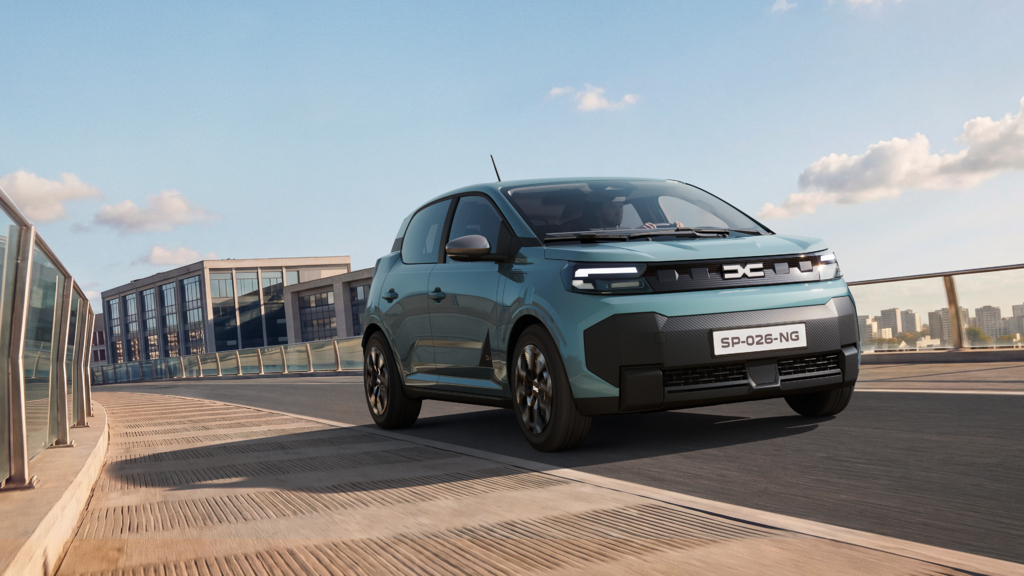
Romania's automotive industry cut more than 30,000 jobs while its combined turnover grew, according to a market report by INFINEXA Insights cited by Economedia, ziare.com and HotNews. Local vehicle production fell 12.7% in the first half of 2026, while European Union car registrations rose 5.7% over the same period.
The report is based on an analysis of 2,325 companies in the Romanian automotive chain, of which 936 form the core analysis perimeter for 2025. ziare.com and HotNews describe the headcount reduction as having taken place over the past four years, while Economedia frames it as five years covering 2021 to 2025.
Turnover up, headcount down
Across the 1,200 companies present in all five years analysed, the number of employees fell by 30,683 between 2021 and 2025, a decline of 13.7%, Economedia reports. Over the same period, turnover in the analysed perimeter grew nominally by 35.1%, from 154.5 billion lei to 208.8 billion lei. Most of the job cuts occurred among tier 1 suppliers.
Profitability moved the other way. The net margin of the whole perimeter fell to 1.70% in 2025 from 2.07% in 2021, while tier 1 suppliers ended the year at 1.29%. A quarter of tier 1 suppliers were already loss-making in 2025. Working capital adds to the strain: inventories and receivables at tier 1 suppliers reached 36.3 billion lei, equivalent to 30% of their turnover, on a net margin of only 1.3%.
Production falls as the European market grows
The divergence widened in 2026. Passenger car registrations in the European Union rose 5.7% in the first half of the year, but Romanian vehicle output fell 12.7%. At Mioveni the decline was 17.7%, and at Craiova approximately 7%.
The analysis attributes the gap to an erosion of Romania's traditional cost advantage at a time when value in the automotive industry is migrating towards batteries, electronics and software. The hourly labour cost in Romanian manufacturing rose 64% between 2021 and 2025, and industrial energy in the second half of 2025 cost 43% more than in Spain. Romania still has no industrial-scale battery cell production project.
"We are not simply witnessing a weak period for the auto industry, but a change in where value is created. Romania is strong in the links that are gradually losing value and less present in those that are gaining, namely batteries, power electronics and software," said Adrian Lotrean, CEO of INFINEXA. "For an automotive supplier, losing a contract no longer means only losing a customer, it can mean losing all relevance for the next generation of cars."
Insolvency statistics lag the damage
Formal procedures remain rare. In August 2026, 13 of the 936 companies analysed for 2025 were in insolvency or preventive concordat. Including firms analysed in 2024, the count reaches 26 out of 1,077, or 2.4%. Nationally, the report identified 303 collective procedures opened in the first half of 2026, up 39.6% year on year.
Six to 24 months can pass between the first signs of deterioration and the opening of a procedure, and in the automotive sector multiannual framework contracts and international shareholding structures can stretch that interval further. "Insolvencies in the sector do not show the scale of the deterioration of the auto industry, and we do not expect major procedures to be opened in the sector, so we are taking even more risk if we look at the wrong indicator," Lotrean said, adding that foreign companies can afford to close local facilities and move outside Romania. The report lists early signals that can precede a filing by six to 24 months:
- loss of a nomination for a new vehicle programme
- a cut in the number of shifts at the main customer
- a significant decline in the operating result
- rising scrap rates without commercial compensation
- financing costs exceeding the operating margin
- deferred maintenance
- reduced trade credit limits
Scenarios to 2030
If the employment adjustment slows to 2-3% a year, the sector could lose a further 12,000 to 18,000 jobs by 2028, according to the report. In a scenario where Romania loses a major production model, the impact could reach 35,000 to 40,000 jobs by 2030, with vehicle output falling 27-36% against the 2025 level.
The sector currently generates around 2.2 billion euros a year in direct budget revenue. The loss of a major model could cut that by roughly 380 to 530 million euros a year by 2030, alongside export losses in the order of 2 to 3 billion euros annually.