Rising global pulses prices lift Indian import costs as weak monsoon clouds crop
International pulses quotations have firmed and the increase is starting to feed through to domestic markets in importing countries. India, the largest buyer of pulses, faces higher landed costs at the same time as a weak monsoon puts the domestic crop in question. Importers, dal millers and origin exporters are all repricing.
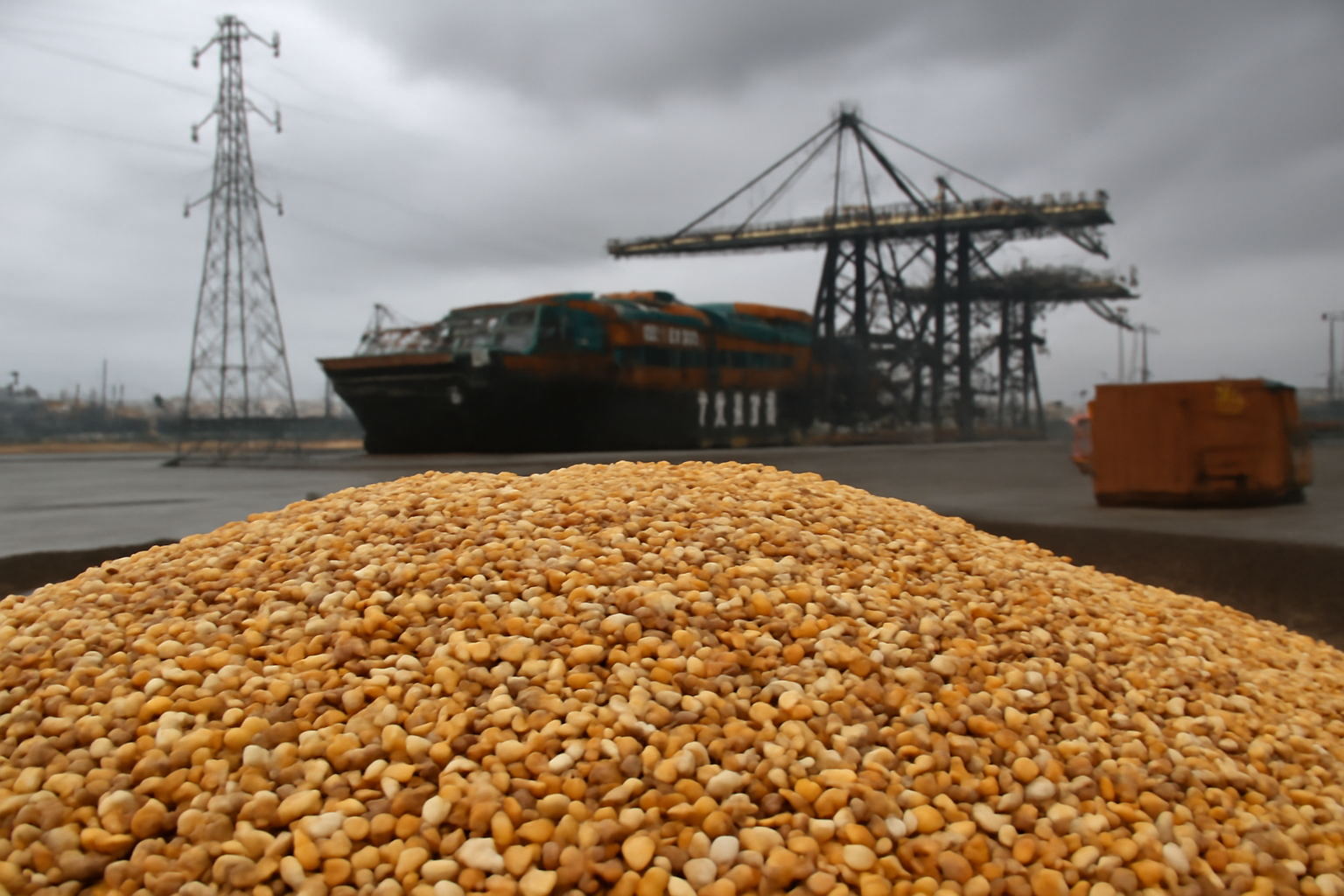
International prices for pulses have strengthened, and the increase is beginning to work through to domestic markets in importing countries. India, the world's largest producer, consumer and importer of pulses, is among the most directly exposed: higher landed costs on imported cargoes are arriving at the same moment that a weak monsoon has put the domestic crop in doubt.
Firmer international quotations lift landed costs
The first driver sits offshore. Offer levels in the main exporting origins have moved higher, and because a meaningful share of Indian consumption is met from abroad, that increase transmits quickly into wholesale prices at home. Importers buying on the spot market absorb the new levels immediately; those holding forward cover are insulated only until existing contracts run out.
India draws its imported pulses from a comparatively narrow group of suppliers. Yellow peas, lentils and chickpeas come largely from Canada and Australia, while pigeon pea and black gram are sourced mainly from Myanmar and East African origins including Mozambique, Tanzania and Malawi. That concentration matters: price moves in a handful of origins are enough to reset the cost of the entire import book, and there is limited scope to substitute one supplier for another at short notice within a single shipment season.
A weak monsoon narrows the domestic buffer
The second driver is domestic. Pulses in India are grown in two main cycles. The kharif crop is sown with the arrival of the southwest monsoon and harvested from autumn; the rabi crop is planted after the monsoon withdraws and depends on residual soil moisture and irrigation. Kharif pulses such as pigeon pea, black gram and green gram are largely rain-fed, which makes them unusually sensitive to the timing and distribution of rainfall rather than to the seasonal total alone.
A weak monsoon therefore does more than trim one harvest. Poor soil-moisture recharge going into the winter season weighs on chickpea and lentil sowing as well, and the rabi cycle supplies the bulk of India's domestic pulses output. When both cycles are in question, the domestic cushion that normally absorbs a rise in world prices is thinner, and the market has to lean harder on imports at precisely the point when imports have become more expensive.
Implications across the chain
The combination points to firmer prices along the entire chain, but the effect is not evenly distributed:
- Importers face margin compression. Higher purchase costs can only be recovered if wholesale buyers accept the pass-through, and demand for pulses is price-sensitive at the household level.
- Processors and dal mills pay more for raw material and compete for a domestic arrival flow that may prove smaller than usual, which raises the risk of underused crushing capacity.
- Exporters in origin countries see better realisations and a clearer incentive to expand planted area in the next cycle, though any supply response arrives a season late.
- Policy becomes a live variable. Import duties, stock limits and government reserves are the standard levers available to Indian authorities when food inflation risk rises, and each of them changes the arithmetic for traders holding inventory.
The near-term signals to watch are the distribution of remaining monsoon rainfall rather than the headline total, the pace of rabi sowing once fields are freed, the volume of arrivals at benchmark mandis, and export offers from Canada, Australia and Myanmar. If origin prices hold their new levels while Indian output disappoints, the import bill rises on both price and volume at once.