Rising Chicken Consumption Drives Product and Processing Capacity Expansion
Global chicken consumption and production have risen sharply over the past 3–4 years as breeding and farming advances shorten production cycles and reinforce price competitiveness. Food manufacturers and restaurant operators are responding with new chicken products and expanded processing facilities.
Chicken strengthens its position in the protein market
Chicken consumption and production have increased rapidly over the past 3–4 years, strengthening poultry’s position as a major source of protein worldwide. The expansion reflects changes on both sides of the market: producers can raise birds more efficiently, while consumers and food businesses continue to value chicken for its price competitiveness.
Improved breeding and advances in farming techniques have shortened production cycles. That allows poultry companies to bring meat to market faster and use production assets more frequently. Compared with proteins that require longer raising periods, this gives chicken producers greater flexibility to respond to demand and makes the sector attractive for additional processing investment.
Food companies add products and equipment
Food manufacturers and restaurant operators are moving to capture the increase in consumption by expanding chicken product ranges and production facilities. The response covers both product development and physical capacity, indicating that companies expect chicken to remain important rather than treating the recent growth as a temporary shift.
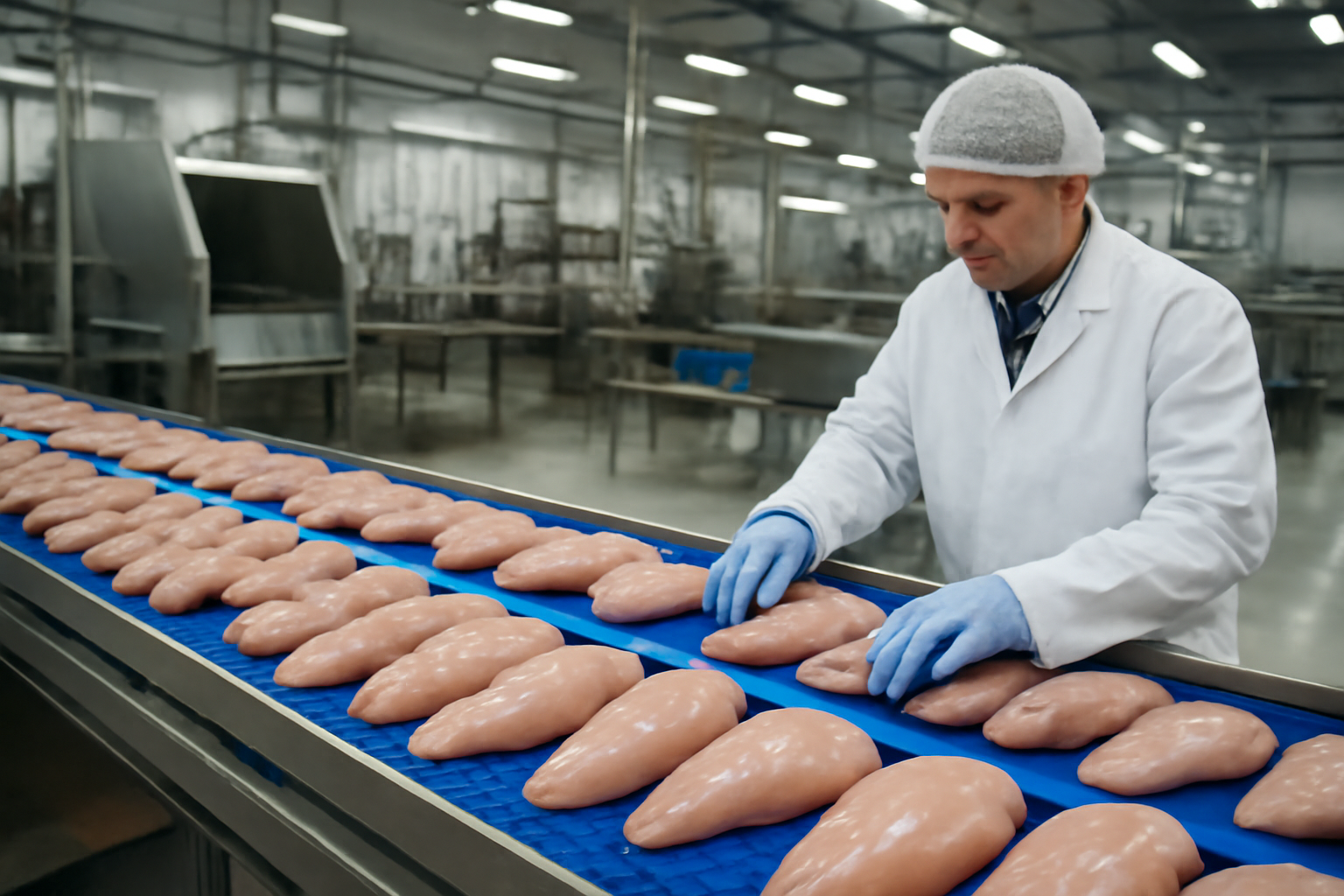
Shorter cycles can help producers adjust output, but processing capacity must develop alongside farm production. Slaughtering, cutting, cooking and packaging operations determine how efficiently rising poultry volumes reach retail and food-service customers. Investment in these stages can also support a wider variety of products, allowing companies to target different price points and consumption occasions.
Efficiency and pricing shape competition
Chicken’s competitive price remains central to its appeal. Efficient breeding and farming can support lower production costs, while rapid production cycles reduce the time capital is tied up in livestock. These characteristics matter to producers, processors and restaurant groups seeking dependable protein supplies without pushing menu or retail prices beyond consumers’ budgets.
The expansion also raises execution risks. New processing equipment needs sufficient and consistent bird supply, while additional farm output requires reliable demand from manufacturers, retailers and restaurants. If capacity grows faster than consumption, margins may come under pressure; if processing investment lags behind production, bottlenecks can limit the value created by improved farming efficiency.
For industry participants, the key issue is therefore the balance between biological productivity, processing capacity and end-market demand. Breeding advances have already improved the speed of production, and food companies are broadening their commercial response. The next phase will depend on whether producers and processors can coordinate expansion while preserving the price advantage that helped make chicken a leading global protein.