New research targets aflatoxin losses in East African maize chains
New research is seeking to make maize safer from aflatoxin, a toxic substance that can trigger buyer rejections and depress farm prices. The problem affects food safety and commercial returns across East African maize chains.
Aflatoxin contamination weighs on maize sales
New research is seeking to make maize safer from aflatoxin, addressing a food-safety problem that can also sharply reduce the commercial value of a harvest. Aflatoxin is a toxic substance, and contamination can lead buyers to reject maize rather than accept the associated health and quality risks.
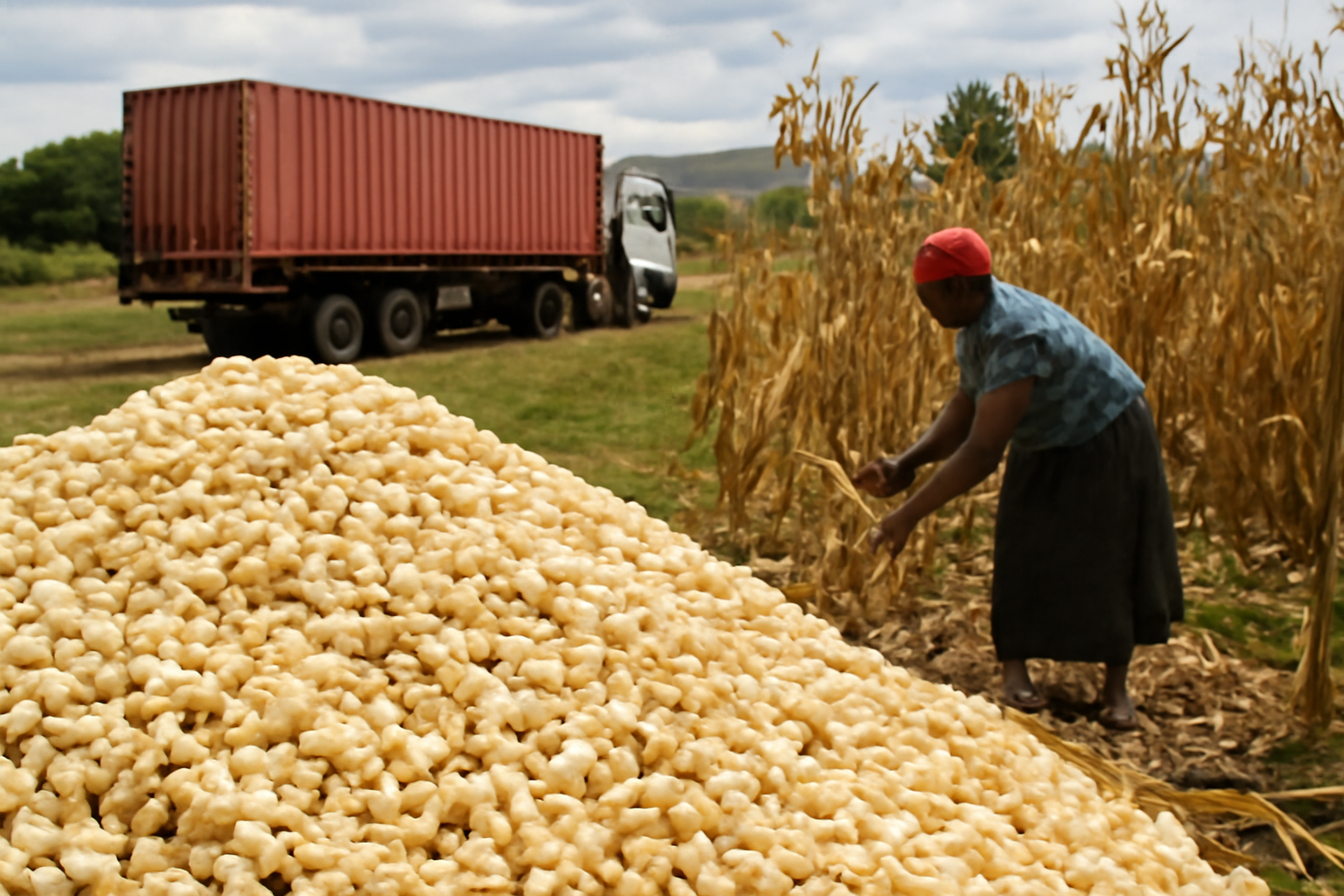
The consequences are immediate for farmers. Amani Karwa, a maize grower from Gatsibo District, recalled selling his harvest at giveaway prices after buyers rejected it because of aflatoxin contamination. His experience illustrates how a food-safety failure can quickly become an income shock: once a crop is judged unacceptable by regular buyers, the farmer has fewer sales options and substantially weaker bargaining power.
Quality failures spread through the supply chain
The impact does not stop at the farm gate. Buyer rejection can disrupt procurement for traders and processors, while contaminated grain creates risks for businesses supplying food markets. Lots that cannot meet buyers’ requirements may be discounted, diverted or left without a viable commercial outlet. That pressure can depress prices even where maize has already been harvested and the producer has incurred the cost of growing it.
For buyers, stricter screening protects consumers and reduces the risk of unsafe maize entering the food chain. For producers, however, rejection means that production volume alone does not determine revenue. Marketable quality becomes equally important. A large harvest offers limited protection if contamination prevents the grain from reaching normal sales channels.
The issue is therefore both a public-health concern and a market-access problem. Farmers carry the first financial loss when maize is rejected, but traders and processors also face uncertainty over the quantity of compliant grain available. Repeated contamination can weaken relationships between suppliers and buyers and make procurement from affected areas more difficult.
Research focus is commercial as well as technical
Efforts to make maize safer could help reduce three connected pressures in East African maize chains: food-safety risks, buyer rejections and depressed farm prices. Effective measures would need to lower the likelihood that contamination reaches a level at which buyers refuse a consignment. That would improve the share of harvested maize that remains commercially acceptable.
The supplied information does not identify the research institution, project timetable, funding, methods or expected results. It also provides no figures for contamination rates, rejected volumes or financial losses. Those details will be important for assessing whether the work can produce solutions that farmers, traders and processors can apply at commercial scale.
For industry participants, the central test is practical adoption. Research will have the greatest market value if it helps farmers preserve saleable quality and gives buyers greater confidence in the grain they purchase. Karwa’s experience shows what is at stake: aflatoxin contamination does not merely reduce a crop’s quality rating; it can remove conventional buyers and force a producer to accept a much lower price.
Safer maize could strengthen market confidence
Reducing contamination would support safer food while protecting more of the economic value created during production. It could also give traders and processors a more reliable pool of acceptable maize. Until the project’s methods and results are disclosed, however, the scale of any benefit cannot be quantified.
The research begins with a clear commercial problem. Farmers need maize that buyers will accept, buyers need grain that satisfies safety requirements, and consumers need protection from a toxic contaminant. Progress will depend on whether the research can turn that shared need into measures that work throughout the maize chain.