Research and logistics investment underpin South Africa’s citrus export lead
South Africa’s position as the world’s leading citrus exporter reflects decades of investment in research, genetics, innovation and logistics. Maintaining that lead will require the industry to keep connecting scientific advances with reliable delivery to international markets.
Long-term investment builds an export industry
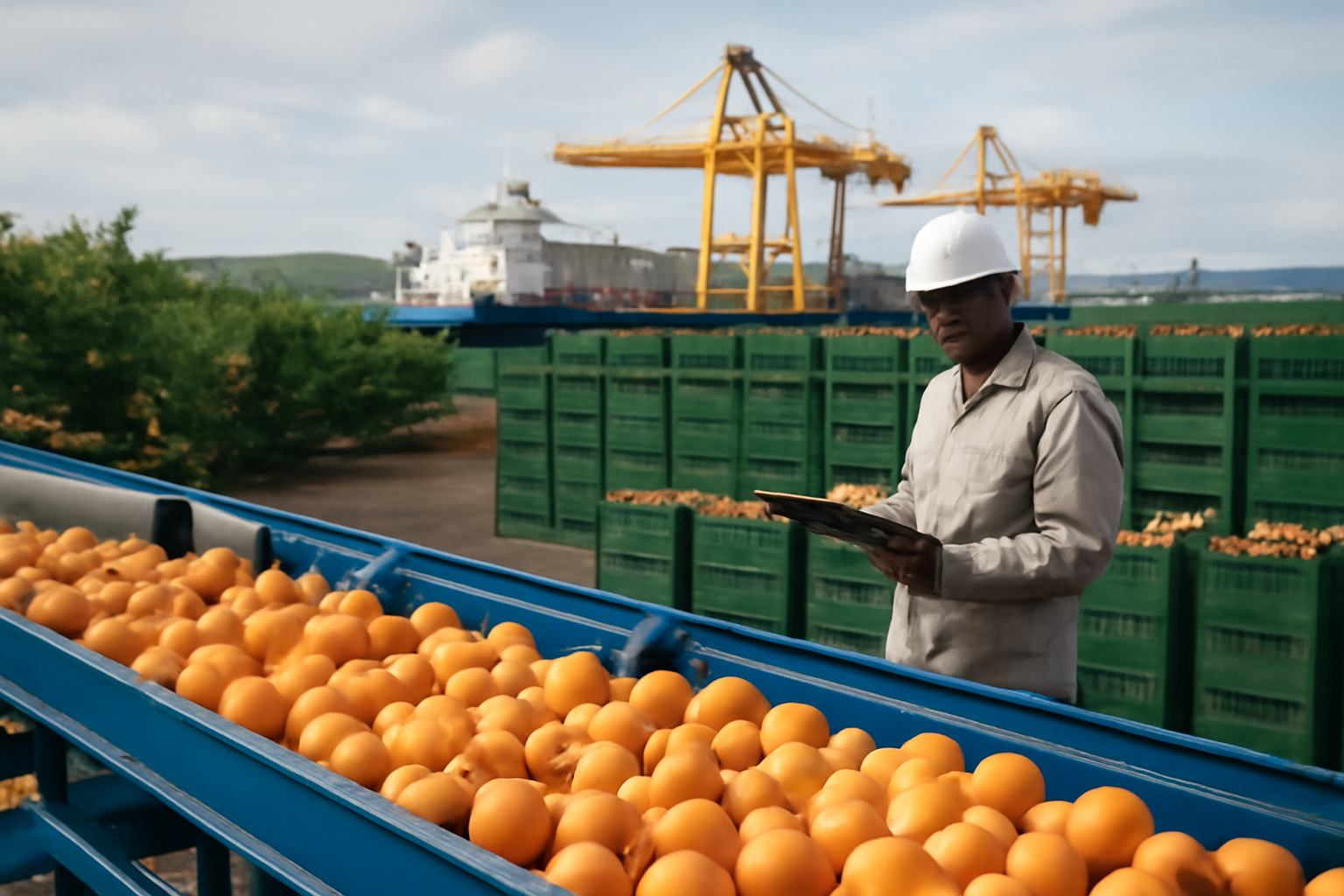
South Africa’s rise to become the world’s leading citrus exporter is rooted in decades of investment rather than a single production cycle or market opening. Research, genetics, innovation and logistics have developed together, giving growers and exporters a system capable of supplying citrus to international markets.
Farmer’s Weekly identified these long-term investments as the foundation of the country’s export growth. The publication’s discussion with agricultural economist Wandile Sihlobo and Citrus Growers’ Association CEO Dr Boitshoko Ntshabele places scientific capability and physical distribution at the centre of South Africa’s competitive position.
For producers, genetics and research influence what can be grown and how consistently orchards can deliver marketable fruit. Innovation connects that knowledge with commercial production. The value of those gains, however, depends on whether exporters can move a perishable product from orchards through packing and transport systems to overseas customers.
Research and logistics operate as one system
The central lesson from South Africa’s experience is that production capacity alone does not create export leadership. Citrus must meet buyer requirements and arrive in saleable condition. Research can support orchard performance and fruit quality, while logistics investment determines whether that output reaches customers efficiently.
This connection matters because failures after harvest can weaken the commercial return on years of work in orchards. Producers carry the cost of developing fruit, while processors, packers, transport operators and exporters manage successive stages before a shipment reaches its destination. Reliability across that chain affects the industry’s ability to serve established customers and compete for additional business.
Genetics also has a long investment horizon. Work undertaken before an orchard reaches commercial production can shape later yields, quality and market suitability. That makes research capacity a strategic asset for growers, but one whose value is realised only when packing, transport and export infrastructure can handle the resulting supply.
Maintaining the lead requires continued coordination
South Africa’s position gives its citrus businesses scale and international visibility, but leadership creates an obligation to keep investing. Producers need access to useful research and plant material, while exporters need dependable logistics. A weakness in either area can limit the returns generated by the other.
For investors and market participants, the story is therefore broader than orchard expansion. The competitive system includes genetics, applied research, production practices, packing capacity and the routes that connect farms with global buyers. South Africa’s export lead shows how those elements can reinforce one another over decades. Its durability will depend on whether the industry continues to treat research and logistics as linked commercial priorities.