Repsol and Moeve advance two of the EU’s largest green hydrogen projects
Moeve and Repsol have moved major Spanish green hydrogen projects into construction as Europe’s 12 largest developments reach a combined 3 GW. The projects target refining, industry and renewable transport fuels, but high costs and uncertain demand remain barriers.
Spanish projects enter construction
Moeve and Repsol are building two of the European Union’s largest green hydrogen projects, moving Spain’s ambitions beyond announcements and into construction. According to El Español, the 12 largest European projects under construction represent about 3 GW of electrolyzer capacity and approximately €13 billion in investment.
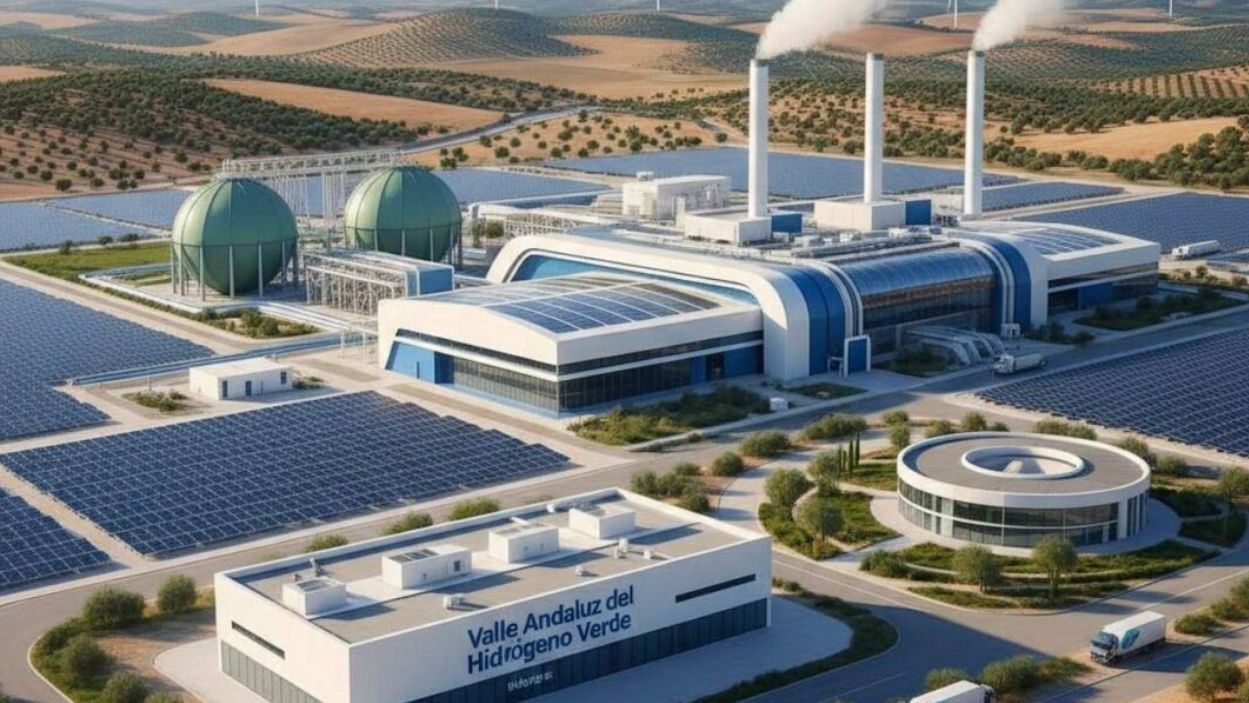
The largest Spanish development currently being built is the first phase of Moeve’s Andalusian Green Hydrogen Valley at the Onuba Energy Park in Huelva. It will initially have 300 MW of electrolysis capacity, with a possible subsequent expansion of 100 MW. Investment exceeds €1 billion, and production is expected to reach about 45,000 tonnes of renewable hydrogen annually.
Moeve made the final investment decision in March 2026 and has started construction. The first 300 MW is expected to enter operation in 2029. The hydrogen will supply industrial users and support production of renewable molecules for road, maritime and aviation fuels.
Refining provides an anchor for demand
The wider Andalusian Green Hydrogen Valley envisages 2 GW of electrolysis capacity and production of as much as 300,000 tonnes per year. Those figures apply to the full planned development, rather than the 300 MW first phase now under construction.
Repsol’s Green Hydrogen Hub at the Petronor industrial complex in the Basque Country is listed at about 110 MW, although El Español notes that the company has developed different phases and electrolyzers linked to its facilities. Its principal purpose is to replace fossil-derived hydrogen currently used in refining and reduce emissions from the industrial complex.
This connection to existing industrial demand is significant because European hydrogen developments are concentrated in sectors that are difficult to electrify directly. The leading projects serve refining, chemicals, steelmaking and sustainable fuel production across Sweden, Spain, Germany, the Netherlands, France, Austria and Portugal.
Europe’s 3 GW pipeline faces cost barriers
El Español identifies Stegra’s steel project in Boden, Sweden, as the largest development in the European ranking, at about 700 MW. Germany has four projects in the ranking, including EWE’s 320 MW Emden Clean Hydrogen Coastline and the 300 MW GET H2 Nukleus. Germany therefore has the largest number of listed projects, even though none matches the Swedish project’s scale.
The construction pipeline is advancing while low-emissions hydrogen remains a small part of the overall market. Citing the International Energy Agency, El Español reports that global low-emissions hydrogen production increased by 20% in 2025 to almost 1 million tonnes. Total hydrogen demand exceeded 100 million tonnes in the same year, but almost all of it remained tied to traditional industrial uses.
High production costs, uncertain demand, regulation and insufficient infrastructure continue to restrict deployment, according to the IEA. Several large projects are expected to begin operating before 2030, but transport, storage and distribution networks will also be required. For Spanish developers, reaching construction establishes an early position in Iberian supply; commercial expansion will depend on securing durable industrial demand and infrastructure beyond individual production sites.