Record US biofuel demand supports soybean oil outlook near 70 cents
US soybean oil consumption for biofuel production reached a record in June, according to Fastmarkets. Nikkei reports that rising crushing volumes and biofuel demand could keep Chicago soybean oil prices near 70 cents per pound over the next six months.
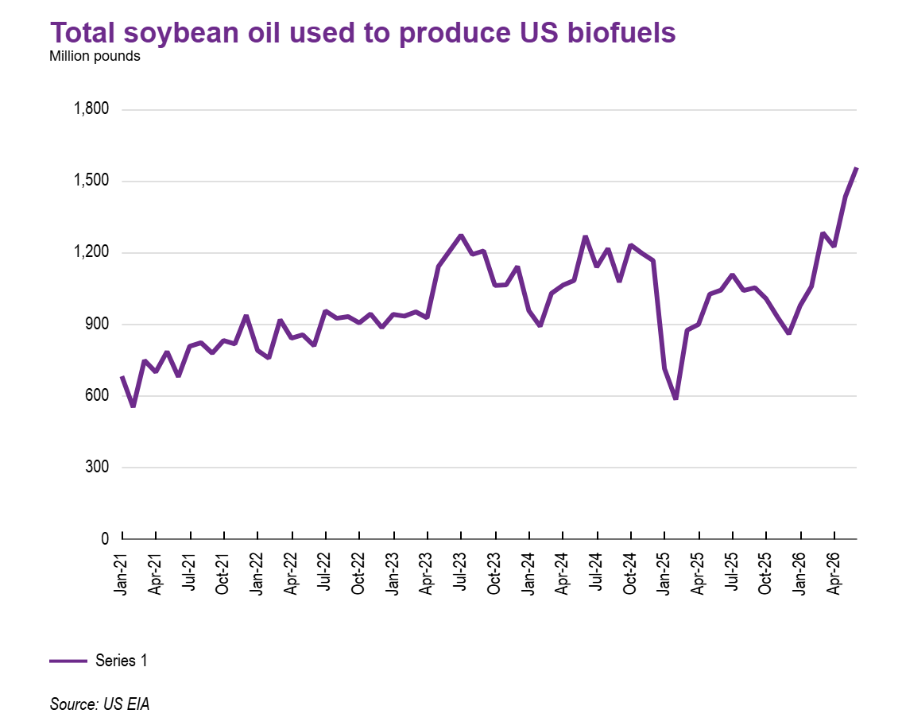
Biofuel consumption reaches a new high
Soybean oil used in US biofuel production reached an all-time high in June, extending a record-setting pace for the sector, Fastmarkets reported. The vegetable oil also captured a growing share of the biofuel feedstock market, strengthening an important source of domestic demand for US soybean processors.
The increase marks a shift in how the US soybean oil market is divided between food and fuel. Nikkei reported that demand had previously been split roughly evenly between edible-oil and biofuel applications. From fiscal 2026, however, biofuel accounts for the larger share as additional domestic crushing facilities increase the volume of oil available.
This changing balance matters because soybean oil demand is no longer driven mainly by food consumption. Biofuel producers are becoming the larger outlet, linking the vegetable-oil market more closely to fuel policy, processing capacity and the economics of renewable fuel production. Food manufacturers must therefore compete with a growing industrial buyer for the same supply.
More crushing capacity expands oil availability
The expansion of US crushing facilities has raised soybean processing volumes, according to Nikkei. Higher crushing creates more soybean oil, allowing biofuel consumption to grow without depending solely on a redistribution of existing supplies. It also increases demand for soybeans from processors, while expanding the quantity of co-products generated alongside the oil.
For crushing companies, the record biofuel use provides a larger domestic market for additional output. The commercial effect extends through the supply chain: soybean producers gain another demand channel, processors have a growing outlet for oil, and food-sector buyers face stronger competition when securing supplies.
The capacity increase does not eliminate price risk. If crushing volumes and biofuel consumption rise at different speeds, the market can alternate between tighter and more comfortable oil availability. The central question for traders and buyers is whether the larger processing base can keep pace with biofuel demand after the fuel segment moves above food use.
Chicago prices seen near 70 cents
Nikkei said Chicago Board of Trade soybean oil could trade around 70 cents per pound over the coming six months. One pound is approximately 453.6 grams. The outlook reflects stronger demand for soybean oil as a biofuel input, combined with the market changes created by expanding US crushing capacity.
A level near 70 cents would be significant for procurement decisions across both fuel and food markets. Biofuel producers must assess feedstock costs against their production economics, while food companies need to manage exposure to a market in which they are no longer the largest demand segment. Crushers, meanwhile, must weigh stronger oil demand against the volume created by new processing capacity.
For international market participants, the US shift is relevant even though the reported demand increase is domestic. A larger share of US soybean oil moving into fuel can affect the amount available to other buyers and influence Chicago price signals used across agricultural markets. The immediate evidence remains concentrated in the United States: record June consumption, a rising biofuel share and more crushing capacity.
Policy and capacity become key indicators
Nikkei linked the increase in biofuel demand to the US Environmental Protection Agency, although the supplied report did not specify the relevant policy details. That connection makes regulatory developments an important variable alongside crush rates and monthly biofuel consumption.
Market participants will be watching whether record usage persists beyond June and whether expanded crushing continues to supply enough oil for both fuel and food customers. The reported outlook near 70 cents per pound depends on the interaction of those two forces: a larger source of supply and a biofuel market taking a greater proportion of output.