Record heat threatens South Korean apple and pear prices ahead of Chuseok
Extreme heat is damaging fruit development in South Korea after a short monsoon and temperatures reaching 40°C in southern regions. Apples and pears face particular pressure as demand typically rises ahead of Chuseok, increasing the risk of further price gains.
Extreme heat disrupts fruit development
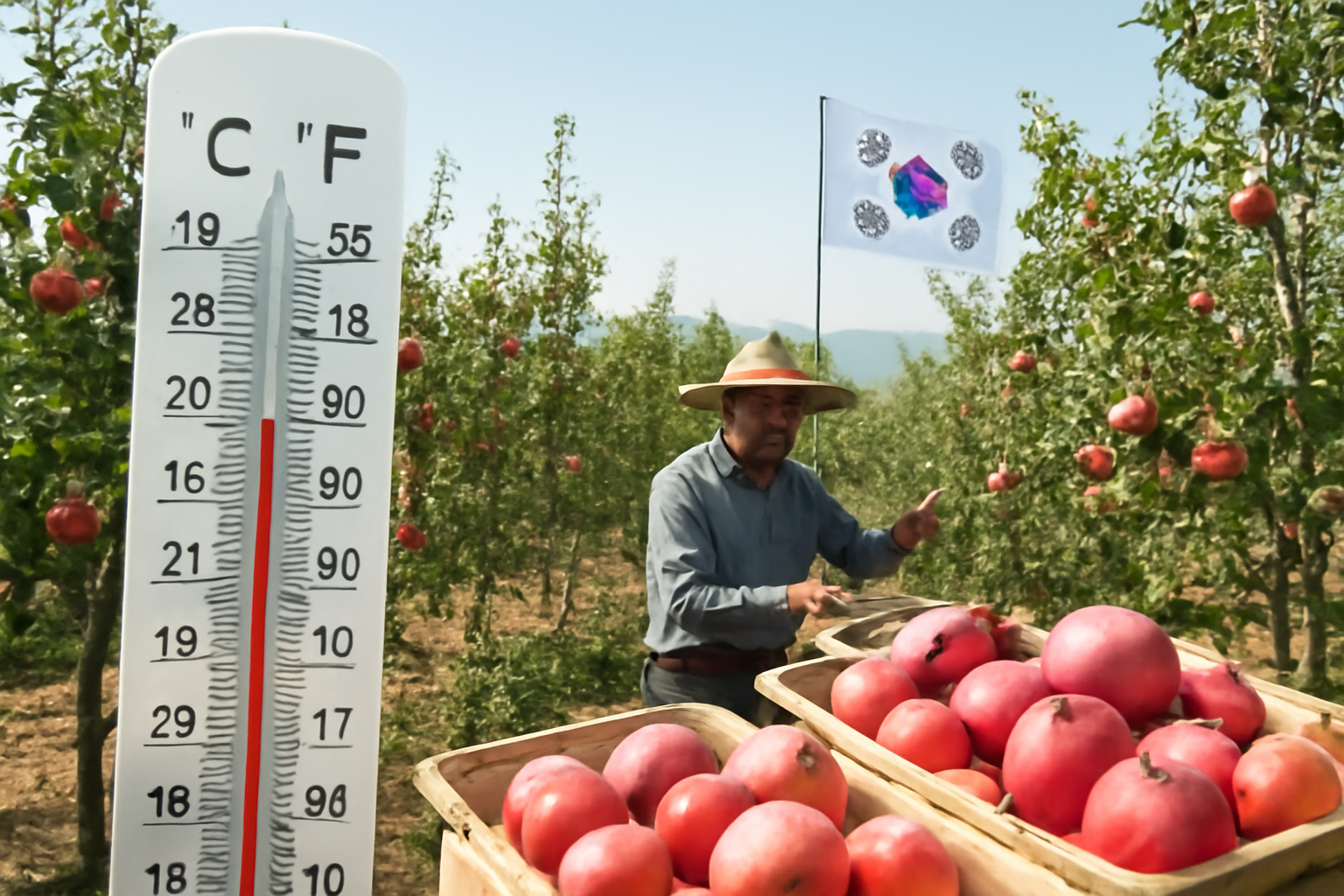
South Korea’s exceptionally hot summer is putting domestic fruit production and prices under pressure ahead of Chuseok, one of the country’s most important periods for food purchases and gift-giving. A short monsoon season followed by temperatures reaching 40°C in southern regions has directly affected fruit development, raising concerns about the condition and availability of the coming crop.
Apples and pears are at the center of the market’s attention because demand for both fruits rises sharply before the holiday. Any reduction in marketable output could therefore reach wholesale and retail channels at a particularly sensitive time. The immediate concern is not simply the total volume harvested, but the quantity of fruit that meets the size, appearance and quality requirements of holiday buyers.
Industry information available on the 5th showed that fruit prices at the beginning of the month were moving differently depending on the product. That variation suggests the heat has not produced a uniform market response. Crop location, harvest timing and the ability of individual orchards to manage heat exposure may determine which categories face the greatest pressure.
Holiday demand increases price risk
Chuseok concentrates demand for visually attractive apples and pears, which are commonly sold for household consumption and as gifts. This makes the market especially sensitive to weather-related quality losses. Even if farms maintain part of their production volume, damage affecting color, size or external appearance can reduce the supply suitable for premium holiday packs.
The combination of constrained quality supply and rising seasonal demand points to a risk of additional price increases. Producers with marketable fruit may benefit from stronger prices, but lower yields or a smaller premium-grade share could offset that advantage. Wholesalers and retailers face a different problem: securing enough consistent-quality fruit without pushing consumer prices beyond levels that weaken demand.
The effects may also differ by region. The most intense heat was reported in southern areas, where temperatures climbed to 40°C. Buyers will consequently need to monitor orchard conditions and incoming wholesale volumes rather than relying only on national production expectations. A shortage in specific grades or sizes can move holiday prices even when aggregate fruit availability appears less alarming.
Supply visibility remains limited
No detailed estimate of crop losses, harvest volumes or expected price increases was included in the available information. It is therefore too early to quantify the impact on the apple and pear markets. The direction of risk is nevertheless clear: continued heat damage would tighten the pool of holiday-quality fruit just as purchasing accelerates.
For growers, the commercial outcome will depend on how much fruit remains saleable and whether higher prices compensate for lost output. Traders and retailers will focus on procurement timing, quality sorting and the price gap between standard fruit and gift-grade products. Consumers may encounter the strongest increases in categories where holiday demand is concentrated and cosmetic standards are strict. Conditions during the remainder of the growing and marketing period will determine whether the current heat-related pressure becomes a broader Chuseok supply problem.