Rangpur maize harvest reaches 1.61 million tonnes across five districts
Farmers in Bangladesh’s Rangpur agricultural region produced 1,607,092 tonnes of maize during the 2026 Rabi and Kharif-1 seasons. Strong feed-industry demand and farmgate prices of Taka 1,000-1,150 per 40 kilograms supported farmer returns.
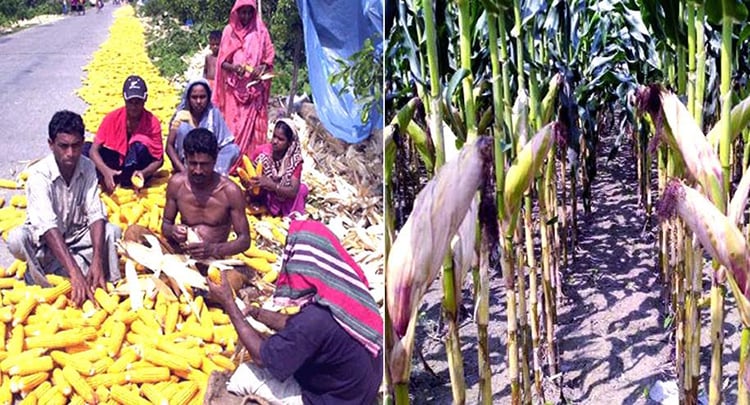
Two seasons deliver a bumper maize crop
Farmers in Bangladesh’s Rangpur agricultural region harvested 1,607,092 tonnes of maize during the 2026 Rabi and Kharif-1 seasons, according to Bangladesh Sangbad Sangstha (BSS). The production came from Rangpur, Gaibandha, Kurigram, Nilphamari and Lalmonirhat, the five districts covered by the regional agricultural administration.
Department of Agricultural Extension officials said the larger Rabi crop contributed 1,417,133 tonnes from 126,756 hectares. The recently completed Kharif-1 season added 189,959 tonnes from 20,815 hectares. Together, the two crops covered 147,571 hectares and created a substantial supply base for northern Bangladesh’s feed and food industries.
The government supported the expansion with special incentives, high-yielding maize seed, fertilizers and updated farming technologies, DAE Additional Director for the Rangpur region Md Shirajul Islam told BSS. Cultivation extended across both mainland farms and char land along the Brahmaputra, Teesta, Dharla, Jamuna, Dudhkumar, Atrai, Kartoa and Ghaghot rivers.
Feed demand supports farmer prices
Market sources cited by BSS said farmers were selling recently harvested maize at Taka 1,000-1,150 per mound, with each mound equal to 40 kilograms. Producers interviewed in Gangachara upazila reported strong yields and better profits during both seasons.
Demand from poultry feed, animal feed and food processors remains the main commercial foundation for maize cultivation in the region. The combination of large output and remunerative prices is important for growers because it allows the domestic market to absorb more grain without an immediate collapse in farm returns. The harvest also gives feed manufacturers a larger nearby source of raw material, although the available report does not quantify Bangladesh’s national maize demand, imports or the share covered by Rangpur.
Maize has become particularly attractive on riverine char land, where growers can bring extensive areas into seasonal production. Md Shirajul Islam said the crop was more profitable than many alternatives and was helping farmers improve incomes and living standards.
Lower irrigation needs shape expansion case
Agriculturist Dr Md Abdul Mazid said Rangpur has scope to raise maize production further and called for greater cultivation of low-irrigation crops such as maize and wheat. He argued that this could reduce reliance on high-irrigation Boro rice in northern Bangladesh while supporting food security under a changing climate and protecting the environment, ecosystems and biodiversity.
Further expansion will depend on whether feed and food demand can keep pace with production while preserving profitable prices. For processors, the 2026 crop provides a broad regional supply across five districts. For farmers, continued access to improved seed, fertilizers and technology will remain central to maintaining yields on mainland and char farms.
Dr Mazid also advocated broader food uses for maize, including corn oil and flour blended from 70 percent wheat and 30 percent maize. Such diversification could create additional demand beyond livestock and poultry feed, but feed manufacturing remains the clearest commercial outlet identified in the BSS report.