Rain Boosts Polish Sugar Beet Growth as Leaf Disease Threatens Yield
Recent rainfall has accelerated sugar beet root growth in Poland after earlier dry conditions, but Cercospora leaf spot is appearing in some fields. Agronews reports that disease control, rainfall and temperatures through the end of August will determine root yield and sugar content.
Rain supports recovery after May water stress
Polish sugar beet fields are entering a decisive period for root growth and sugar accumulation after recent rainfall improved crop conditions. Agronews reports that the rain reduced the water stress recorded in May and accelerated root development, although the extent of the recovery varies by region, soil type and earlier crop management.
Fields supplying Pfeifer & Langen Polska in Gostyń, Miejska Górka, Środa Wielkopolska and Glinojeck are now in an intensive phase of root growth. The strongest crops are on fields where herbicide applications and foliar feeding were completed at the appropriate time. These fields are showing rapid gains in root mass and good closure between rows.
Most fields around Gostyń, Miejska Górka and Środa Wielkopolska have developed a closed leaf canopy. This helps limit water evaporation and suppress competition from weeds. However, lighter soils still show the effects of the earlier dry period. Water shortages in May and a subsequent heatwave slowed some plants, and Agronews notes that the latest rain may not fully reverse losses in the weakest and driest locations.
Cercospora appears as roots accumulate sugar
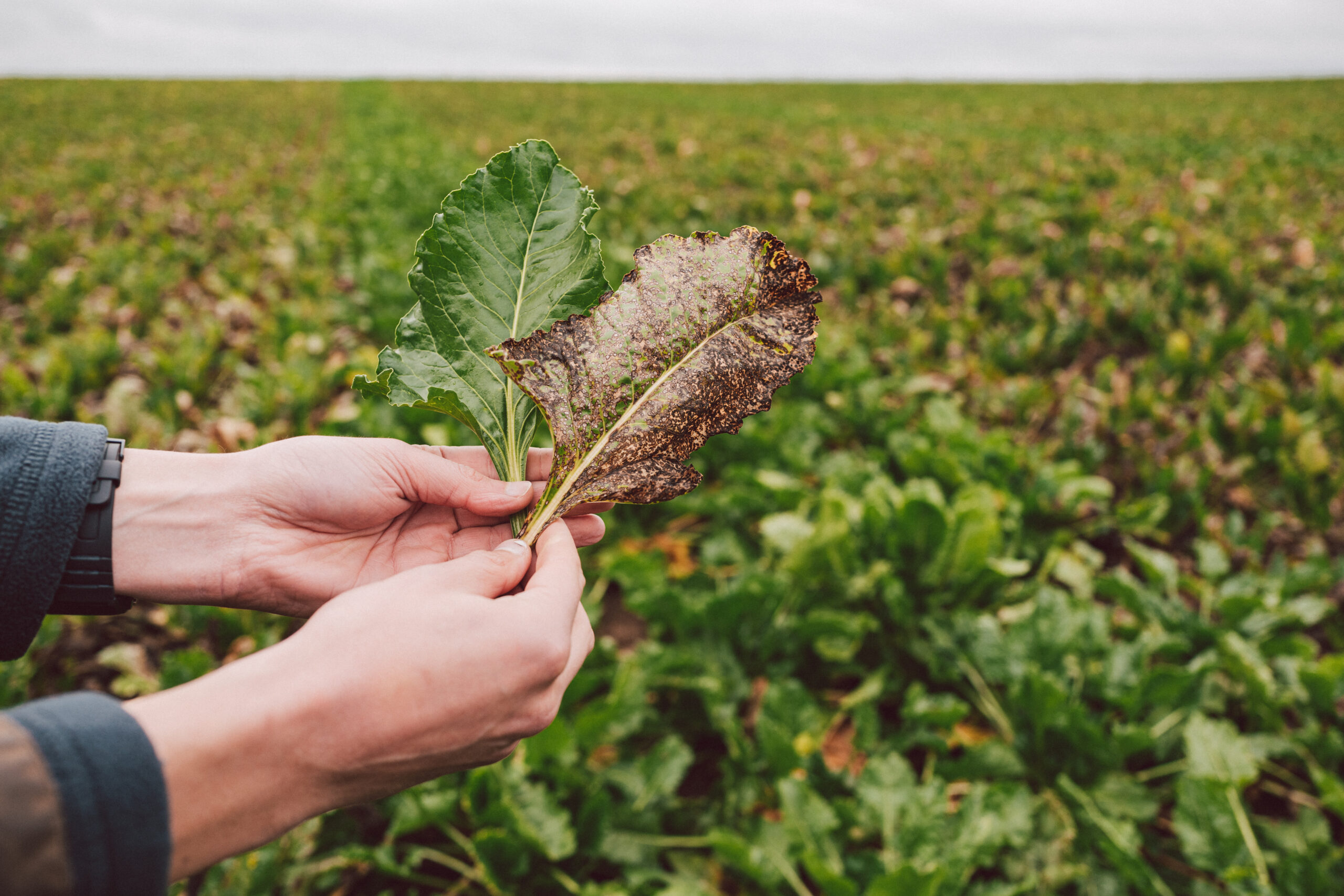
The situation is more uneven around Glinojeck, where some fields face both secondary weed growth and the first outbreaks of Cercospora leaf spot. The weeds identified include common lambsquarters and barnyard grass. Disease lesions were observed by the end of June, particularly on varieties with lower tolerance.
Cercospora damages the leaf area used for photosynthesis and reduces the plant’s capacity to produce sugar. A heavily infected plant may rebuild its foliage by consuming reserves already stored in the root. The result can be a reduction in both root yield and polarization, the measure associated with sugar content.
High humidity, warm nights, frequent rain and persistent dew favor the disease. Advisers therefore recommend inspecting fields every three or four days, with particular attention to older leaves and areas that remain wet for longer. Early symptoms are small, round lesions with pale centers and brown or reddish borders. As infection develops, the lesions merge and leaves gradually dry out.
Fungicide timing becomes critical
Many farms carried out their first fungicide treatment around the turn of June and July. Pfeifer & Langen advisers recommend another application in the coming days where field inspections confirm rising pressure. In areas with severe leaf disease, an additional treatment may be required after about 18–21 days.
The interval should not be applied automatically. Decisions need to reflect field conditions, varietal susceptibility, weather and the performance of the previous treatment. Growers are also advised to rotate active ingredients in accordance with product labels because of the risk of Cercospora resistance.
Application conditions and delivery schedules matter as well. Fungicides should be used without rainfall and at temperatures that allow the products to work properly. Farms planning an early harvest must check both pre-harvest intervals and the dates on which their beet is due to be delivered to the factory.
Healthy foliage will determine campaign outcome
Despite the local disease, weed and drought damage, experts cited by Agronews assess the crop as having good yield potential. Achieving it will depend on preserving healthy foliage, controlling pests effectively and receiving favorable weather through the end of August. Rainfall alone will not determine the campaign: the speed with which growers react to initial Cercospora symptoms will also affect root mass and sugar content.
Pfeifer & Langen Polska produces sugar at four factories in Środa Wielkopolska, Gostyń, Miejska Górka and Glinojeck. The plants procure beet exclusively from Polish growers and sell products including those marketed under the Diamant brand. Crop performance across these supplying regions will therefore shape both farm deliveries and factory feedstock quality during the coming campaign.