Rail restrictions slow Kazakhstan’s grain exports as domestic sales accelerate
Kazakhstan’s grain exporters face slower shipments as wagon congestion and approval restrictions affect routes through Saryagash, Bolashak and Dostyk. Demand is supporting lower- and medium-grade wheat, barley and flaxseed prices, but access to European markets remains uncertain.
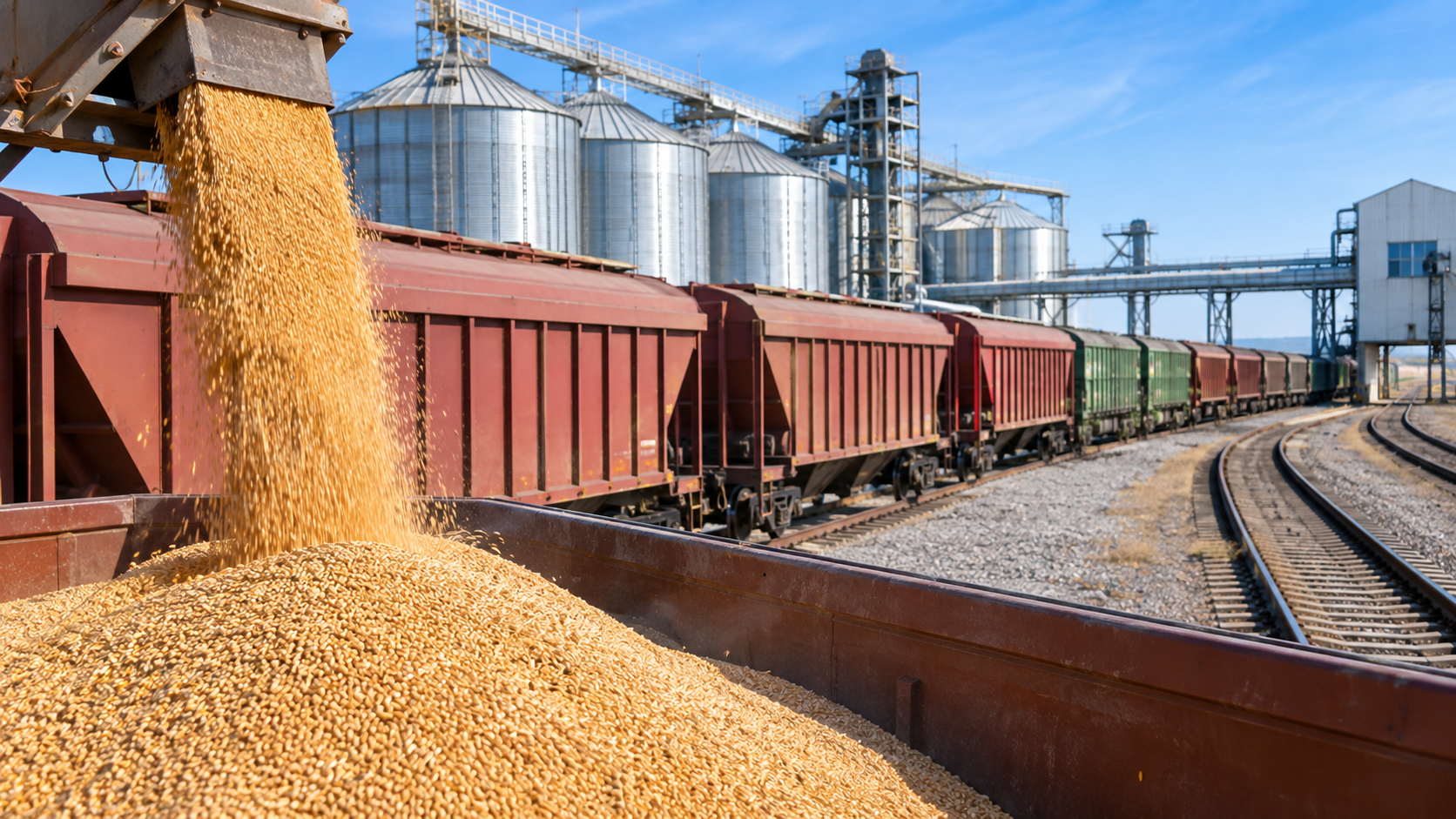
Rail bottlenecks curb export capacity
Kazakhstan’s grain export shipments are slowing as rail restrictions limit access to several major corridors, according to inbusiness.kz, citing a weekly review by the Analytics Committee of the Grain Union of Kazakhstan. The review covers November 16-22, 2026, when domestic sales became more active but exporters continued to face infrastructure and transit constraints.
Excessive wagon accumulation remains a problem on the Kazakhstan Temir Zholy network toward Saryagash, Bolashak and Dostyk. Exporters are also encountering difficulties securing Russian Railways approval for transit toward Baltic Sea ports. Restrictions affect the Belarus route and transit through Belarus to Lithuania, Latvia and Poland. Grain Union analytics head Evgeny Karabanov said the prospects for resolving these constraints were uncertain.
Kazakhstan Temir Zholy is partially restricting approvals for primary and additional transport plans, contributing to lower export loading rates. Flaxseed shipments face another blockage: transit through Russia toward Estonian and Latvian ports is unavailable because the Oktyabrskaya Railway is congested with Russian grain. Alternative routes are also affected by restrictions and rising freight costs.
Demand lifts lower-grade wheat and barley
Domestic sales accelerated as agricultural producers sought cash to meet December obligations, including commitments under the state’s Ken Dala programme. At elevators in the Akmola, Kostanay and North Kazakhstan regions, third-class wheat with 23-24% gluten rose by 1,000 tenge to 92,000-95,000 tenge per tonne. Wheat with 25-26% gluten gained the same amount to 93,000-96,000 tenge.
Fourth-class wheat increased to 89,000-92,000 tenge per tonne and fifth-class wheat to 87,000-90,000 tenge. In contrast, third-class wheat with 28-29% gluten declined by 1,000 tenge to 97,000-101,000 tenge, while grain with at least 30% gluten fell to 102,000-106,000 tenge. Karabanov attributed the divergence to stronger demand and tighter supply for lower- and medium-quality wheat. Exporters, processors and poultry farms are active buyers.
Feed barley rose by 1,000 tenge to 74,000-78,000 tenge per tonne, supported by feed-flour producers and exporters serving China. On the ETS exchange, two trades covering 1,242 tonnes of third-class wheat were completed over three trading days. Other offered lots, including second-class barley priced at 80,000 tenge per tonne, failed to trade.
Export prices diverge by quality and route
At DAP Saryagash, export prices for third-class wheat with 23-27% gluten were unchanged at ranges between $268 and $274 per tonne. Wheat with 28-29% gluten lost $1 to $276-$280, while wheat with at least 30% gluten fell to $292-$296. Fourth-class wheat gained $1 to $260-$263, and fifth-class wheat rose by $2 to $252-$255. Barley increased to $220-$225 per tonne, rising by $2 at DAP Saryagash and $3 at FOB Aktau, while remaining unchanged through Dostyk/Altynkol.
Russian wheat is becoming more expensive because of higher domestic prices, seasonal logistics costs and a stronger ruble. Including delivery and import VAT, its price is at parity with or sometimes above comparable Kazakh wheat, according to Karabanov. Flaxseed strengthened despite the transport problems: domestic prices rose by 3,000 tenge to 184,000-189,000 tenge per tonne, while FCA Kazakhstan prices gained $2 to $442-$447. DAP Poland brown flaxseed with 97% purity increased by €5 to €510-€515, but uncertain rail access means favorable prices alone may not translate into higher shipment volumes.