Rail Quotas K1 and K2 Squeeze Kuzbass Coal's Access to Eastern Export Routes
Kuzbass, Russia's largest coal region, is losing position on the Eastern Polygon not to foreign rivals but to domestic shippers competing for the same rail capacity, according to vgudok.com. The publication points to the K1 and K2 quotas as the mechanism deciding who gets eastbound slots, even as record coal volumes move toward Pacific ports.
Domestic competition, not foreign demand
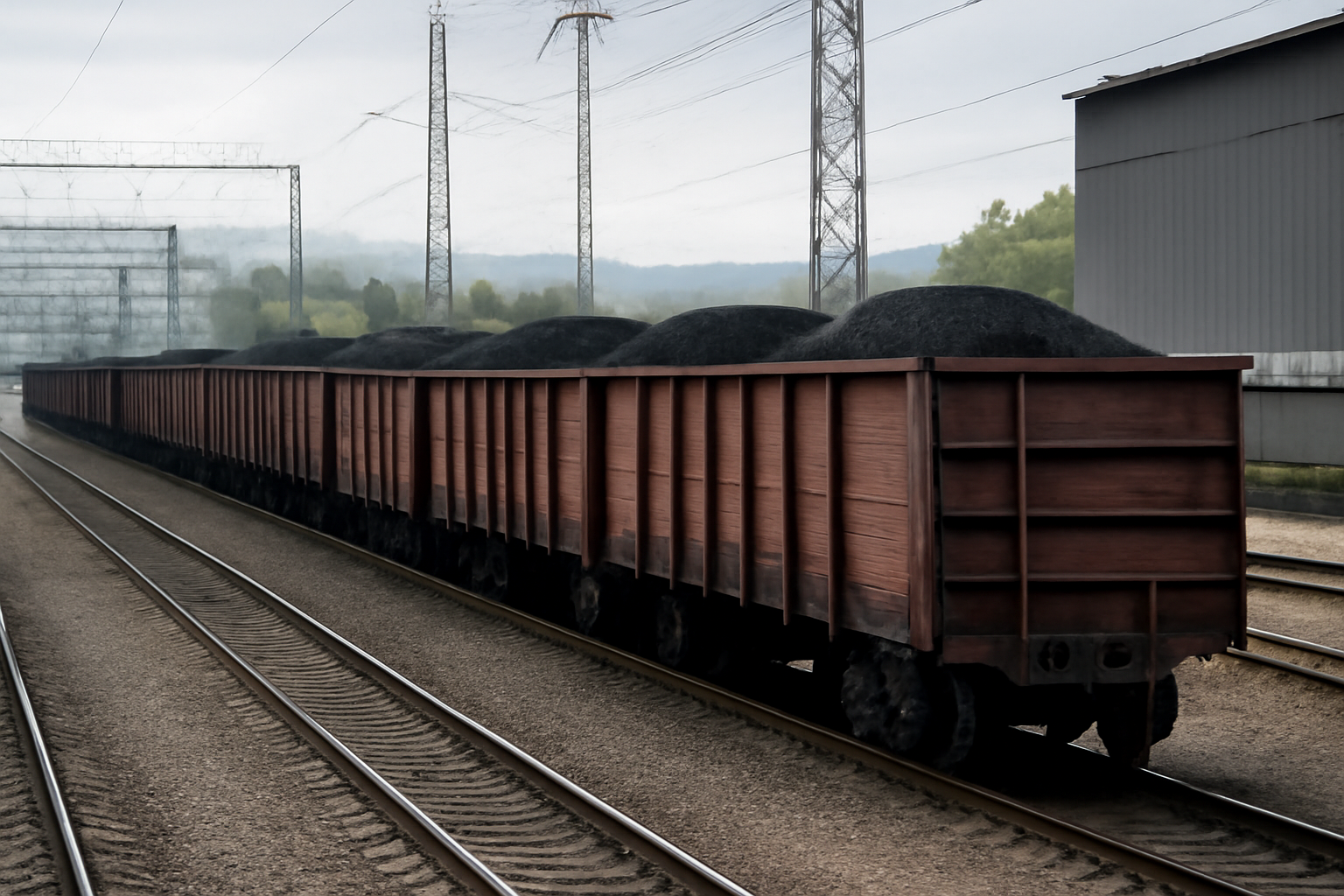
Kuzbass, Russia's largest coal-producing region, is losing ground on the Eastern Polygon rail network, and the pressure is coming from inside the country rather than from rivals for Asian buyers, the transport industry publication vgudok.com reports. Record volumes of coal are moving eastward, according to vgudok.com, yet the Kemerovo region's share of that traffic is being compressed by what the outlet calls commodity “battles” between domestic shippers over a fixed amount of rail capacity. The contest is over access rights, not over demand at the far end of the route.
At the centre of the dispute is the way eastbound freight is rationed. vgudok.com points to the K1 and K2 quotas as the instruments that decide which cargoes, and which shippers, obtain slots on the Baikal-Amur Mainline and the Trans-Siberian Railway — the two corridors that together form the Eastern Polygon and provide the only rail link from Siberian coal basins to Pacific ports. Once those categories are filled, remaining tonnage waits, regardless of the contracts a producer has already signed. The publication does not quantify how much volume has shifted away from Kuzbass shippers.
Why the eastern corridor is the binding constraint
Kuzbass sits deep inland, far from any seaport, which leaves rail as the only realistic way to move its coal to tidewater. Western and southern routes exist, but the Pacific direction is where export economics have been concentrated, and its throughput is finite. That turns quota allocation into a commercial variable as decisive as mining cost or coal quality. Access to the corridor effectively determines:
- which producers can serve seaborne contracts at all;
- how much tonnage has to be cleared through domestic or western channels instead;
- how quickly stockpiles accumulate at mines when slots are unavailable;
- which competing cargoes displace coal in the queue.
What the squeeze means for Kuzbass producers
For a low-margin bulk commodity, rail access is close to the whole business case. Coal that cannot reach a port does not simply wait at a stable cost: it ties up working capital, occupies storage, and forces producers to keep running mines at output levels their logistics cannot absorb. When eastbound slots are allocated to other cargo categories, the immediate effect for Kuzbass companies is not a lower export price but no export shipment at all, which is a harder constraint to hedge than market volatility.
The pattern described by vgudok.com also separates two things that are often read together. Record eastbound volumes indicate that the corridor is working at full stretch and that Asian demand is being served. They do not indicate that every basin is being served proportionally. A region can lose share on a growing route if the growth is allocated elsewhere, and that is the distinction the report draws between competition abroad and competition at home.
Open questions
The report leaves several points unresolved for market participants: how the K1 and K2 categories are being applied over time, which commodity groups are gaining the capacity Kuzbass loses, and whether the region's shippers have recourse beyond negotiating for guaranteed volumes. For importers and traders on the Pacific rim, the practical question is narrower — whether tonnage sourced from Kuzbass remains as reliable as the aggregate eastbound figures suggest, or whether counterparty risk now sits in the rail queue rather than at the mine.