Quality losses may tighten Poland’s marketable potato supply despite larger harvest
Poland may harvest 6–7 million tonnes of potatoes this season, but weather damage could leave the marketable yield about 30% below the total crop. Limited saleable supply and lower acreage in Western Europe may support Polish prices in autumn and winter.
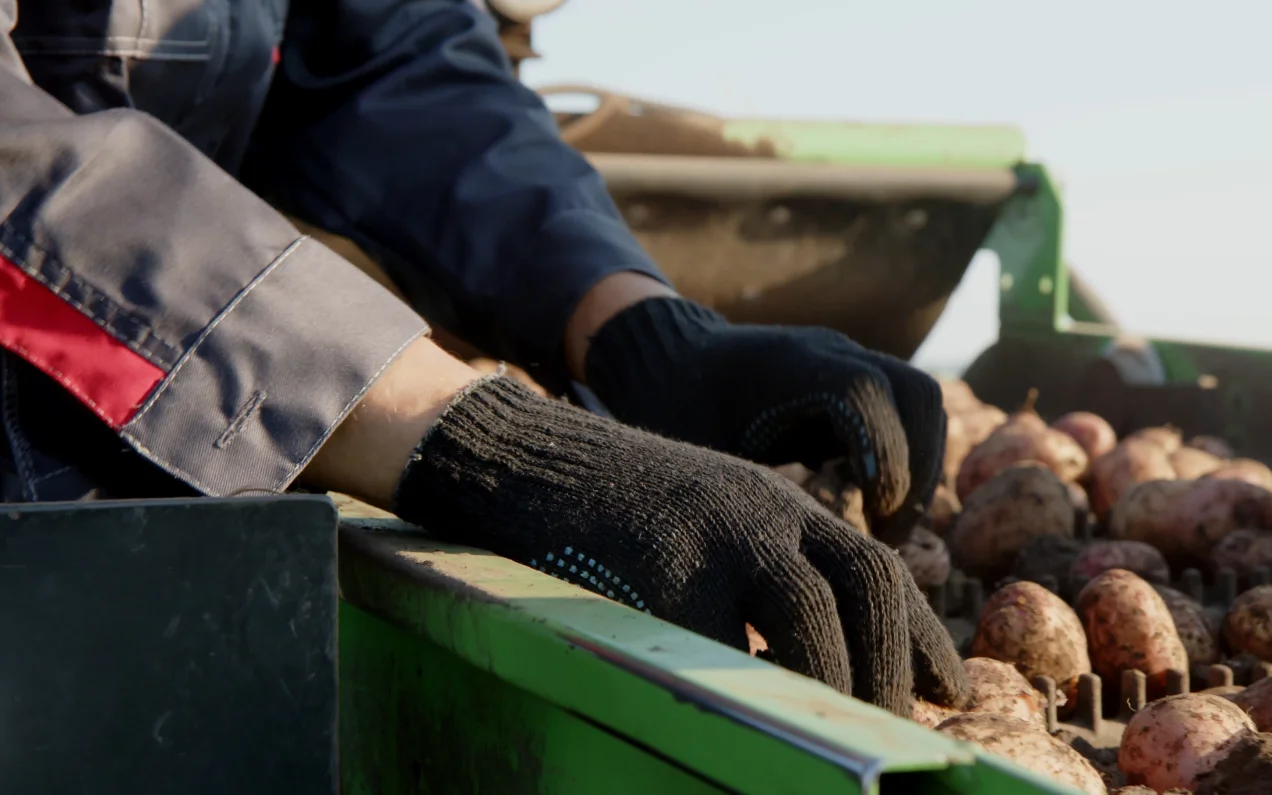
National yield may reach 330 quintals per hectare
Poland’s potato harvest could be larger than last year, although drought, heat and sudden heavy rainfall have raised doubts about how much of the crop will meet commercial standards. Dr Wojciech Nowacki of the Polish Potato Association told Wiesci Rolnicze that the national average yield should exceed 300 quintals per hectare and may reach about 330 quintals per hectare. The Central Statistical Office recorded 326 quintals per hectare in the previous year.
The planted area is provisionally estimated at around 200,000 hectares, compared with a final estimate of 214,000 hectares last year. Total Polish production is expected at 6–7 million tonnes. Nowacki described this as a relatively modest contraction in area, particularly compared with the larger year-on-year declines reported in France, the Netherlands and Germany.
Weather has widened regional and quality differences
Conditions vary sharply across Poland. Water availability was strongest in the north, where producers may achieve yields of 350 quintals per hectare or more. Rainfall in the central belt was highly localised, producing substantial differences even between neighbouring farms. The most difficult conditions occurred in the south and in drought-affected areas including Mazovia, southern Łódź province, parts of Greater Poland, Lubusz, Lower Silesia, Opole and Lublin.
Two periods of extreme heat interrupted plant assimilation and stopped tuber growth, according to Nowacki. Rain that followed then triggered rapid growth, increasing the incidence of misshapen and cracked potatoes. Such defects reduce the volume accepted by retailers and processors: Nowacki estimates that the average marketable yield will be about 30% below the total field yield. The headline harvest figure may therefore overstate the amount available for higher-value fresh-market channels.
Storage could determine producers’ returns
Potato prices typically weaken in July and August as early-crop growers clear fields for subsequent vegetable planting. Analysts cited by Wiesci Rolnicze expect prices to recover during autumn and winter. Nowacki said growers with suitable storage should not rush to sell, although the eventual price level may still fall short of producers’ full expectations. Higher prices than last year could nevertheless offset part of the heavy expenditure on fertiliser, crop protection and energy.
The distribution of value remains contentious. Farmers currently report farmgate prices of 0.30–0.80 zloty per kilogram, while supermarket prices reach 2, 3 or even 4 zlotys per kilogram. Meanwhile, production is moving away from small mixed farms toward specialised growers capable of supplying the large, uniform varietal lots required by retailers and wholesalers. The sector is also facing lower certified seed-potato production after weak demand during last season’s low-price market. Use of certified planting material in Poland remains three times below estimated agronomic needs, potentially adding another constraint on quality and productivity.