Qemetica to spend over 2 billion zloty on decarbonising its plants over four years
Poland's only soda ash producer will invest more than 2 billion zloty over four years to replace coal with biomass and municipal waste at its plants, strategy director Piotr Szlagowski-Budacz told PAP. A 300 million zloty boiler conversion contract is already signed, with start-up due in the second half of 2028 and a thermal waste treatment unit by 2030. Energy accounts for about half the costs of the company's soda business.
Steam, not power, is the bottleneck
Qemetica, the only producer of soda ash in Poland and the second largest in the European Union, will spend more than 2 billion zloty over the next four years to reduce carbon dioxide emissions at its plants. The figure was given by the company's strategy director, Piotr Szlagowski-Budacz, to the Polish Press Agency (PAP), in an account published by the industry portal wnp.pl.
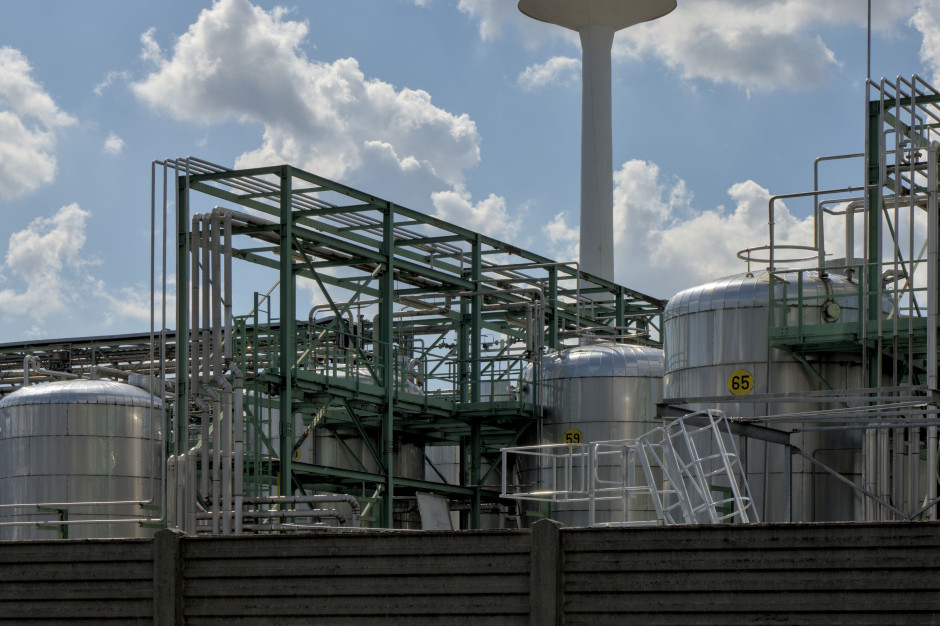
According to wnp.pl, the group faces a substantial challenge in meeting decarbonisation targets tied to European Union climate policy. Direct electrification is not an available solution for Qemetica for technological reasons: soda ash production requires large volumes of process steam, which today is generated mainly from coal. The solution for the company is the use of biomass and municipal waste, and more than 2 billion zloty will be allocated to the related investments in the coming years, Szlagowski-Budacz said.
A 300 million zloty boiler conversion, waste unit by 2030
The first hardware commitment is already in place. In August the company signed a contract for the conversion of a coal-fired boiler into a biomass-fired unit. The contractors are Mostostal Zabrze Realizacje Przemyslowe and Sumitomo SHI FW, and the contract is worth 300 million zloty. The boiler is scheduled to be started up in the second half of 2028. A thermal waste treatment installation is to be built by 2030.
The economics behind the programme are straightforward. Energy costs account for around half the costs of Qemetica's soda business, wnp.pl reported. That share explains why the company treats fuel switching, rather than incremental efficiency work, as the core of its emissions strategy, and why the cost of European carbon allowances feeds almost directly into its cost base.
ETS reform judged insufficient
For that reason, Szlagowski-Budacz said, regulation of the European Union Emissions Trading System (EU ETS) is of key importance. The reform proposal presented by the European Commission in July contains several favourable adjustments, but it does not change the fundamental direction of the system and, in the assessment of the chemical industry, remains insufficient.
Qemetica's management set out a series of specific demands:
- the pace at which the pool of free emission allowances is reduced should be eased as early as 2027;
- reform of the Market Stability Reserve should genuinely limit upward pressure on allowance prices;
- a larger share of allowance revenues, and of the funds of the Industrial Decarbonisation Bank, should be directed to industrial transformation, provided that technological neutrality is preserved, meaning that companies are not told how to cut their emissions;
- waste incineration plants should not be brought into the ETS.
Financing should not be limited mainly to electrification or to selected technologies, because in some industries, soda ash production among them, such solutions are not technically sufficient, the strategy director argued. On waste, he added that if incineration installations are included in the system, landfills should be covered by analogous carbon dioxide and methane costs, so that landfilling does not become more attractive at the expense of energy recovery.
The company
Qemetica operated under the name Ciech until June 2024. Alongside soda ash it produces evaporated salt, crop protection products, polyurethane foams, silicates and glass packaging. The company is part of a group controlled by Kulczyk Investments.