Qassim Ranks Third in Saudi Date Factories as Capacity Exceeds 390,000 Tonnes
Qassim has about 25 date factories with annual capacity exceeding 390,000 tonnes, placing it third among Saudi regions by factory count. The region produced 584,127.8 tonnes of dates and had 10.87 million palms, giving processors a large and diverse raw-material base.
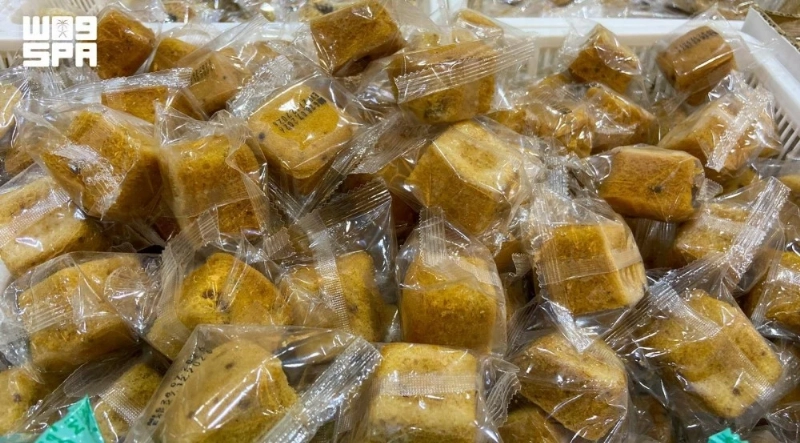
A large crop supports an expanding industrial base
Saudi Arabia’s Qassim region has become the country’s third-largest base for date factories by number of plants, supported by extensive cultivation and a broad range of varieties. Makkah newspaper, citing statistics from the regional branch of the Ministry of Environment, Water and Agriculture, reported that Qassim has about 25 date factories. Some are engaged in further processing, and their combined annual capacity exceeds 390,000 tonnes.
The region’s agricultural base is larger still. Data published in 2026 by the National Center for Palms and Dates put Qassim’s date production at approximately 584,127.8 tonnes, the highest volume among Saudi regions. The same data counted about 10.87 million palm trees across 13,403 agricultural holdings. The scale gives local processors access to a substantial raw-material pool while spreading production among thousands of farms.
Factory capacity and agricultural output measure different parts of the market. The 390,000-tonne figure represents the potential intake of existing factories, not their actual annual throughput, and it does not mean that the entire regional crop is processed. Dates may also move through seasonal markets, domestic wholesale channels or direct sales. The gap between crop volume and installed capacity nevertheless points to room for additional processing, storage and marketing services.
Processing broadens the market beyond whole dates
Qassim’s factories and packing operations cover sorting, grading, washing, drying, treatment, sterilisation, pitting and packaging. Further-processing opportunities include date paste, syrup, juice, beverages, vinegar, date powder, extracted sugar, bakery ingredients, confectionery, filled dates and chocolate-coated products. These categories can use fruit with different commercial grades and reduce reliance on selling the harvest solely as an unprocessed seasonal product.
Date paste is particularly relevant to bakeries, biscuits, cakes, breakfast products, confectionery and food fillings. Lower-value fruit can also be directed into vinegar and other derivatives, creating an outlet for dates that may be less suitable for premium retail packs. Seeds and fruit unsuitable for conventional marketing offer another potential input for animal feed, seed powder, extracted oil, biofuel and other industrial applications.
Makkah reported that investments or financing connected with the region’s date factories are estimated at about 313 million Saudi riyals. The industrial network is complemented by sorting and packing centres, seasonal markets, transport, warehousing and logistics providers. This concentration allows growers, processors and traders to handle several stages of the value chain within or close to the producing region.
Varietal diversity supports domestic and foreign sales
Earlier ministry data cited by Makkah in 2025 said Qassim produced more than 50 date varieties and that factories in the region supplied customers in more than 47 countries. The varieties include fruit intended for fresh consumption, standard retail packs and processed products, allowing suppliers to address different price points and technical requirements. However, maintaining quality during transport and storage remains a challenge, especially for dates requiring tighter preservation conditions and longer shelf life.
Qassim’s third-place ranking by factory count therefore understates its importance as a production centre. Its competitive position rests on crop volume, varietal breadth and the presence of processing and logistics infrastructure rather than plant numbers alone. For Saudi Arabia’s non-oil development objectives, the practical opportunity is to convert more of this agricultural base into consistent, higher-value products that can serve domestic buyers and international markets throughout the year.