Putin calls Russian fuel-market strain temporary as export bans hit diesel and gasoline
President Vladimir Putin said Russia's fuel-market difficulties are temporary as the government banned gasoline exports from 2 April and diesel from 8 July. The diesel embargo pushed world prices to multi-year highs, hitting importers such as Brazil and Turkey, while a proposed mini-refinery network could take three to five years to build.
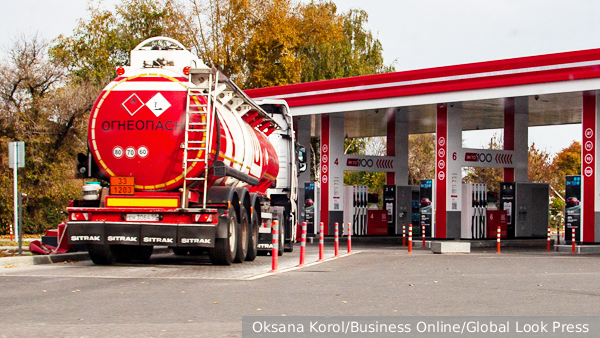
Kremlin frames fuel squeeze as temporary
Russia's current fuel-market difficulties are temporary, President Vladimir Putin said at a meeting with government members, according to vz.ru. He linked the strain in part to attempts to disrupt the Russian holiday season. Deputy Prime Minister Alexander Novak reported that the government has raised refinery utilization to maximum levels, released previously accumulated fuel stocks to the market, shortened ongoing refinery maintenance and postponed planned repairs. Authorities also imposed a full ban on exports of gasoline and jet fuel and drew on the capacity of medium and small refineries.
Export bans reshape trade flows
The government banned gasoline exports from 2 April and extended the ban to diesel from 8 July, vz.ru reported. Legislative changes were introduced to encourage oil companies to import fuel for domestic buyers without raising internal prices. For diesel, the export ban should be enough to normalize supply, said Sergei Kaufman, analyst at Finam, because Russia produces noticeably more diesel than it consumes; the ban runs only until the end of July, and the domestic market should be saturated within weeks.
The consequences fall on world markets. Russia ranked second in global diesel exports after the United States, accounting for about 11% of world supply, according to Vortexa data cited by vz.ru. The embargo pushed world diesel prices to multi-year highs. Russia normally exports around 800,000 barrels per day of diesel, though that figure has nearly halved recently on lower refining runs, Kaufman said. The importers most exposed are buyers of Russian diesel — Brazil, Turkey and a number of African countries.
Gasoline deficit and the import fix
Gasoline is the harder problem, which is why its export ban has been in place since April. Production has fallen by more than the volumes Russia previously exported, and excluding imports the deficit runs at 10,000-25,000 tonnes per day, Kaufman estimated. Current import sources are Belarus and India, with other former Soviet states and China possibly joining. The global gasoline market has not yet recovered from the effect of the Middle East conflict, complicating imports. To make imports viable, the state extended damper payments to imported gasoline, covering the gap between higher external prices and lower domestic prices from the budget, explained Igor Yushkov of the National Energy Security Fund.
Mini-refineries proposed
Zabaykalsky Krai governor Alexander Osipov proposed building a nationwide network of small refineries, arguing that large plants are vulnerable to repeated strikes while mini-plants are harder to hit. Putin suggested studying the idea and drawing small and medium businesses into refining. Analysts were sceptical on timing. Building even a mini-refinery takes at least 1.5 to 2 years, said Kaufman, while Russia needs gasoline now; the proposal makes sense only if refineries face threats over a two-year horizon or longer. Natalya Milchakova of Freedom Global put a single mini-refinery at a minimum of half a year with ready block-modular designs, or about a year without them, and a full national network at three to five years.
Financing is the main obstacle. A network of mini-refineries with capacity up to 1 million tonnes a year could cost at least 150-300 billion rubles, at 3-6 billion rubles per plant, Milchakova estimated; with the central bank's key rate still high and bank credit expensive, the state would likely have to provide the bulk of the funding, possibly through a special bond issue. She still backed the idea, citing developing G7 and G20 economies that rely on many small plants to supply specific regions, ease logistics such as the northern delivery, lower prices and demonopolize regional markets. Consumption is expected to fall for seasonal reasons from September, which could allow some measures, and even imports, to be wound down.