Puglia grape growers seek equal import rules as farmgate prices fall
Puglia accounts for more than 53% of Italy’s table-grape acreage and exported nearly €1 billion of grapes in 2025. Coldiretti Puglia is seeking equivalent standards for non-EU imports as farmgate prices fall to €0.30-€0.40 per kilogram.
Puglia’s export strength contrasts with domestic price pressure
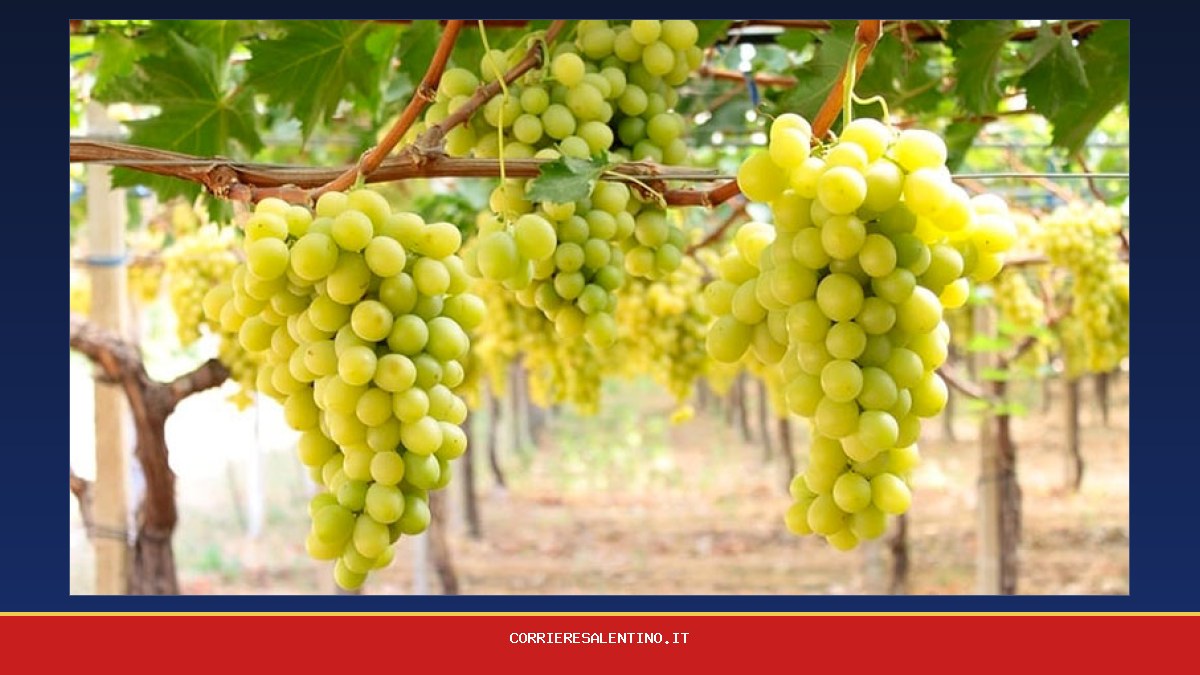
Puglia’s table-grape industry is calling for equivalent standards on imports from outside the European Union as low farmgate prices and retail promotions put pressure on growers’ margins. The region has about 25,000 hectares planted with table grapes out of approximately 47,000 hectares across Italy, giving it more than 53% of the national area, according to Coldiretti Puglia.
The growers’ organization raised the issue at a regional table-grape meeting convened by Puglia’s agriculture authorities. Its proposal is not to stop imports, but to require products entering the EU to meet conditions equivalent to those imposed on European producers in food safety, plant-protection products, labor, environmental practices and traceability. Corriere Salentino, Puglia Press and BariToday reported the organization’s position.
Nearly €1 billion in exports, but weak returns at the farm
Puglia remains Italy’s leading table-grape production center and has developed a specialized supply chain through investment in new vineyards, irrigation, quality and varietal renewal. Seedless grapes have become increasingly important, reflecting demand from consumers and international buyers. Coldiretti welcomed their inclusion in the production rules for the Uva di Puglia protected geographical indication, saying this should improve recognition of regional innovation and product identity.
The industry also has a strong international position. Puglia’s table-grape exports were worth close to €1 billion in 2025, according to figures cited by Coldiretti and reported by the three publications. A new logistics route is due to open on October 3, when the first cargo service from Grottaglie to Istanbul is scheduled to depart. The connection is intended to expand access to international markets.
Export performance has not prevented pressure on returns in the Italian market. Coldiretti said grapes can be valued at only €0.30-€0.40 per kilogram at origin, while supermarket promotions offer them at €0.99 per kilogram. At that retail price, a 2.5-kilogram box costs the consumer €2.475. Between the farm and the shelf, the product must absorb harvesting, packaging, cardboard, covering, labeling, transport, pallets, strapping, logistics, year-end charges and value-added tax.
Growers want price transparency and supply-chain contracts
Coldiretti argues that promotions should not be financed by pushing the cost onto growers, particularly when farms are already facing higher expenses for labor, energy, materials and logistics. It is seeking greater transparency in price formation, stronger enforcement against unfair trading practices and supply-chain contracts that offer more predictable commercial relationships and a fairer allocation of value.
The organization has also proposed a table-grape varietal register. The database would track planted area, varieties and production potential, giving growers and buyers a clearer basis for planning. Such information could become more important as producers replace traditional varieties with seedless grapes and adjust supply to changing domestic and export demand.
Reciprocity becomes the central policy demand
For Puglia’s producers, the dispute connects two different competitive pressures. They must meet EU requirements while competing with non-EU fruit in the domestic market, and they must also maintain quality and delivery performance abroad. Coldiretti’s demand for reciprocity therefore centers on comparable production standards rather than restrictions on trade. The outcome will matter for growers deciding whether continued investment in varieties, irrigation and logistics can generate adequate returns, as well as for retailers and importers balancing price, supply and compliance requirements.