Protein demand drives growth in India’s milk, meat and egg production
Greater awareness of protein consumption since the COVID-19 pandemic is supporting demand for milk, meat and eggs in India. Rising domestic consumption has strengthened India’s position among the world’s leading producers of milk, chicken, goat meat, sheep meat, buffalo meat and eggs.
Protein awareness changes food demand
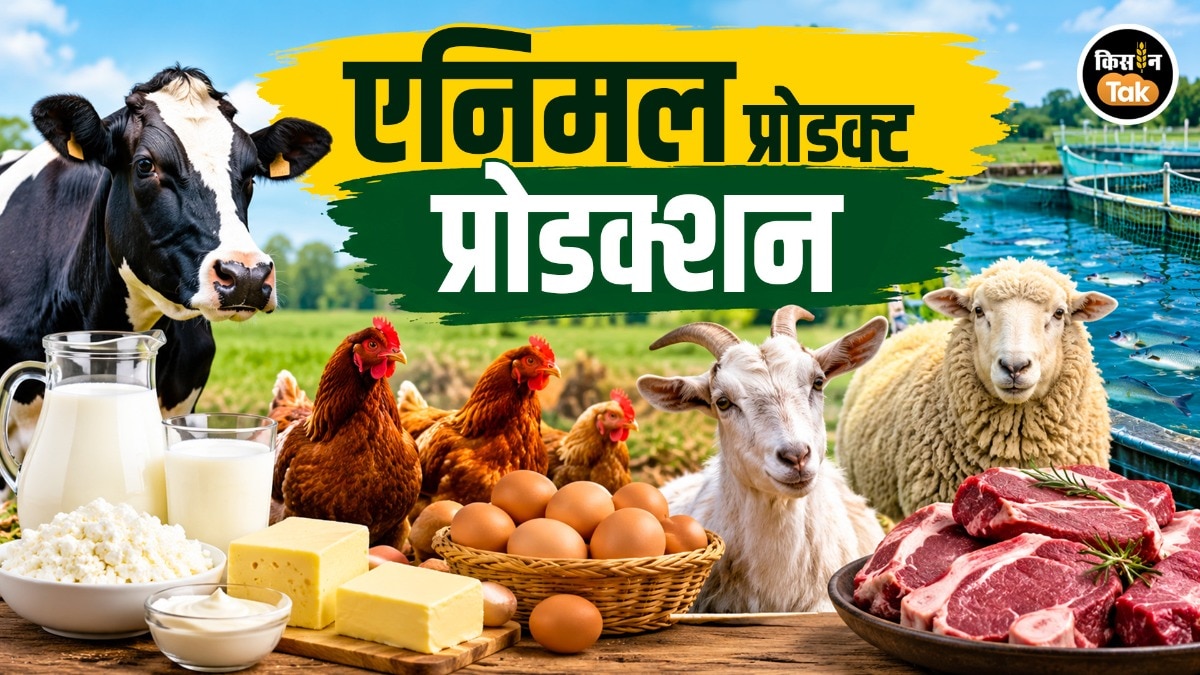
Growing awareness of dietary protein is supporting annual increases in India’s production of milk, meat and eggs, according to Kisan Tak. The publication reports that the shift became more pronounced after the COVID-19 pandemic and accelerated from 2021, as consumers paid greater attention to the protein content of their diets.
The trend affects both vegetarian and non-vegetarian markets. Consumers who eat meat are obtaining more protein from eggs and meat, while vegetarians are relying on milk and dairy products. Animal products also provide a comparatively affordable source of protein at a time when several alternative protein-rich foods remain expensive, Kisan Tak reported.
India ranks among leading global producers
India’s scale is most visible in milk. Data presented by Kisan Tak put Indian milk production at 24.78 crore tonnes, ahead of the United States at 10.24 crore tonnes, Pakistan at 6.66 crore tonnes, China at 4.59 crore tonnes and Brazil at 3.68 crore tonnes. The figures underline the size of India’s dairy market and the importance of demand from households, food processors and traditional dairy-product manufacturers.
India is also the world’s fifth-largest chicken producer in the dataset, with output of about 52 lakh tonnes. The United States leads with 2 crore tonnes, followed by China with 1.60 crore tonnes, Brazil with 1.37 crore tonnes and Russia with 54.57 lakh tonnes. Kisan Tak says Indian chicken exports remain limited, meaning that most of the approximately 52 lakh tonnes produced is consumed domestically.
Production rankings are similarly strong in other meat categories. Kisan Tak lists India second to China in goat meat, at 17.22 lakh tonnes compared with China’s 25.38 lakh tonnes. India also ranks second in sheep meat, producing 12.92 lakh tonnes against China’s 26.40 lakh tonnes. In buffalo meat, India leads the listed producers with 45.65 lakh tonnes, ahead of Pakistan at 12.69 lakh tonnes and China at 7.79 lakh tonnes.
Domestic consumption anchors poultry growth
Egg production has continued to rise alongside demand. About 14,000 crore eggs are consumed within India, according to Kisan Tak, while exports of both eggs and chicken remain relatively small. A separate production comparison published with the report places China first at 3.63 crore tonnes, followed by India at 81 lakh tonnes, Indonesia at 68.48 lakh tonnes, the United States at 64.69 lakh tonnes and Brazil at 37.34 lakh tonnes.
The dominance of domestic consumption means that India’s animal-protein expansion has direct consequences for feed grains, veterinary services, cold storage, slaughtering, dairy processing and food distribution. Poultry and egg producers depend primarily on Indian consumers rather than overseas buyers, while buffalo meat has a stronger export orientation. Goat meat exports are much smaller than buffalo meat shipments, and India also exports sheep meat.
Growth brings opportunities and constraints
For producers and processors, continued protein demand offers room to expand capacity and improve productivity. It also raises the need for reliable feed supplies and temperature-controlled logistics, particularly for milk, poultry and meat. The available figures show that India is already operating at global scale; further growth will therefore depend not only on additional animals and birds, but also on processing efficiency, product affordability and the ability of supply chains to serve a large domestic market without compromising quality.