Private investment targets an overhaul of Kenya’s potato value chain
A venture led by businessman Kimani Rugendo is investing millions in Kenya’s potato industry. The project spans farmer supplies, processing and marketing, with the broader aim of strengthening domestic production and reducing reliance on imported potato products.
From juice cartons to potatoes
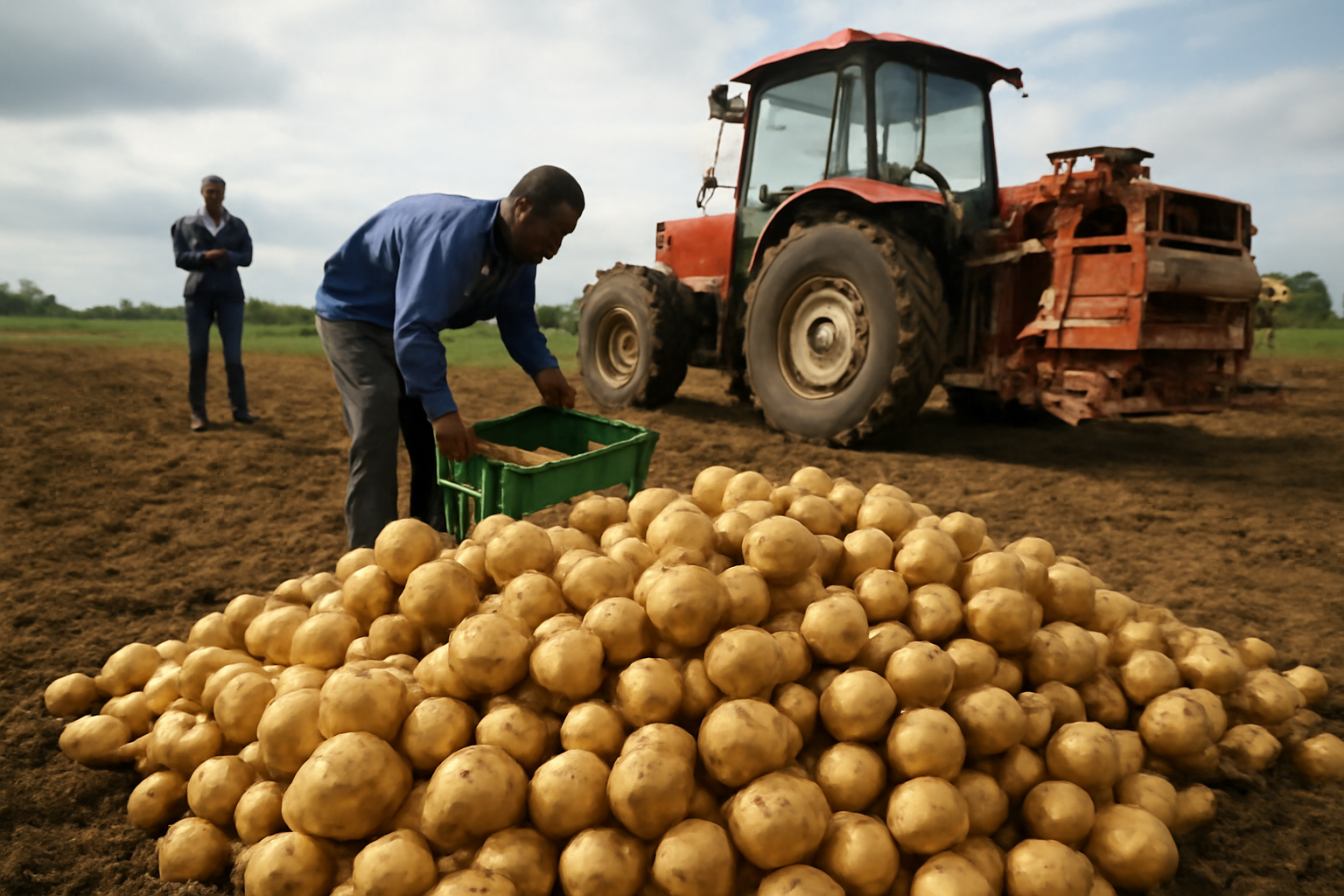
Kenyan businessman Kimani Rugendo is directing a multimillion investment toward the country’s potato industry, extending his company’s activities beyond the juice-carton business on which it built its name. The venture is designed around the commercial system behind the crop rather than potato production alone, bringing farmer supplies, processing and marketing into a broader value-chain strategy.
The approach reflects a central challenge for agricultural investors: expanding output does not by itself create a reliable market. Farmers also need access to suitable inputs and dependable buyers, while processors require consistent volumes and quality. By addressing several stages together, Rugendo’s venture is seeking to connect production decisions on farms with demand further along the chain.
An integrated investment model
The available information does not specify the exact investment amount, production targets or processing capacity. It describes the commitment as running into millions and identifies farmer supply, processing and marketing as its principal components. Those areas will determine whether the venture can secure enough potatoes for commercial processing and build stable sales channels for the finished products.
Input support can influence the quantity and consistency of potatoes reaching processors. Processing creates an outlet beyond the fresh market, while organized marketing can help match production with buyers. For growers, the practical value of such a system depends on purchasing terms, quality requirements and the reliability of demand. For the investor, the principal task is coordinating those parts without allowing shortages or uneven specifications to constrain plant operations.
Rugendo’s background in juice cartons also places the move within a wider food-industry context. Although packaging and potato processing are different businesses, both depend on links between agricultural raw materials, industrial production and consumer markets. The investment therefore represents diversification into another segment of Kenya’s food economy rather than a stand-alone bet on farm output.
Potential implications for imports
A stronger domestic processing base could reduce Kenya’s dependence on imported potato products if local facilities can offer the volumes, specifications and reliability required by buyers. The source material does not provide current import volumes, origin countries or a timetable for import substitution, so the scale of that potential cannot yet be quantified.
The immediate significance lies in the breadth of the plan. Rather than concentrating only on a factory or only on farm production, the venture targets the connections among growers, processors and markets. That raises execution demands but also addresses the coordination gaps that often limit agricultural processing projects.
For producers, processors and food-sector investors, the next indicators will be concrete: the number of participating farmers, contracted acreage, processing capacity, procurement terms and confirmed sales channels. Until those details are disclosed, the investment signals substantial private-sector interest in Kenya’s potato chain, but its effect on domestic supply and imports remains to be demonstrated through operating results.