Premium demand lifts Romania’s €800 million chocolate market
Romania’s chocolate market is worth €800 million, with sales of 45,000 tonnes and value growth of 5% despite a 1.3% decline in volume. A consumer study indicates strong interest in artisanal products, although the segment still represents only 1% of the market.
Value rises while consumption falls
Romania’s chocolate market has reached €800 million, supported by higher spending even as consumers buy less by volume. Revista Biz reports that market value increased by 5%, while sales volume declined by 1.3% under pressure from the high cost of living. Around 45,000 tonnes of chocolate were sold in the country this year.
Large industrial manufacturers continue to dominate the market. Artisanal chocolate accounts for only 1% of total sales and did not grow by volume over the past year, according to the data cited by Bursa and Revista Biz. However, a study conducted by Be Igloo PR for Chocolate Saga points to expanding consumer interest in premium products and locally made chocolate.
The research found that 90.5% of respondents were prepared to pay 20–30% more for premium or artisanal chocolate. Of these consumers, 40.5% regularly accept the premium and 50% do so on special occasions. Personal indulgence was the main reason for paying more, cited by 61.9%, compared with 31% who primarily bought the product as a gift.
Quality and lower sugar shape purchases
Quality was the leading purchase criterion for 66.7% of respondents, followed by reduced sugar content at 52.4%. A short, clean ingredient list and price were each cited by 40.5%. In addition, 42.9% said the first change they would make to their preferred chocolate would be to reduce or remove sugar.
The preference is particularly pronounced among consumers of dark chocolate containing more than 70% cocoa. Within this group, 76.5% pay close attention to low sugar content, more than twice the 36% recorded among consumers who prefer milk or white chocolate.
Higher-spending buyers also attach greater importance to product composition and sourcing. Among respondents prepared to spend 35–50 lei on a bar, 75% look for ingredients without additives and 50% seek sustainability and Fairtrade certification. These requirements create opportunities for artisanal producers that can document ingredient quality and sourcing, but they also raise the standard that premium products must meet.
Local artisans gain preference but trust remains a barrier
Taste and quality matter more than brand origin for 53.8% of respondents. Where buyers expressed a geographic preference, 35.9% chose a Romanian artisan, compared with 10.3% who preferred an established international brand. Among consumers already familiar with artisanal chocolate, support for local producers rose to 52.4%.
That preference does not automatically translate into purchases from unfamiliar producers. The study found that 74.4% of consumers need to taste a product before buying from an unknown artisan. Brand story and ingredient quality can persuade 56.4%, while 83.3% would not recommend chocolate solely because of visually attractive packaging. Social media also has limited influence: 59.5% said platforms and influencers affect their choice little or not at all.
Events provide a route to premium pricing
Specialist fairs give producers direct access to consumers and allow them to demonstrate quality. At gastronomic events, 51.3% of respondents considered 20–25 lei acceptable for an artisanal bar weighing 80–100 grams. Another 30.8% were willing to spend 35–50 lei, rising to 40% among adults aged 24–40.
Free tastings were the strongest event attraction, cited by 71.8% of respondents. Live chocolatier demonstrations appealed to 48.7%, while 43.6% were interested in pairings with wine, coffee or tea. These findings suggest that physical sampling and product experience are more effective sales tools for emerging artisans than online promotion.
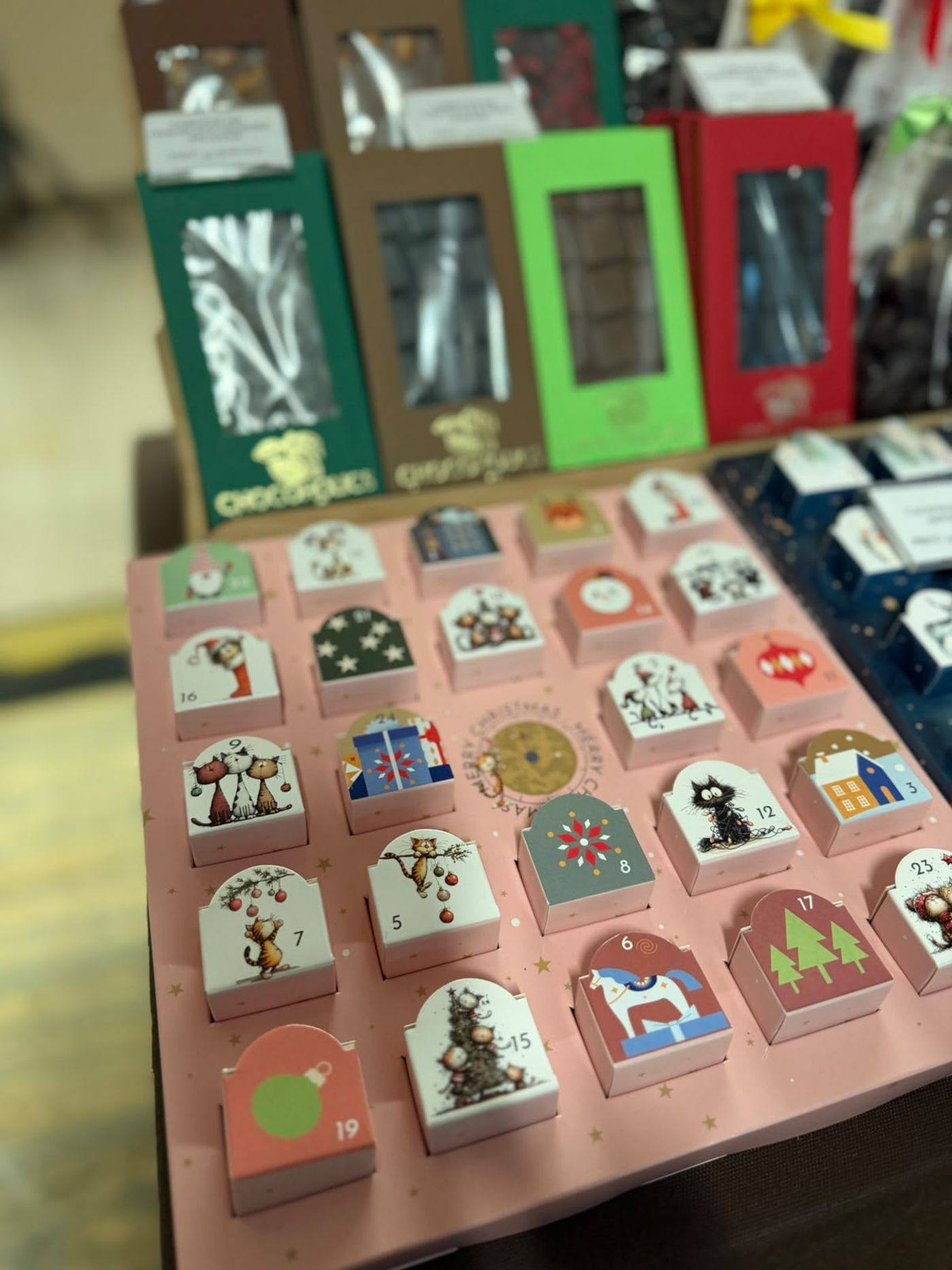
Praline boxes remain the most sought-after artisanal format, with demand peaking around Christmas and Easter. Although gifting remains important, the stronger motivation of personal consumption broadens the potential market beyond seasonal occasions. For producers, the commercial opportunity lies in converting stated willingness to pay into repeat purchases while competing with industrial brands in a market where overall volumes are contracting.