Post-harvest losses of up to 17.9% erode Vietnam’s rice value
A Mekong Delta survey recorded rice-chain losses of up to 17.9%, with harvesting the largest source of damage. Trials show that better machinery, faster drying and improved storage can protect output, quality and farm income.
Losses remain high in Vietnam’s main rice region
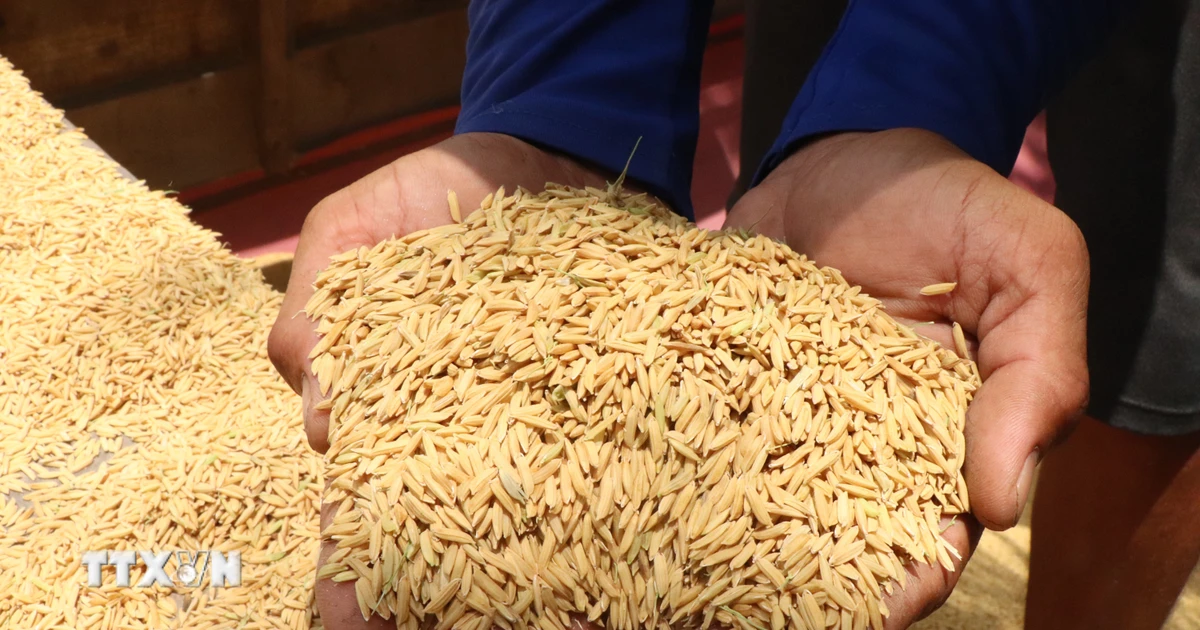
Post-harvest losses are reducing the value of Vietnam’s rice production despite continued gains in yields and output. A 2023-2024 survey by the Institute of Strategy and Policy on Agriculture and Environment, or ISPAE, across three Mekong Delta provinces found that average losses along the entire chain peaked at 17.9% during the Summer-Autumn crop.
VietnamPlus reported that losses specifically during post-harvest operations in the Mekong Delta were estimated at 13-15%, equivalent to about 6.4 million tonnes of rice annually. Across Vietnam’s broader rice chain, food loss and waste account for about 24%, mostly before retail. Total food loss and waste cost the country approximately $8.9 billion each year, according to ISPAE representative Trần Thị Thanh Nhàn.
Harvesting, drying and storage create pressure
Harvesting was the largest source of loss in the provincial survey. Unsuitable machinery caused grain to spill, while late harvesting exposed crops to flooding and germination in the field. ISPAE linked the problem to poorly integrated equipment, uneven machinery quality and limited operator skills.
The scale matters because the Mekong Delta supplies as much as 90% of Vietnam’s rice exports. In 2025, the region represented 55.7% of national rice area and 57.9% of output, while its yield was 4.1% above the national average. Vietnam exported about 9 million tonnes in 2024, supported by high rice prices and imports of more than 1 million tonnes of paddy from Cambodia.
Drying technology is another constraint. A survey by the Sub-Institute of Agricultural Engineering and Post-Harvest Technology, or SIAEP, at 12 facilities and cooperatives found that common flatbed dryers handled 20-50 tonnes per batch. Drying took 18-22 hours, post-drying moisture varied by 3-5%, and fixed-speed fans consumed unnecessary electricity and fuel.
Trials demonstrate measurable returns
Intervention models introduced in Đồng Tháp, An Giang and Vĩnh Long in 2025 produced quantifiable benefits. Laser land levelling generated the highest additional value for farms, at about 4.4 million dong per hectare per crop. Timely mechanized harvesting reduced the risk of volume losses by 2.5-5% compared with harvesting delayed by one or two days.
Moving paddy quickly and completing drying within 24 hours cut losses by as much as 2.6%. An integrated value-chain package preserved 1.96-2.67 million dong per hectare. Tests of an upgraded flatbed dryer at Tấn Đạt Cooperative reduced average drying time by 15.4%, or two to four hours per batch, while cutting electricity use by 10-14% and drying fuel by 13-17%. Whole-rice recovery increased by 1-3%.
Storage improvements could extend those gains. After nine months, rice kept in modified-atmosphere, EVOH, vacuum or oxygen-absorbing packaging retained better colour, aroma and eating quality, while rice in conventional woven polypropylene bags showed weevil infestation from the second month. Improved packaging extended storage at ambient temperature to 15-18 months and reduced weight loss from 1.5% to 0.01%. Combined with cool storage at 25-27°C, it slowed colour change by 1.4 times and reduced overall losses by 4.5 times. Meeting the national target of cutting post-harvest losses below 8% will therefore require coordinated spending on machinery, drying, storage and operator training.