Port of Split invests €8 million in Croatia’s first bitumen storage terminal
The Port of Split will invest €8 million in Croatia’s first modern onshore bitumen storage facility. The two-year project will replace temporary barge storage with a closed system serving road construction supply chains across Dalmatia.
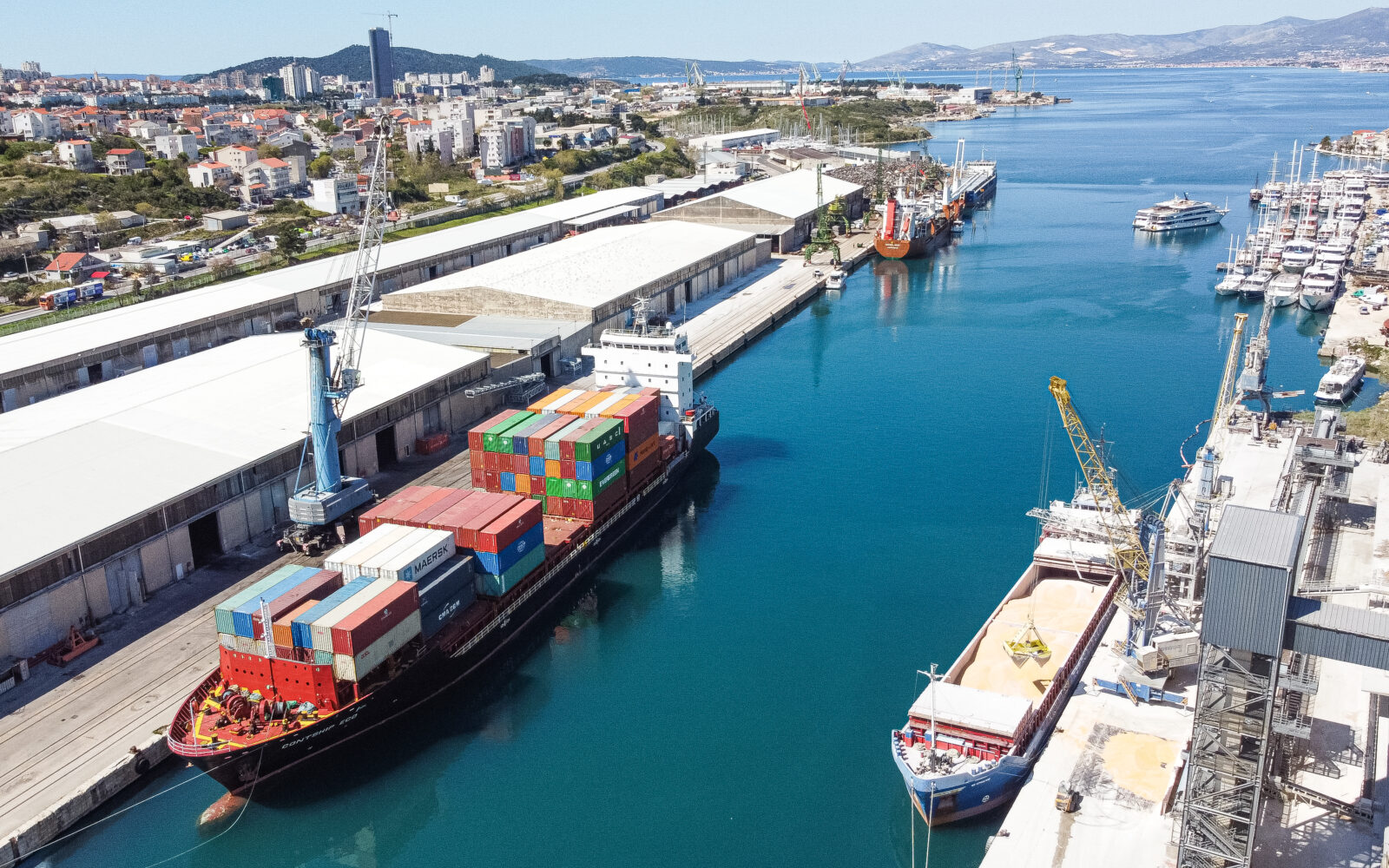
Onshore storage to replace barges
The Port of Split is launching an €8 million investment to build Croatia’s first modern onshore storage tanks dedicated to bitumen, according to Poslovni.hr and Tportal.hr. The project covers design work and full construction over the next two years. It will replace the port’s existing model of temporary storage on barges with a closed land-based system.
Under the planned arrangement, bitumen will move directly from arriving vessels into the new tanks after unloading. The port expects this to reduce the long-term need for storage barges in its waters, limit cargo handling in the maritime area and improve control over the logistics process. It also expects shorter vessel stays at berth, an operational change that could increase the reliability of deliveries and release capacity for other port activity.
A critical entry point for Dalmatia
Bitumen is a key input for building and maintaining roads, and the Port of Split is the only entry point supplying the product to Dalmatia. The investment therefore addresses a concentrated regional supply chain: seaborne deliveries arrive at one gateway before the material moves onward to road construction and maintenance projects.
The project does not add a second import route, but it changes how cargo is handled after arrival. Enclosed storage should reduce intermediate movements and minimize dependence on barges, while giving operators more control between vessel discharge and inland distribution. For importers and construction-material buyers, the main potential benefit is a more predictable interface between maritime shipments and the regional market. No storage capacity or expected annual throughput has been disclosed.
Current bitumen transshipment already operates under applicable safety rules and continuous professional supervision, the port said. The new infrastructure is intended to raise safety and environmental protection further by reducing handling over water. The Port of Split also conducts air and seawater monitoring, while the Public Health Institute of Split-Dalmatia County monitors air quality in the wider port area using accredited methods. Poslovni.hr reported that all results to date have remained within prescribed limits.
Part of a wider Croatian port investment cycle
The storage tanks are being developed with the Split Port Authority and the relevant institutions. The project follows approximately €600 million of investment in Croatia’s port system over the past seven years. Split’s inclusion in the European Baltic–Adriatic transport corridor has also strengthened its strategic role in connections between maritime, road and rail freight networks.
The Port of Split is the only cargo port in Split-Dalmatia County and has linked sea, road and rail transport for more than 80 years. It handles five principal traffic categories: bulk, general cargo, liquid bulk, containers and Ro-Ro. Port director Filip Rogošić said the bitumen project would improve operational efficiency while creating the conditions to reduce barge storage to a minimum over the long term. For Croatia’s road-material supply chain, the investment is primarily a resilience and handling upgrade at an established import gateway rather than an expansion supported by announced volume targets.