Pony.ai and FutureLink Plan 200 Level 4 Robotaxis for South Korea
Pony.ai and FutureLink plan to deploy 200 seventh-generation Level 4 robotaxis in South Korea. The partners will begin certification with 10 vehicles and aim to add 190 within one year after approval, before launching commercial service in Seoul.
Certification to begin with 10 vehicles
Chinese autonomous-driving company Pony.ai and South Korea’s FutureLink plan to introduce 200 seventh-generation Level 4 robotaxis into the South Korean market, ZDNet Korea reported. The companies will initially import 10 vehicles for self-certification under South Korea’s Motor Vehicle Management Act. If certification is completed, they intend to bring in another 190 vehicles within one year and establish a 200-unit fleet.
The partners signed a strategic cooperation agreement on August 28 at the Conrad Seoul hotel in Yeouido. The project is designed to move their work in Seoul’s Gangnam autonomous-driving pilot zone from technology validation toward commercial operations. FutureLink will oversee domestic certification, market entry, fleet and service operations, data management and localization. Pony.ai will supply the vehicles and autonomous-driving technology.
Seoul service planned, but timing remains open
The companies plan to launch service in a Seoul pilot zone and subsequently expand operating areas and hours across the capital, the wider metropolitan region and other major cities. Pony.ai CEO and co-founder James Peng said the initial 200 vehicles represent only the first stage and that fully driverless robotaxis would be deployed on Korean roads after certification.
Neither the completion date for certification nor the start of commercial service has been fixed. The partners are also considering a joint venture, but have not determined its ownership structure, investment size or capital contributions. Those decisions will depend on the progress of the initial project and plans for expansion beyond 200 vehicles.
Lower vehicle costs and local data controls
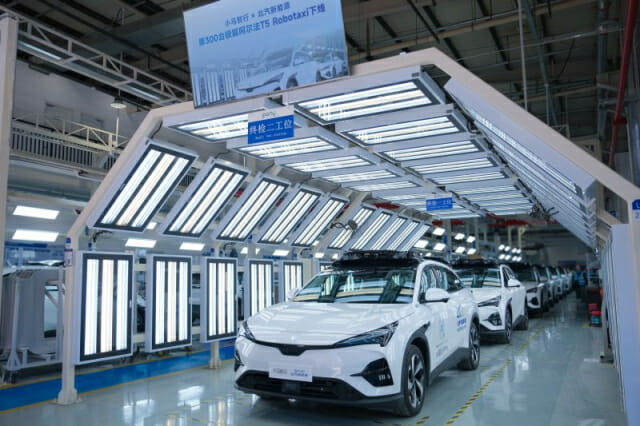
The vehicles planned for South Korea are based on a model from the BAIC group. Unlike systems retrofitted onto completed vehicles, Pony.ai’s seventh-generation robotaxis have autonomous-driving equipment installed on the production line. Braking, steering and power systems are redundant, while the autonomous-driving kit uses automotive-grade components. According to ZDNet Korea, the component cost of the seventh-generation kit is 70% below that of the previous generation. Pony.ai aims to reduce 2026 production costs by another 20% from the previous year and bring the combined cost of the vehicle and kit in China below 230,000 yuan by mid-2027.
Pony.ai currently operates Level 4 robotaxis in Beijing, Shanghai, Guangzhou and Shenzhen. Peng said vehicles in Shenzhen and Guangzhou complete more than 25 trips per vehicle per day on average. The 200 South Korean vehicles are additional to 4,000 robotaxis that Pony.ai has agreed to deploy in Europe, the Middle East and other markets.
FutureLink, wholly owned by Kosdaq-listed PonyLink, has tested Kona Electric-based vehicles equipped with Pony.ai development kits in Gangnam. The vehicles accumulated about 80,000 kilometres of accident-free daytime and nighttime driving. FutureLink says data collected in South Korea will remain in the country, with local analysis and validation of unusual road cases. The partners are also considering roles for existing taxi drivers as safety drivers during the initial phase and for taxi companies in fleet management, potentially placing robotaxis in areas where conventional taxi supply is insufficient.