Polish wood-pellet prices reach 2,600 zloty as sawdust supply tightens
Polish A1 wood-pellet prices have risen as high as 2,600 zloty per tonne, while average prices stood near 2,334 zloty at the end of September. Weak wood-processing activity, higher sawdust costs and demand exceeding domestic output are keeping the market tight.
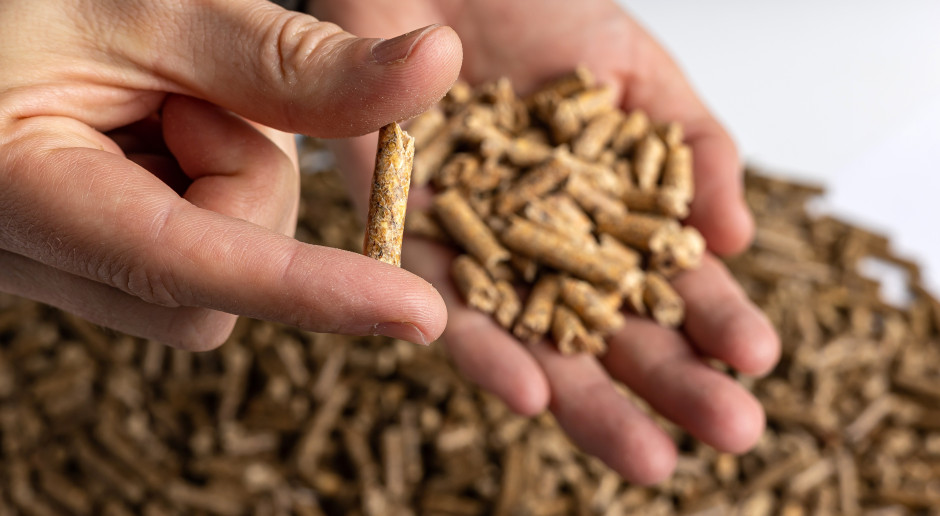
Retail prices approach 2,600 zloty per tonne
Poland’s wood-pellet market remained under pressure at the beginning of October. Farmer.pl, citing market monitoring data, reported that the average price of A1 pellets was about 2,334 zloty per tonne at the end of September, while the cheapest offers started near 2,050 zloty. The median price tracked by PelletAlert was 2,435 zloty per tonne on September 20, almost unchanged from the previous week.
Prices in home-improvement stores were often higher. A 15-kilogram bag generally cost 32–40 zloty in September, equivalent to roughly 2,150–2,670 zloty per tonne. Full pallets bought from producers or distributors were available at approximately 2,000–2,400 zloty per tonne. The wide range reflects differences in packaging, distribution and purchase volume, but even the lower end represents a substantial heating expense for households.
The increase cannot be explained solely by logging volumes in state forests. Under a May 2025 regulation issued by Poland’s Ministry of Climate and Environment, A1 pellets—the only class legally permitted in household boilers—must be made from clean sawdust, shavings or bark-free waste wood. Forest branches, logging residues, glued or painted wood and waste from furniture boards cannot be used.
Wood-processing slowdown cuts residue supply
Pellet production depends on residues generated by sawmills, furniture factories and joinery plants. The RED III directive also applies the cascading-use principle to biomass, directing roundwood first toward sawmills and processors that create greater value in the local supply chain. As Piotr Poziomski of the Polish Economic Chamber of the Wood Industry told Farmer.pl, pellets are a by-product of wood processing; without feedstock, heating-fuel output also falls.
State Forests sold an average of 40.9 million cubic metres of wood annually between 2018 and 2024, including a record 41.7 million cubic metres in 2022. Nevertheless, Poland’s furniture and wood-processing industries have entered a deep downturn. Lower production means fewer sawdust and shavings are generated, so increasing roundwood availability alone would not immediately expand pellet supply if processors continue to curb operations.
The price of sawdust has consequently risen by as much as 100% in one year, from 60–70 zloty to 120 zloty per loose cubic metre, according to Farmer.pl. Pellet manufacturers also compete for this material with wood-panel producers and industrial plants that burn sawdust for their own energy needs. These competing uses transmit the shortage directly into pellet production costs.
Domestic demand outpaces Polish output
Demand has risen as more Polish households install biomass boilers. In the middle of 2024, biomass boilers accounted for 53% of applications under the Clean Air subsidy program, compared with 25% for heat pumps. This expansion has created a larger recurring market for pellets and increased buyers’ exposure to seasonal supply disruptions.
Poland’s annual pellet requirement is now estimated at about 2.3 million tonnes, while domestic production is around 2 million tonnes. Statistics Poland data for CN 440131 show that the country moved from being a net exporter to a net importer of wood pellets around the turn of 2023 and 2024. Imports must therefore cover part of the roughly 300,000-tonne difference between stated demand and production.
The imbalance extends across Europe. Consumption reached approximately 32.7 million tonnes in 2024, compared with EU production of about 22.7 million tonnes. In Germany, the average pellet price exceeded €422 per tonne during the cold winter weather of February 2026. Frozen feedstock, machinery failures and reduced deliveries from Ukraine can add further winter pressure. For Polish buyers, this combination of constrained industrial residues, stronger heating demand and a wider European supply deficit limits the prospect of a rapid price decline.