Polish tractor registrations fall sharply in first half of 2026
Poland registered 4,134 new tractors in the first half of 2026, down from 5,137 a year earlier, farmer.pl reported. Used tractor registrations also fell, while Kioti was a rare major brand to post growth.
New tractor registrations lose momentum
Poland’s agricultural machinery market weakened markedly in the first half of 2026 as farmers postponed capital spending in an uncertain economic environment. According to farmer.pl, 4,134 new tractors were registered between January and June, compared with 5,137 in the same period last year. The reduction of 1,003 units indicates a broad slowdown rather than an isolated decline affecting one manufacturer or equipment segment.
Sales fell across nearly all of the market’s leading manufacturers, although the order at the top of the registration ranking remained stable. New Holland recorded the most new registrations, followed by John Deere, Kubota, Deutz-Fahr, Case IH and Claas. The data suggest that established brands are retaining their relative positions even as the total pool of new machinery purchases contracts.
Kioti gains as farmers delay investment
Kioti was one of the few exceptions to the downward trend. The brand registered 278 tractors during the six-month period, improving its result by 107 units. Farmer.pl said the gain may reflect the expansion of the sales and service network undertaken by the company’s new importer. In a declining market, the result shows how wider dealer coverage and after-sales capacity can still shift market share.
The underlying constraint is farmers’ reluctance to commit to major investments without a stable economic outlook. Industry representatives cited by farmer.pl do not expect a rapid recovery. This affects manufacturers and importers as well as dealers, service businesses and lenders whose activity depends on equipment replacement and farm expansion. Lower registrations can also lengthen machinery replacement cycles, particularly where producers choose to repair existing tractors instead of buying new units.
Used market also contracts
The weakness is not limited to factory-new machinery. Poland registered 10,258 used tractors in the first half of 2026, down from 11,591 a year earlier, a decline of 1,333 units. Simultaneous falls in new and used registrations indicate that buyers are not simply switching toward cheaper second-hand equipment. Instead, the figures point to a wider pause in machinery transactions across price categories.
Farmer.pl also highlighted changes at Czech tractor brand Zetor as a symbol of pressure across the European machinery industry. Production activity is expected to move to India, while offices, marketing and service operations would remain primarily in Brno. Kamil Pawłowski of farmer.pl said Zetor was ceasing to operate as a conventional manufacturer and becoming a combination of different technologies and components. For European suppliers and distributors, such changes show how weak demand and production economics can reshape established industrial models.
Machinery interest persists outside dealerships
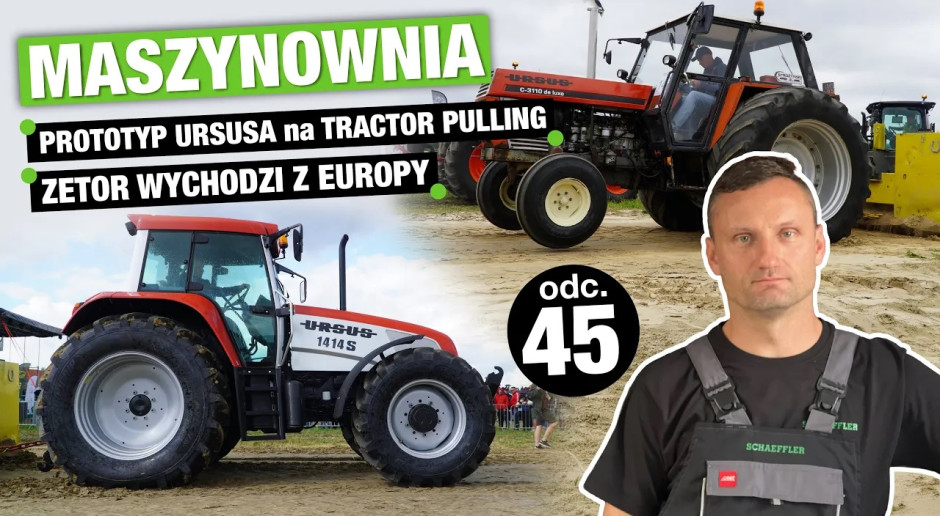
The commercial slowdown contrasts with strong interest in tractors as working and competition machines. At the second Tractor Pulling event in Róg, a replica Ursus 1414S built by Mariusz Zdanowski and Daniel Urban placed second in the standard machinery class and completed a full pull on one run. Modified Ursus tractors, machines powered by combine engines and a Scania V8 also appeared.
Organizers said interest is rising because farmers want to see machinery operating under load rather than only on static display. A future edition may expand to two days and add truck pulling, while selected machines are expected to appear at Agro Show in Bednary. The enthusiasm does not offset the registration decline, but it demonstrates that engagement with agricultural technology remains strong even when farm investment budgets are constrained.