Polish seed groups deploy genomic techniques to halve variety development time
Krajowa Grupa Spożywcza seed companies and the University of Silesia will introduce new genomic techniques into Polish breeding programs. The partnership aims to reduce the development and registration cycle for a plant variety from about 10 years to 5 years.
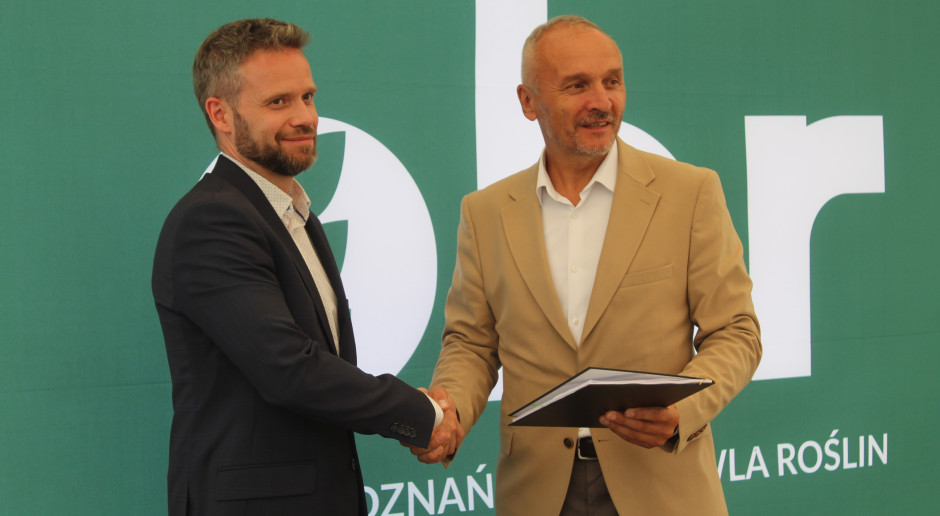
Seed companies join forces with university researchers
Seed companies controlled by Poland’s Krajowa Grupa Spożywcza, or KGS, have started a research partnership with the University of Silesia to deploy new genomic techniques in plant breeding. Farmer.pl reported that the agreement was signed on August 20, 2026, at the headquarters of Poznańska Hodowla Roślin in Nagradowice, in the Wielkopolskie region.
The project brings together Poznańska Hodowla Roślin, DANKO Hodowla Roślin, Kutnowska Hodowla Buraka Cukrowego and Małopolska Hodowla Roślin. It will connect their breeding operations with the university’s Centre for Research and New Genomic Techniques. The broader aim is to consolidate research capacity that has been dispersed among domestic companies and reduce their dependence on large international seed suppliers.
According to Deputy State Assets Minister Grzegorz Wrona, KGS has a portfolio covering 60 plant species and 350 varieties. Three breeding organizations are being integrated under one structure, alongside the academic partnership. The group expects the work to support cheaper, more effective and higher-yielding seed material for Polish farmers.
Development cycle could fall from 10 years to 5
The central technology is precise genome editing, particularly CRISPR-Cas. Unlike conventional transgenic modification, the techniques described by the partners make targeted changes within a plant’s own genetic material without introducing foreign DNA. Marek Marzec, director of the university research centre, said such changes can be identical to mutations that arise naturally.
The partners expect the approach to reduce the time required to breed and register a variety from about 10 years to 5 years. Conventional programs require repeated crossing, selection and field observation. A shorter cycle would allow breeders to respond faster to drought and other changing field conditions.
The University of Silesia has already demonstrated the potential scale of a targeted change in barley. The crop’s genome contains about 5 billion base pairs, yet a mutation in a single nucleotide produced the experimental MG13 line, which grows 40% taller than the original form while retaining genetic stability. The result illustrates the precision of the method, although commercially useful traits will still require field testing.
EU timetable shapes field-testing plans
Farmer.pl reported that the European Union revised its rules in June 2026 to open a route for commercial use of NGT-1 plants, whose mutations correspond to natural changes and contain no foreign DNA. Following a two-year transition period, plants produced with certain new genomic techniques are expected to become available for breeding and cultivation from July 17, 2028.
The regulatory timetable broadly matches the research program. Marzec said the partners expect to have their first plants ready for field trials when the three-year collaboration ends. Those trials will determine whether laboratory traits deliver an advantage under natural growing conditions.
Shared infrastructure lowers the burden on individual breeders
Large-scale genomic and bioinformatics work requires laboratories and investment beyond the capacity of a single breeding company. KGS therefore plans to centralize research and development and build shared infrastructure. Poznańska Hodowla Roślin has already secured almost PLN 19 million in EU funding for BREED-UP, a project focused on innovation in cereal and legume breeding under changing climatic conditions. Its total value exceeds PLN 32 million.
For domestic breeders, the commercial issue is not only development speed. KGS says closer integration could help Polish companies compete with global groups that charge high licensing fees. The outcome will depend on field performance, certification and the implementation of the new EU framework, but the partnership gives Polish breeders a defined route from genome research to marketable varieties.