Polish sauerkraut attracts foreign buyers, but top markets remain unidentified
Polish fermented cabbage is finding buyers abroad, extending the market for a product deeply embedded in the country’s cuisine. The available source material does not identify the leading destinations, export volumes, prices or the period covered, limiting any assessment of market concentration and demand growth.
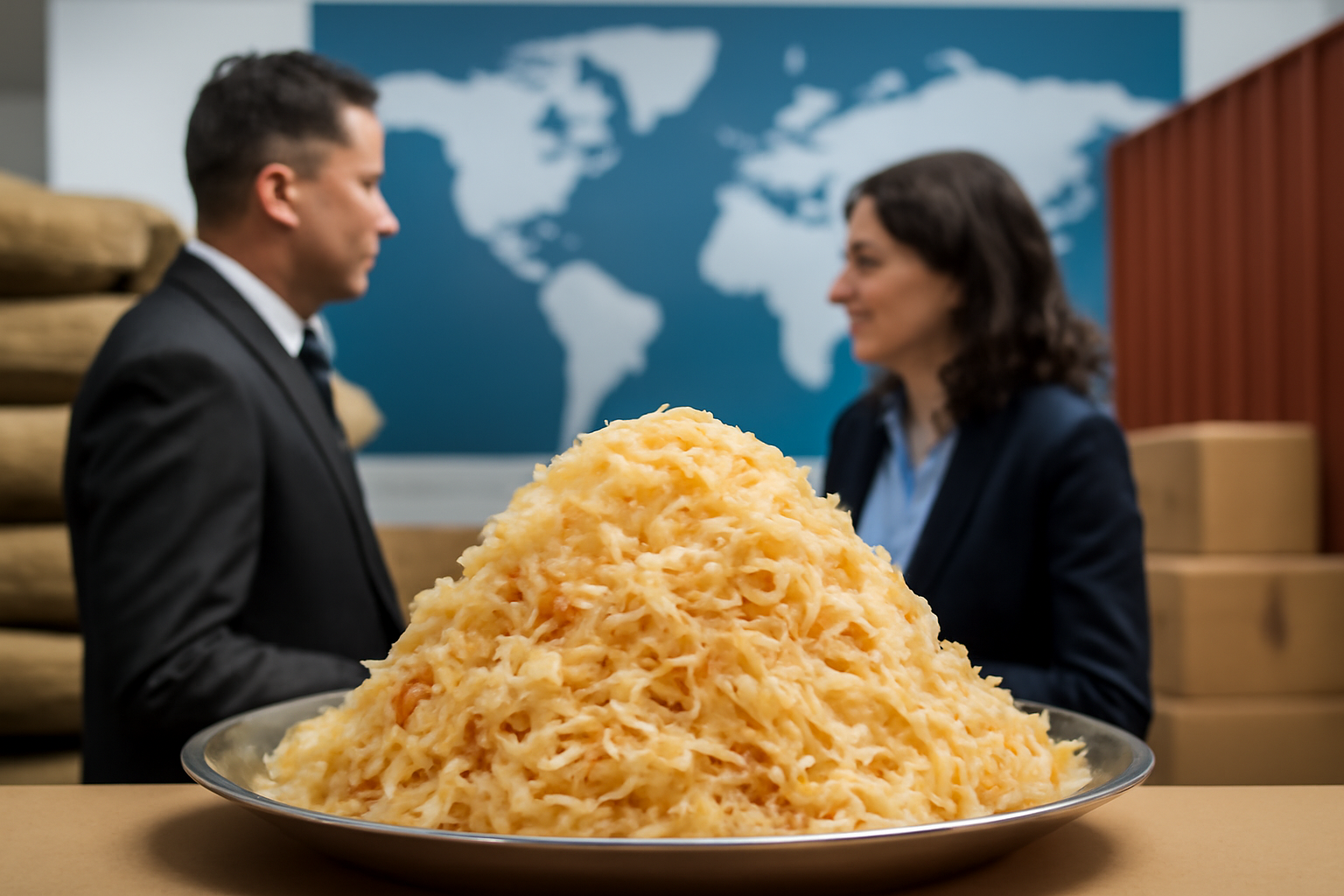
Polish fermented cabbage reaches foreign consumers
Polish sauerkraut is attracting buyers outside its domestic market, according to the headline and description supplied for this report. The material presents fermented cabbage as a Polish product gaining international attention, but it does not name the countries purchasing the largest quantities. It also provides no export volumes, values, prices, growth rates or comparison period.
That missing detail matters for producers, processors and traders. A list of leading destinations would show whether sales depend on neighboring European markets, Polish communities abroad or a broader consumer base. Volume and value data would also help distinguish higher physical shipments from changes caused by prices, packaging formats or the mix of retail and food-service products.
A product with several domestic uses
The source description points to sauerkraut’s established place in Polish food culture. It is used in bigos, kwaśnica soup, fillings for pierogi and croquettes, and salads. These applications give processors access to several customer groups, including households, restaurants and manufacturers of prepared foods.
The product’s versatility can support demand for different specifications. Retail customers may buy packaged sauerkraut for home cooking, while catering businesses and food manufacturers can require larger formats or cabbage prepared for particular recipes. However, the supplied material contains no information about product categories, packaging, processing capacity or the companies involved.
Demand drivers require supporting data
Fermentation gives cabbage a distinctive sour taste that divides consumer opinion, as the source description notes. Strong familiarity among consumers who already use Central and Eastern European dishes can provide a natural market for Polish suppliers. Demand beyond those established customer groups would require evidence from destination-level sales, retail listings or consumption trends, none of which is included in the available material.
It is therefore not possible to determine whether foreign demand is being driven by traditional cuisine, interest in fermented foods, competitive Polish production or wider distribution by retailers. The information also does not indicate whether exports are expanding in volume, value or geographic reach. Each measure would carry a different implication for growers and processors.
Market concentration remains the key question
For cabbage growers, sustained foreign sales could broaden the outlet for raw material beyond domestic consumption. For processors, the commercial effect would depend on plant capacity, procurement costs, contracts and achievable export prices. Importers would also need reliable information on supply consistency, product standards, shelf life and transport requirements.
The central claim is that Polish sauerkraut has buyers around the world and that some countries purchase more than others. Yet the source packet does not disclose those markets or provide the figures needed to rank them. Until country-level trade data and a defined reporting period are available, the scale, pace and commercial significance of the reported export expansion cannot be verified.