Polish retailers expand alcohol-free beer ranges as sales rise 16.2%
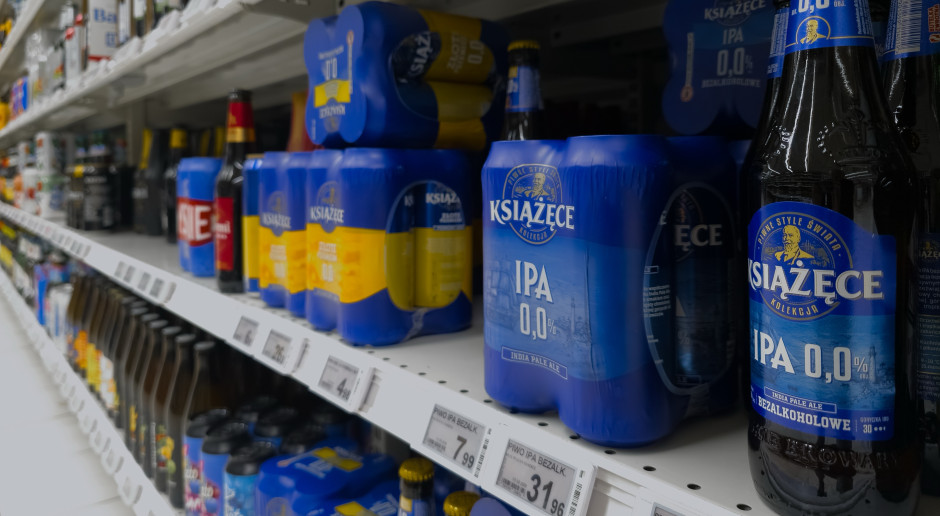
Poland’s sold production of alcohol-free beer rose 16.2% year on year in the first half of 2026, while traditional beer sales fell 11.9%. Biedronka, Lidl, Carrefour and Kaufland are responding with dedicated shelves, broader flavor ranges and more craft products.
Alcohol-free segment grows against a shrinking market
Poland’s beer market continued to contract in the first half of 2026, but alcohol-free products moved in the opposite direction. According to data from Statistics Poland reported by Portal Spożywczy, sales of traditional beer containing alcohol fell 11.9% year on year between January and June. Sold production of alcohol-free beer increased 16.2% over the same period, including growth of 30.1% year on year in June alone.
The divergence is changing the commercial priorities of breweries and retailers. Bartłomiej Morzycki, director general of the Polish Brewers association, told Portal Spożywczy that alcohol-free beer has become an everyday choice for working consumers, drivers and people limiting alcohol for health reasons. Recent CBOS research found that almost one in four Polish people does not drink alcohol. Among those who do, more than half also consume 0.0% products.
Poland is part of a broader European shift. The Brewers of Europe’s European Beer Trends report showed that demand for alcohol-free beer increased 5.9% last year and by more than 38% over five years. One in every 12 beers consumed in the European Union is now alcohol-free. However, the segment’s expansion is not yet large enough to offset the decline in the wider beer industry.
Supermarkets allocate more space and widen choice
Biedronka describes alcohol-free beer as one of the fastest-growing parts of its beer category. Category manager Marcin Łuczak said the chain recorded sales growth of more than 40% in the latest period. Products containing 0.0% alcohol now account for almost 10% of its beer sales volume. The retailer is expanding beyond mainstream brewery brands to include craft products, while the importance of traditional pale beer is gradually declining in favor of a more varied assortment.
Lidl Polska has installed a dedicated alcohol-free beer shelf in every store. It adds new craft products monthly and currently offers examples including mango-flavored alcohol-free beer and alcohol-free Sour Ale. The chain also enlarges its seasonal assortment each year. Classic lagers and flavored beers retain a substantial customer base, but Lidl reports its strongest growth among specialty products.
Carrefour is focusing on the organization and composition of its range rather than simply increasing the number of stock-keeping units. The retailer uses a clearly arranged shelf intended to help shoppers navigate from classic 0% lager to experimental alcohol-free craft beer. Carrefour said the segment is among the fastest-growing beverage categories in its stores, with demand spanning mainstream and craft brands, traditional lager, flavored products and radlers.
Kaufland expects the category to reach one-fifth of beer sales
Kaufland currently carries around 150 alcohol-free beer products and expects the segment to represent approximately one-fifth of its total beer-category sales in the near future. Its range includes products from major brewing groups and craft breweries. Flavored variants currently generate the largest share of sales, although lagers are posting faster growth as some consumers return to classic styles.
The retail strategies point to a market moving beyond a small substitute category. Dedicated displays, seasonal expansion and greater variety give breweries more routes to introduce flavors and premium or craft formats. Yet the 11.9% decline in traditional beer remains the larger challenge. Producers must capture rising demand for 0.0% products while managing capacity and portfolios in a contracting alcoholic-beer market.