Polish rapeseed prices hold firm as Ukrainian values fall on export constraints
Polish rapeseed prices remained comparatively stable despite weak domestic yields and growing pressure across the wider market. Disrupted Ukrainian exports, exceptionally low European river levels and a reduced Australian crop outlook are reshaping regional supply and logistics.
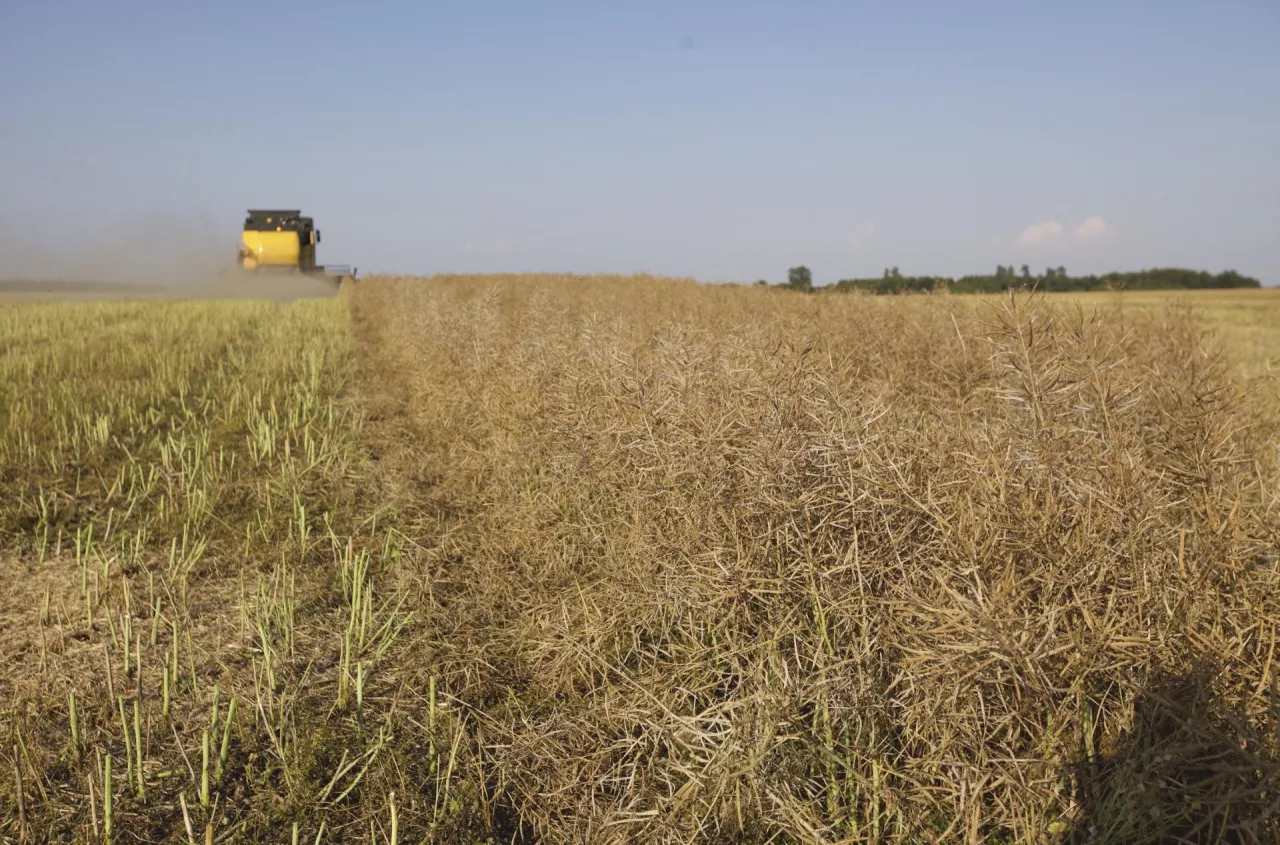
Polish prices resist wider market pressure
Rapeseed prices in Poland remained broadly stable in early August despite disappointing domestic yields and mounting logistical pressure across Europe and the Black Sea region, according to Top Agrar Polska. On August 6, traders were offering 2,150–2,350 zł per tonne, while the average buying price slipped by only 5 zł to 2,239 zł per tonne. Domestic processors quoted 2,280–2,300 zł per tonne without premiums, and offers based on German conditions stood at 2,190–2,220 zł per tonne.
The November rapeseed contract ended August 6 at €526.25 per tonne, close to its level at the end of the previous week. Physical supply, however, remained very weak. Processors reported lower oil content and a high proportion of contamination from other plants, adding quality concerns to the reduced availability of seed.
Uneven harvest results across Poland
Harvest progress and yields varied sharply by region. Some Polish farmers reported no more than 1 tonne per hectare, while others achieved 3–3.5 tonnes per hectare. Yields of 4 tonnes per hectare were described as exceptional. The south had virtually completed harvesting, and around 95% of the crop had been cut in Wielkopolska.
Harvesting was more than 80% complete in Lower Silesia and 80–90% complete in Lubusz. Similar progress was reported in other central regions and the Lublin area. Kujawy and Masuria had harvested 60–75%, while Pomerania remained far behind at about 20%. The combination of uneven progress and low yields has limited farmer selling even as quoted prices remain relatively steady.
Ukraine turns west as Black Sea shipments stall
In Ukraine, the practical halt of maritime exports of rapeseed and processed products has pushed domestic prices lower. Attacks affecting Ukrainian and Russian port infrastructure have restricted Black Sea movements, while exporters face higher costs when redirecting cargo by road or rail through Ukraine’s western border. DAP offers at the western border stood at $540–560 per tonne, equivalent to about 2,100 zł per tonne. Offers at Danube ports fell to $470–490 per tonne, or about 1,838 zł per tonne.
European river logistics are providing little relief. Drought pushed water levels on the Danube and Rhine to their lowest point in 30 years, with some locations falling below the 1976 record. Barges must carry smaller loads, forcing more rapeseed onto costlier rail and road routes and limiting exporter demand. Market experts cited by Top Agrar Polska do not expect a quick recovery in maritime exports, leaving Ukrainian farmers to accept lower prices or postpone sales until the second half of the season.
Grain Trade reported that Ukraine had harvested 2.39 million tonnes from 911,000 hectares by August 3, representing 68.5% of the projected area. The average yield was 2.63 tonnes per hectare. The Ukrainian Grain Association forecasts a 2026 crop of 3.5 million tonnes and 2026/27 exports of 1.9 million tonnes, with nearly half of harvested seed expected to be processed domestically.
Australian outlook tightens later-season supply
Oil World expects Australian rapeseed production to decline by 1 million tonnes year on year to 6.7 million tonnes in 2026/27, despite an increase of about 200,000 hectares in planted area. Australia’s Bureau of Meteorology forecasts below-average rainfall and above-average temperatures across most producing regions over the next three months. If those conditions persist, average yields could fall below 1.7 tonnes per hectare.
Oil World estimates Australian exports at no more than 5.4 million tonnes in 2026/27, compared with 5.8 million tonnes in the previous season and the lowest level in many years. European Union buyers are expected to rely more heavily on Australian supplies only in the second half of the season. Until then, constrained Ukrainian flows and expensive inland transport will remain the more immediate influences on the European rapeseed market.