Polish Rail Industry Targets Western Europe as 2024 Exports Near $2 Billion
The Polish Investment and Trade Agency says the country's railway industry is shifting from component supplier to independent European player, exporting to more than 100 markets with an export value of almost $2 billion in 2024. Germany, which takes about a quarter of Polish foreign trade, is the priority market, with NEWAG starting Griffin locomotive authorisation and PESA signing a strategic agreement with Hitachi Rail in 2026.
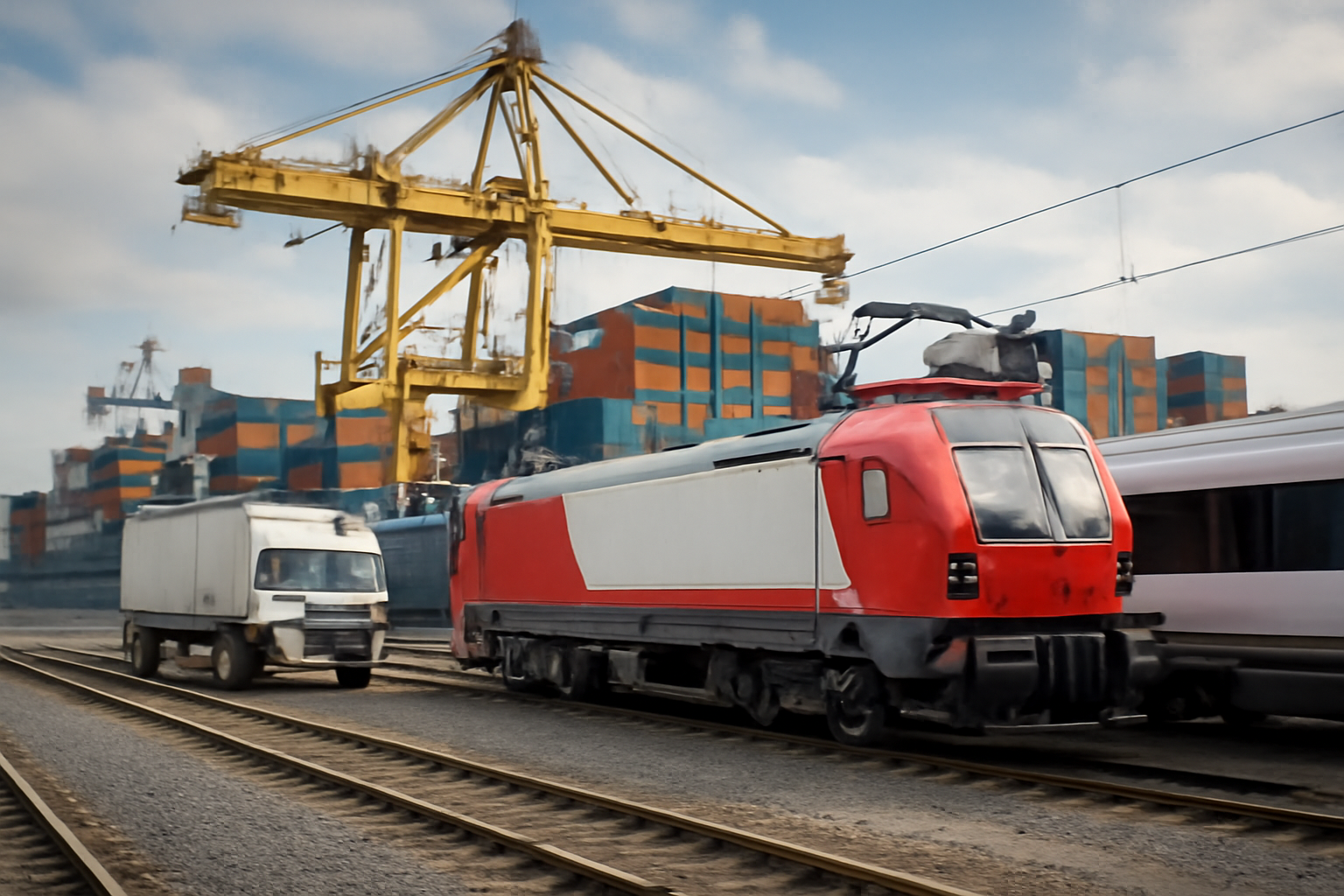
Poland's railway industry is moving from the role of domestic producer and component supplier for foreign manufacturers toward that of an independent European player, according to the Polish Investment and Trade Agency (PAIH). In a statement published by the trade outlet lok-report.de, the agency said the sector now exports to more than 100 markets and that the export value of the Polish railway industry reached almost $2 billion in 2024.
Industrial base behind the exports
PAIH describes a supply base that covers most of the railway value chain:
- production and modernisation of rolling stock;
- electrical systems, control and automation technology;
- components and infrastructure;
- solutions for urban transport.
The agency ties that capability to the domestic market. Investment in infrastructure modernisation, fleet renewal and preparation for high-speed lines builds competences that companies subsequently apply abroad. EU countries are the main expansion targets, with PAIH pointing to the developed industrial base and Poland's location in the centre of Europe as advantages while European rail transport is being restructured.
Scale is also organisational. The Polish Rail Chamber (Polska Izba Kolei) brings together 500 rail-sector entities — rolling stock and component manufacturers, infrastructure and technology firms, transport operators and sector institutions. “More and more Polish railway technologies, products and services are reaching beyond national borders as a complete, competitive offer, and no longer merely as an element of the supply chain,” said Adam Musiał, director general of the chamber.
Germany as the decisive market
Germany is Poland's largest trading partner and accounts for roughly a quarter of Polish foreign trade. Its railway market also sets high technological, regulatory and certification requirements, which is why PAIH treats a presence there as confirmation of the maturity and competitiveness of Polish companies.
NEWAG began the authorisation process in 2026 for its multi-system Griffin locomotive on the German and Austrian markets. Obtaining operating approval would open the way to a broader presence on further Western European markets, according to PAIH. PESA has already signed contracts on the German market and is expanding into other European markets; in 2026 the company concluded a strategic agreement with Hitachi Rail covering, among other things, the development and production of high-speed vehicles and double-deck trains, and the transfer of advanced technologies.
Infrastructure is moving in parallel. In February 2026, Poland and Germany signed an agreement on the modernisation and expansion of rail connections between the two countries. “Rail is being treated as a strategic element of German-Polish cooperation in cross-border mobility, territorial cohesion and the development of the high-speed rail network in the European Union,” said Małgorzata Kucharek of PAIH's European projects office.
Certification, financing and the Berlin agenda
PAIH cautions that entry into Western European markets is not decided by technology alone. Certification and authorisation procedures in rail transport are complex, and operators' purchasing decisions are usually tied to contracts running for several years. The ability to finance development, local presence, familiarity with procedures and relationships with operators and integrators are described as equally decisive.
The sector's institutional push is concentrated on Berlin. Polish companies will present jointly with PAIH at InnoTrans 2026 under a national stand themed “Poland. Business Forward”, located in Hall 11.2, stand 240. Alongside the fair, PAIH, the Polish Embassy in Berlin and the Polish Rail Chamber are organising Rail Connect 2026, a German-Polish supplier day scheduled for 22 September in Berlin, intended to bring Polish and German companies into direct contact and to present railway projects being carried out on both markets.
PAIH is an advisory institution within the Polish Development Fund (PFR) group. It operates in Poland and through a worldwide network of offices, acts as the first point of contact for exporters and investors, and supports the inflow of foreign direct investment into the country.