Polish farm-gate milk prices fall for 15 months as global dairy market weakens
Polish farm-gate milk prices have declined for 15 consecutive months, falling about 20% even as deliveries increased by roughly 2.5%. Lower exports and processor profits have intensified pressure, but strong investment and relatively low debt indicate that the dairy industry is not in a domestic crisis.
Global downturn reaches Polish farms
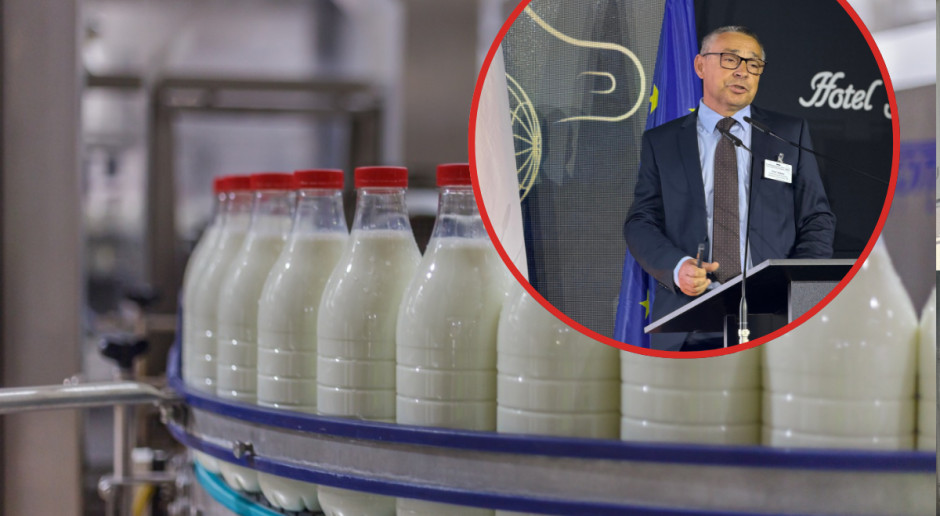
Farm-gate milk prices in Poland have fallen continuously for 15 months, reflecting weaker conditions in the international dairy market rather than a distinct domestic crisis, according to farmer.pl. Piotr Szajner, head of the Agricultural Markets and Quantitative Methods Department at the Institute of Agricultural and Food Economics – National Research Institute, told the 23rd Dairy Community Forum in Białystok that Poland’s close integration with international markets means domestic and global dairy prices now move in broadly the same direction.
Polish farm-gate prices declined by about 20% while milk deliveries increased by approximately 2.5%. The absence of the seasonal price fluctuations normally seen in the industry underlines the strength of the downward cycle. Despite weaker farm income, producers have continued to expand milk output, which Szajner described as a positive signal for the industry’s production base.
Exports, imports and processor earnings weaken
The downturn has reduced the value of Poland’s dairy exports by about 10%, while the sector’s trade surplus fell roughly 12%. Import volumes increased substantially, but Szajner said much of this trade consists of inputs for further processing rather than finished products competing directly with domestic output. The main imported items are milk powder, liquid milk and cream, which Polish factories use because their processing capacity exceeds the volume supplied by domestic farms.
Processors also reported weaker first-half results. Revenue declined by around 10%, while costs decreased by about 9%. Raw-material costs fell 15%, supported by the roughly 20% reduction in milk prices, although the increase in deliveries limited the overall decline in procurement expenditure. Profits dropped by approximately 20%, a development Szajner called concerning but not evidence of a broad financial crisis. The industry continues to generate a financial surplus, while debt stands at about 38% of total assets, substantially below the average for Poland’s food industry.
Cost advantage gives way to investment
The more lasting challenge is the erosion of Poland’s traditional cost advantage. Farm-gate milk prices have broadly converged with the European Union average and are occasionally higher than prices in Germany and France. Cheap raw milk and low labour costs can therefore no longer provide the same competitive foundation for Polish processors. Szajner said the industry will increasingly depend on restructuring, concentration, specialization and modernization to improve economies of scale and manage energy, water and waste more efficiently.
Investment data indicate that processors are already responding. The value of dairy-industry investment in the first half of the year was about 60% higher than in the same period of 2022, while depreciation charges were roughly 50% higher. According to Szajner, these figures show that the sector continues to increase its fixed-capital base despite lower current earnings.
Consolidation accelerates as demand nears its limit
Raw-milk production is becoming more concentrated. The number of farms supplying the dairy industry fell by around 6%, leaving approximately 75,000 suppliers in Poland. Szajner expects that number to continue declining while average deliveries per farm rise. Similar consolidation is taking place among processors.
Domestic consumption offers limited room to absorb additional output. Poland currently consumes the equivalent of around 320 litres of raw milk per person, a level comparable with developed Western European markets. Further growth in dairy demand would increasingly require consumers to substitute dairy products for categories such as meat. With the domestic market close to saturation and retail prices—particularly butter prices—remaining volatile, export performance will stay important. The sector is therefore facing a global cyclical downturn at the same time as it must replace its former cost advantage with scale, efficiency and more modern production assets.