Polish dairy farming consolidates as small herds disappear
Poland has about 150,000 farms keeping cows, 5–6% fewer than a year earlier, with most exits occurring among the smallest producers. Larger specialized farms are expanding as processors seek regular deliveries of uniform milk, while limited capital and land constraints hinder smaller operators.
Small herds lead the decline
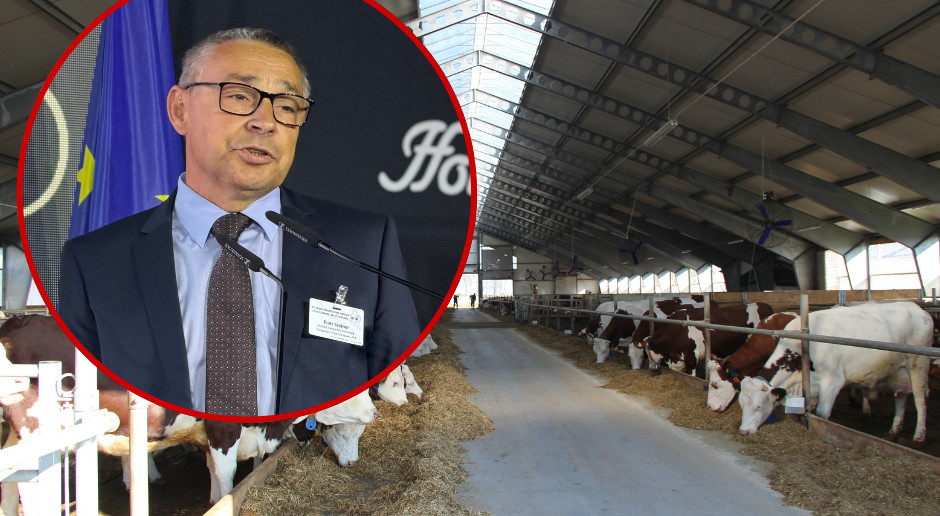
The number of Polish farms keeping cows has fallen to about 150,000, a decline of 5–6% from the previous year, farmer.pl reported, citing Piotr Szajner of Poland’s Institute of Agricultural and Food Economics. The contraction is concentrated among farms with up to five or nine cows, while the number of large-scale operations is increasing from a comparatively small base.
The herd is also shifting toward larger producers. Specialized farms are adding cows and expanding milk output, while many small family farms are reducing their herds or leaving dairy production altogether. Although small farms remain numerous, they now account for a diminishing share of Poland’s cattle population.
Processors favor scale and regular supply
Szajner said the dairy-processing industry is helping drive concentration because plants require large, regular batches of uniform raw milk. Collecting small volumes from many dispersed farms raises pickup, transport and transaction costs. This gives larger suppliers a practical advantage in relationships with processors, even before differences in farm-level production costs are considered.
Expansion nevertheless requires substantial spending on barns, milking systems, livestock and land. Small producers often lack the capital, labor and land needed for such projects, making consolidation a long-term process rather than an immediate restructuring. Informal land-lease arrangements in Poland create an additional obstacle to building the operating area required by expanding farms.
The pace also differs by region. Larger specialized units are developing in western Poland and are already important in the Podlaskie and Warmian-Masurian regions. Farms remain more fragmented in the Łódź and Mazowieckie regions and in upland and mountainous areas. Szajner compared this divide with Germany, where larger farms dominate in the north and center while the south has a more fragmented structure.
Scale does not guarantee profitability
Large herds can lower some unit costs, but Szajner cautioned that scale does not automatically produce higher profits. Bigger operations also carry high investment and operating expenses. For lenders, processors and farm investors, herd growth therefore signals rising capacity but not necessarily stronger margins, particularly when expansion depends on expensive fixed assets.
Smaller farms may instead pursue premium cheese, direct sales or farm retail. Szajner pointed to Germany, Switzerland, northern Italy and Austria, where some small farms receive higher milk prices for hay-based production and benefit from support linked to difficult mountain conditions. He said such niches could supplement Polish farm income but would not become the sector’s dominant model. Producer groups could offer a broader route to scale by combining volumes and strengthening bargaining power without merging farm ownership, but farmer interest in such organizations remains limited.
Poland’s dairy industry currently accounts for about 85% of production, compared with almost 97% across the European Union, according to Szajner. With domestic demand largely saturated, further growth will depend substantially on sales outside Poland. The EU is the first market, while Asia and Africa could provide additional opportunities if the industry coordinates trade policy and strategy. Large processors with substantial volumes of relatively inexpensive raw milk are best positioned to lead that expansion, reinforcing the commercial pressure for larger and more consistent farm supply.