Polish construction investment lifts demand for cement, aggregates and lime
Poland’s construction market is expected to exceed PLN 500 billion before 2030 as infrastructure and energy investment accelerates. The project pipeline is increasing demand for cement, aggregates and lime while making reliable material supply increasingly important for contractors.
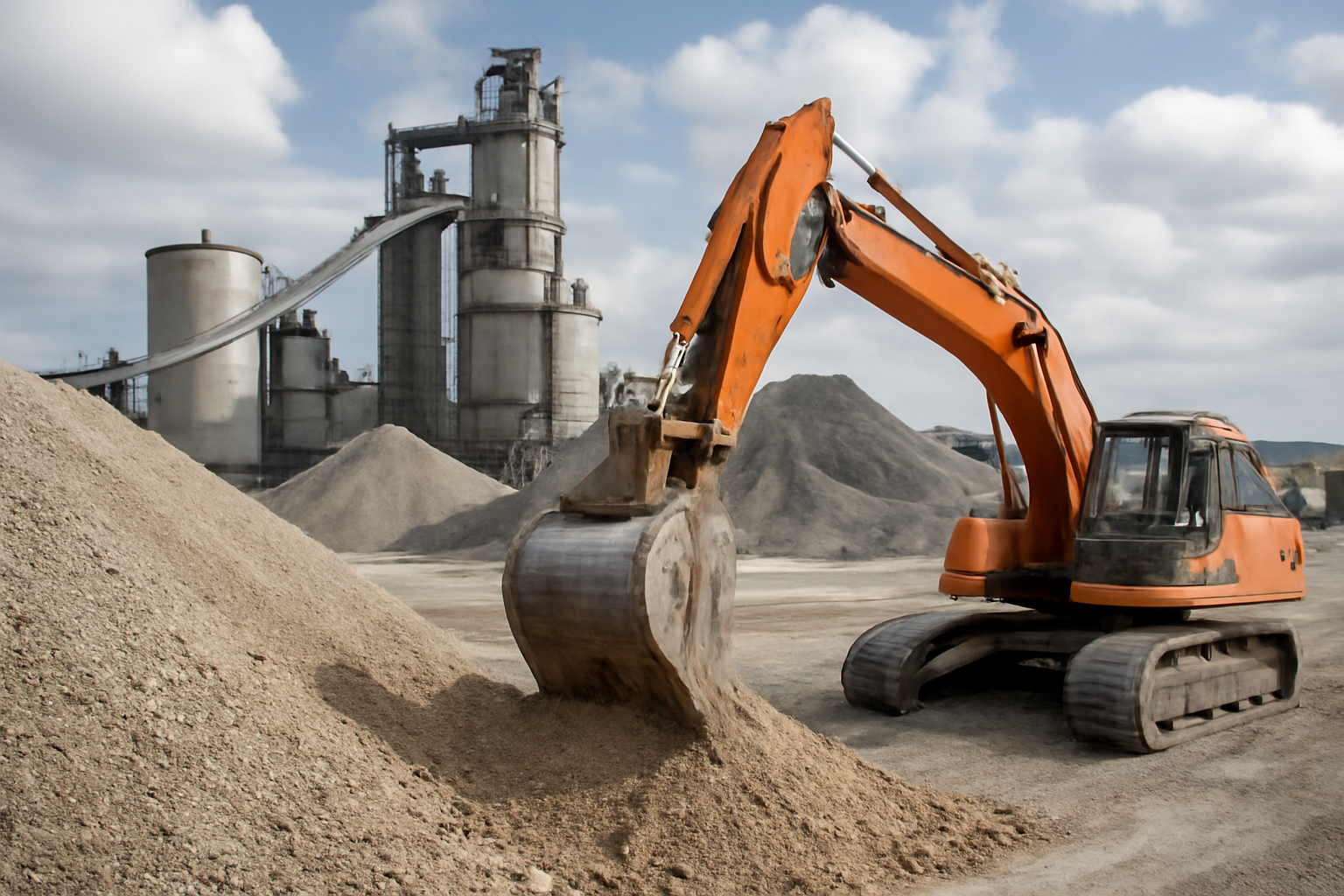
Construction market heads toward PLN 500 billion
Poland’s construction market is expected to exceed PLN 500 billion before 2030, supported by a growing number of infrastructure and energy projects. The expansion is increasing demand for three basic mineral materials: cement, aggregates and lime. These products sit near the start of the construction supply chain, making their availability important for the pace and cost of project delivery.
The projected market value indicates a large pipeline of work rather than growth in a single construction segment. Infrastructure projects require substantial volumes of cement and aggregates, while energy investment adds another source of demand for foundations, roads and related facilities. Lime also serves construction and industrial applications connected with major projects.
Material availability becomes an operational issue
For contractors, the central risk is not only the price of materials but also the possibility of costly interruptions. A delayed delivery of cement or aggregates can affect work schedules and leave equipment and employees idle. As the number of projects increases, construction companies have a stronger incentive to secure dependable suppliers and coordinate deliveries more closely with project timetables.
Producers of cement, aggregates and lime face the corresponding challenge of matching output and logistics with demand. The materials are heavy and are commonly needed in large volumes, so the practical capacity to move them to construction sites matters alongside production itself. A strong order book can therefore test quarry, plant and transport availability at the same time.
Infrastructure and energy projects shape demand
The composition of investment will determine which suppliers benefit most. Infrastructure construction directly supports aggregate and cement consumption, while energy projects can create concentrated demand around individual sites. Companies positioned close to major projects may have a logistical advantage, although the available information does not specify regional volumes, individual projects or planned capacity additions.
The outlook also has implications for buyers and investors. Contractors will need to balance material prices against the cost of delays, while producers must decide how much capacity and logistical support the project pipeline can justify. No detailed forecasts for production, prices or imports have been provided, so it is not yet possible to determine how much of the additional demand will be met by Polish plants and quarries. The clearest signal is the scale of the broader market: a construction sector worth more than PLN 500 billion before 2030 would create a substantial domestic outlet for cement, aggregates and lime.