Polish butter price war alarms Czech producers and prompts calls for EU action
Polish promotions offering 200-gram packs of butter for the equivalent of about 5 Czech koruna have intensified concern among Czech farmers and food producers. The Czech agriculture minister is considering EU-level action against sales below purchase price, while retailers warn that restrictions would raise food prices.
Polish discounts set a new price benchmark
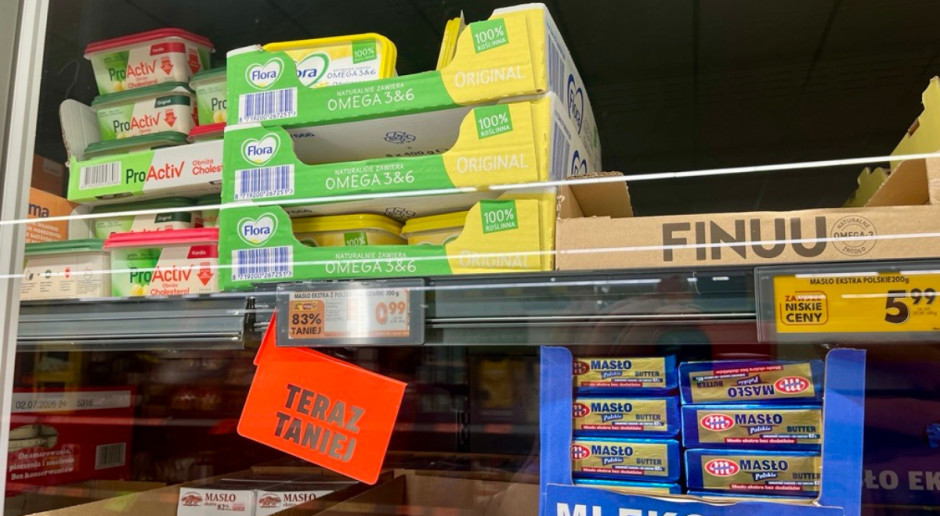
A price war between Polish supermarket chains Lidl and Biedronka is spilling into the Czech food-market debate. According to portalspozywczy.pl, a 200-gram pack of butter can be bought in Poland for the equivalent of about 5 Czech koruna during promotional campaigns. The discounts also extend to meat and cooking oils.
The gap with Czech prices is substantial. Data from price-comparison service Kupi.cz put the lowest butter price recorded in the Czech Republic this year at 18.90 koruna. Some Czech retailers have already started comparing the prices of entire shopping baskets in their promotional leaflets, indicating that competition may spread beyond individual products.
Consumers benefit immediately from such campaigns, but farmers and food processors in both countries argue that some promoted products are being sold below their production costs. Meat processors say certain promotions price their products at as much as half the usual market level.
Producers challenge the economics of promotions
Jan Doležal, president of the Czech Agrarian Chamber, said that product prices frequently fail to reflect real costs. The concern is particularly acute for dairy processors, which face high operating costs while sale prices for some products do not cover them.
The dispute also affects poultry. David Bednář, chief executive of the poultry plant in Klatovy, described chicken breast fillets priced at 99.90 koruna as unbelievable. He said Czech consumers are highly sensitive to promotions and that sales are minimal when discounts are unavailable.
Agricultural market analyst Petr Havel warned that disproportionately low prices can distort consumers' understanding of food's real value and may encourage waste. For producers, frequent deep discounts can also establish retail price expectations that are difficult to reconcile with farm and processing costs.
Possible ban divides government and retailers
Czech Agriculture Minister Martin Šebestyán is considering action at European Union level to prohibit the sale of products below their purchase price. He told CNN Prima NEWS that many countries may act before the European debate concludes because it could take several years.
Former agriculture minister Marek Výborný opposes this approach, arguing that such intervention in the market would not be a good solution. Retail representatives are also against the proposed restrictions and warn that limiting below-purchase-price sales could cause food prices to rise immediately.
Comparable restrictions already operate in France, Spain and Belgium. The central policy question is whether such rules protect farmers and processors from excessive retail pressure or mainly reduce promotions and increase household grocery bills.
The issue extends beyond competition between Polish and Czech supermarkets. In the first half of July, dairy companies and industry organizations from several countries met EU Agriculture Commissioner Christophe Hansen over low milk and butter prices. Participants agreed that the situation was unsustainable. Jiří Kopáček, chairman of the Czech-Moravian Dairy Association, told CNN Prima NEWS that dairies across Europe face the same combination of high costs and sale prices that cannot cover them, creating a threat to the wider industry rather than a problem confined to one product.