Poland’s top 10 food retailers control 80% of sales as parliament weighs farmer protections
Poland’s ten largest retail chains account for about 80% of domestic food sales, a market worth more than 250 billion złoty, MP Michał Cieślak told a parliamentary committee. Lawmakers are considering changes intended to curb the unfair use of contractual advantage in agricultural and food supply chains.
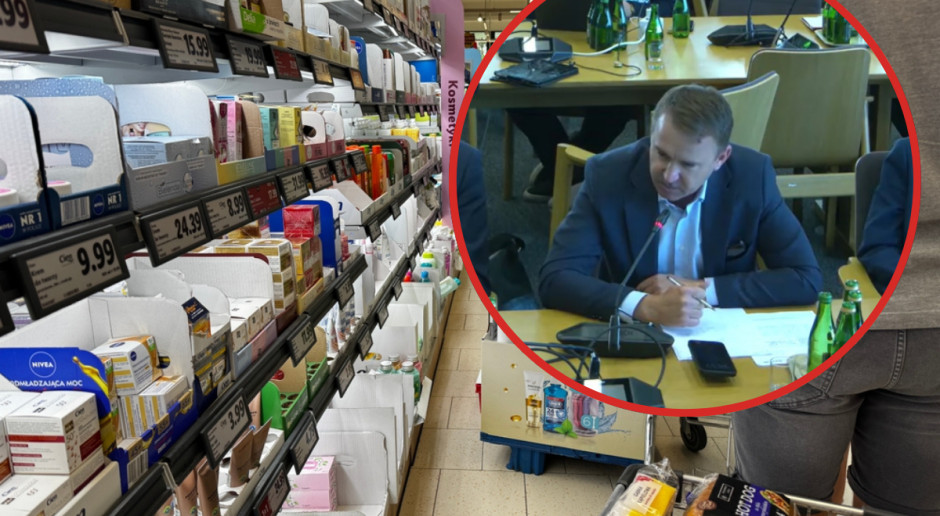
Ten chains dominate a 250 billion złoty market
Poland’s ten largest retail chains now account for about 80% of the country’s food sales, whose total value exceeds 250 billion złoty, according to figures presented by MP Michał Cieślak. He cited the data during a meeting of the parliamentary Committee on Agriculture and Rural Development held on 16 July 2026, farmer.pl reported.
The committee was conducting the first reading of a parliamentary bill to amend Poland’s law on counteracting the unfair use of contractual advantage in trade in agricultural and food products. Cieślak argued that the concentration of sales among a small number of retailers has reduced agricultural producers’ influence over prices and other commercial conditions. He described the 250 billion złoty market as value for which Polish farmers are seeking a larger and fairer share, rather than money directly lost by producers.
Family-store network shrank sharply
Cieślak contrasted the current market with Poland’s retail structure between 1995 and 2000. He said the country then had about 450,000 family-owned food stores and related businesses. In his account, these outlets offered farmers relatively direct access to consumers through a short chain consisting mainly of the producer, transport provider and retailer, with a moderate store margin.
The number of such family stores has since fallen to about 70,000, according to Cieślak. He estimated that the contraction of family retail caused the loss of nearly 1.5 million to 2 million jobs over the period. The figures and the causal link represent the MP’s assessment as reported by farmer.pl; the source text does not provide a separate statistical verification. Cieślak also said the change deprived farmers of open access to distribution channels and made it harder to reach Polish consumer spending on acceptable terms.
Proposal would shift enforcement toward retailers
During the debate, Cieślak proposed placing the main compliance and documentation burden on retail chains rather than farmers. Under his approach, Poland’s Office of Competition and Consumer Protection, known as UOKiK, would examine whether a retailer had purchased an agricultural product below its production cost. The assessment would draw on agricultural production-cost data published annually by an economics and agriculture institute referenced during the meeting.
If UOKiK established that a chain had bought a product from a farmer below the relevant benchmark cost, the retailer should face a penalty, Cieślak argued. The proposal seeks to address the bargaining imbalance without requiring producers to generate additional documentation. For farmers and processors, its practical impact would depend on how production costs are calculated across different segments and whether the benchmarks reflect differences between farms. Retailers, meanwhile, could face greater scrutiny of procurement prices if the proposed principle is incorporated into the legislation.