Poland Rises to Third Place in Europe’s PPA Market as Businesses Seek Stable Power Costs
Poland contracted 1.5 GW of renewable capacity through power-purchase agreements in 2025, up from 0.7 GW a year earlier. Only Spain and Italy recorded larger volumes, as Polish companies increasingly use long-term contracts to manage electricity costs and decarbonisation.
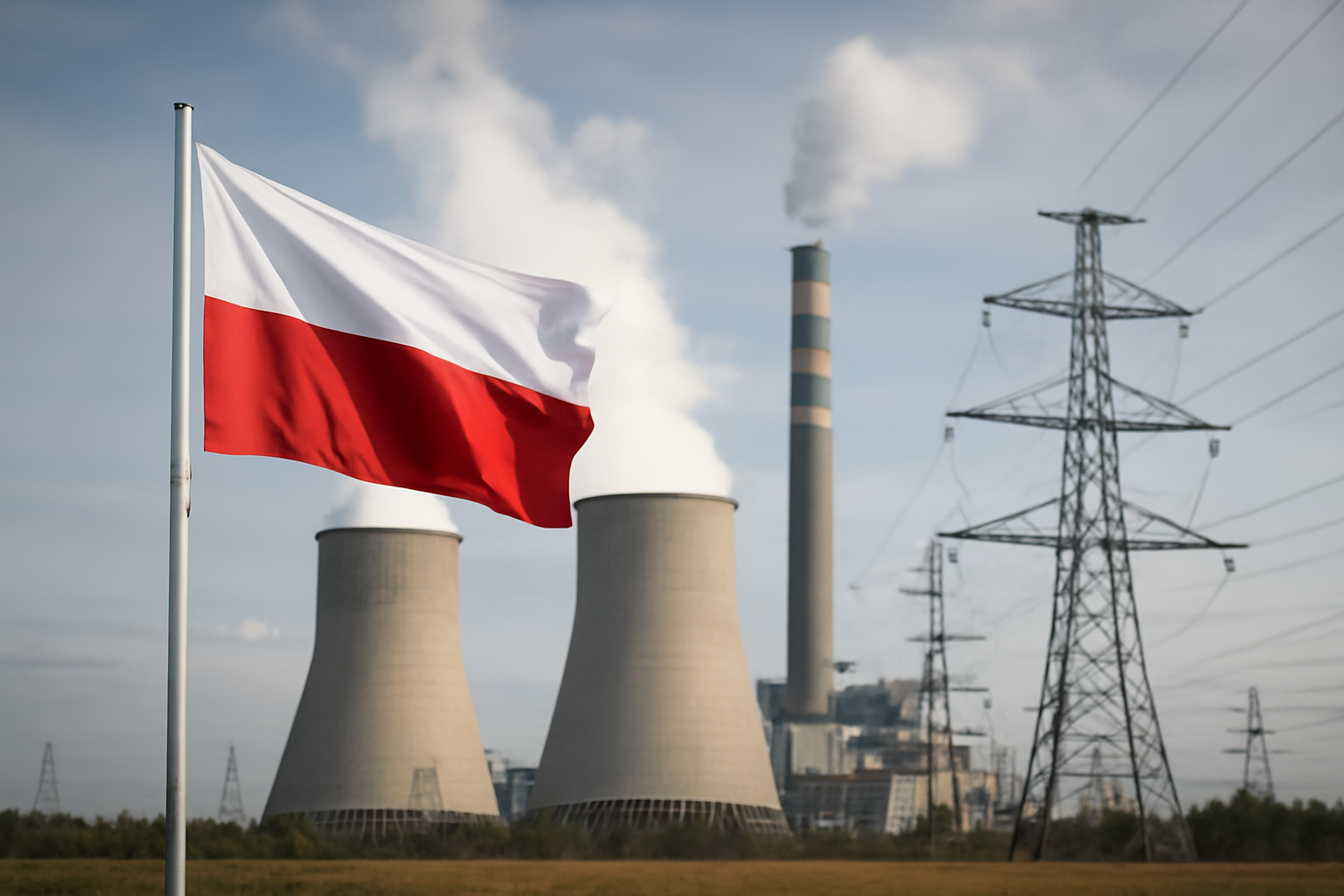
Poland moves up the European ranking
Poland became Europe’s third-largest market for power-purchase agreements in 2025, as businesses increased their use of long-term renewable electricity contracts to control costs and reduce exposure to wholesale price volatility. According to Swiss energy-market analytics company Pexapark, 1.5 GW of capacity was contracted in Poland, up from 0.7 GW in 2024. Only Spain, with 3.9 GW, and Italy, with 1.8 GW, recorded higher volumes.
The Polish expansion came despite a wider slowdown. Pexapark reported that disclosed European PPA capacity declined to 13.1 GW across 247 deals in 2025, from 15.3 GW a year earlier. Activity in Poland accelerated sharply in the fourth quarter after a weak start to the year, supported mainly by renewed demand from US technology companies and, later, greater participation by utilities. Because many contracts are not disclosed, published figures may understate the market’s actual size.
Contracts become a cost-management tool
Corporate PPAs, or cPPAs, allow an electricity consumer to agree long-term purchases from a renewable generator. The arrangement can give the buyer greater cost visibility while providing the generator with a contracted revenue stream that may support project financing. EnergiaPress reported that Polish companies are increasingly looking for electricity that is renewable, competitively priced and predictable, rather than treating the contracts solely as a decarbonisation instrument.
WysokieNapiecie reported that approximately 2 GW of generating capacity is currently covered by Polish cPPAs. Solar accounts for 1.1 GW, wind for 0.6 GW and combined wind-and-solar arrangements for 0.3 GW. The market has evolved from wind-led contracts in 2018–2021 to greater use of solar from 2022 and, more recently, growing demand for contracts combining both technologies. Such combinations can better align generation with a buyer’s consumption profile.
Buyers examine risks more closely
Demand is broadening beyond large industrial groups and technology companies. Energa Obrót told WysokieNapiecie that entry thresholds for medium-sized businesses can now begin at annual volumes of 1 GWh. Buyers may contract part of their demand through a cPPA and cover the remainder through indexed products or the day-ahead market, limiting the risk of fixing the price of their entire consumption for a long period.
Price remains only one part of the decision. Buyers are paying closer attention to production profiles, balancing costs, negative-price periods and renewable curtailment. PPA prices cited in the 2026 Wind Energy in Poland report were below 400 zlotys per MWh, while combined wind-and-solar contracts could be priced at around 380–400 zlotys per MWh or more. Storage and more complex contract structures are expected to become increasingly important as companies seek to match renewable output with consumption and reduce purchases during expensive spot-market periods.