Poland produces 35% of EU pumpkins, but exports remain below 5,000 tonnes
Poland harvested 436,000 tonnes of pumpkins in 2025, retaining its position as the European Union’s largest producer. Only 4,800 tonnes were exported, showing that domestic consumption and processing absorb nearly all national output.
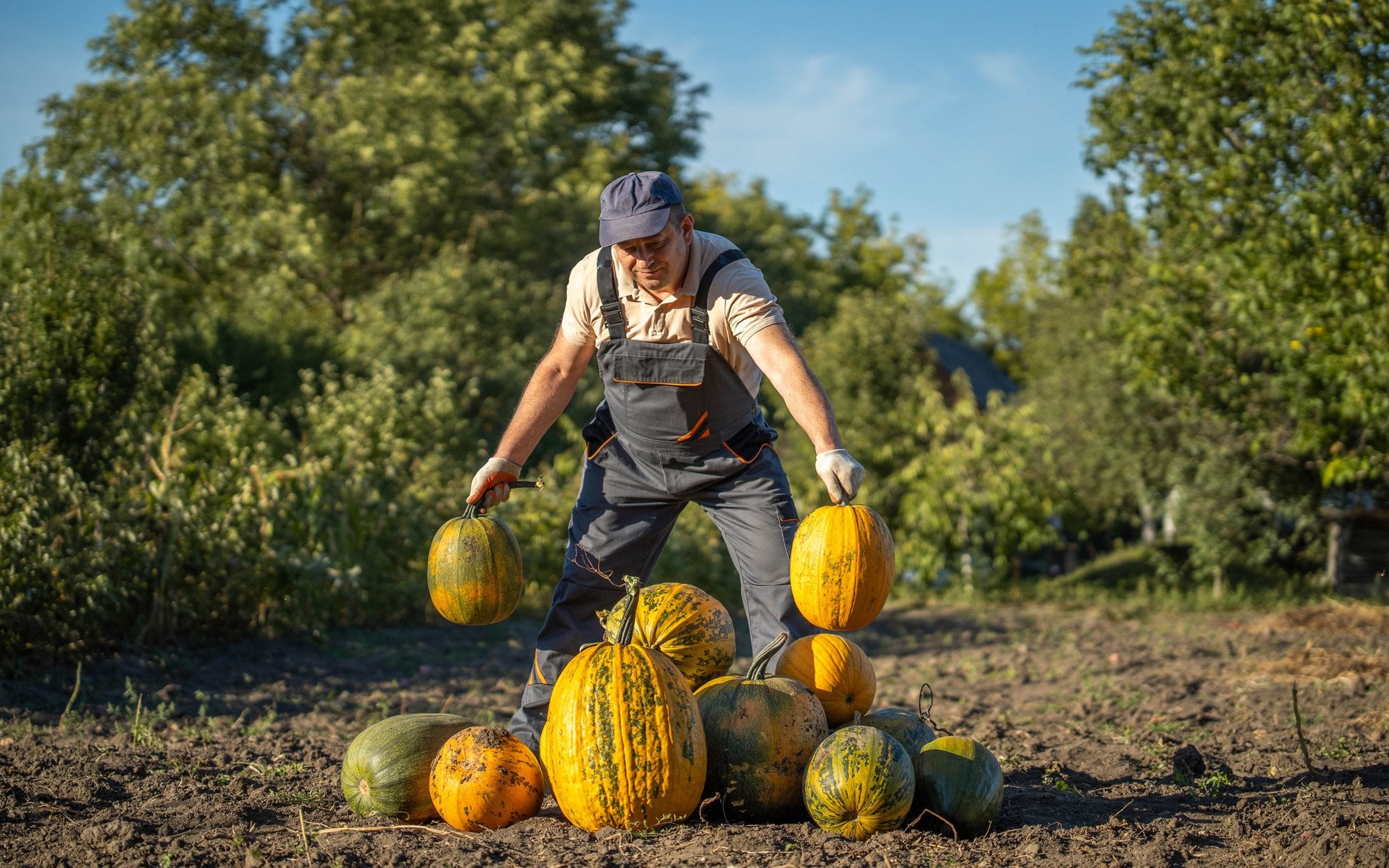
Poland retains a commanding EU lead
Poland harvested 436,000 tonnes of pumpkins in 2025, accounting for 35% of total European Union production and preserving the leading position it has held since 2020. Data from Poland’s National Support Centre for Agriculture, or KOWR, put France in second place with 250,000 tonnes and a 20% share. Spain produced 171,000 tonnes, or 14%, followed by Germany with 122,000 tonnes, or 10%, and Portugal with 85,000 tonnes, or 7%.
Together, the five largest producers supplied 86% of the EU crop. Total EU pumpkin production reached 1.2 million tonnes in 2025, an increase of 6% from the previous year. KOWR said European output has followed a sustained upward trend since 2019, indicating that Poland’s expansion forms part of a growing regional market rather than a shift occurring in isolation.
Area expansion drives a ninefold harvest increase
Poland’s rise has been built primarily on a rapid expansion of planted area. According to Eurostat data cited by KOWR and Rzeczpospolita, the country’s pumpkin area increased more than eightfold between 2015 and 2025, from 1,300 hectares to 10,500 hectares. Production grew even faster, climbing from 47,000 tonnes in 2015 to 436,000 tonnes in 2025, an increase of more than nine times in a decade.
The figures imply an average 2025 yield of about 41.5 tonnes per hectare, calculated from the reported production and area. Polish growers cultivate pumpkins for both food and decorative uses, with common pumpkin and giant pumpkin dominating national production. The National Register of Varieties contained 36 registered varieties in 2026. Demand extends beyond fresh retail into food manufacturing, pharmaceuticals and cosmetics, broadening the potential domestic customer base for growers and processors.
Exports absorb only a small fraction of output
Despite Poland’s production lead, its external sales remain limited. The country exported 4,800 tonnes in 2025, within the annual range of 3,000–5,000 tonnes observed in recent years. That volume represented only about 1.1% of the national harvest. Italy received 22% of shipments and Germany 21%, while Slovakia accounted for 17% and the Czech Republic for 13%. All other destinations together took the remaining 27%.
Rzeczpospolita reported that export revenue approached €3.2 million in 2025, down from more than €4 million in 2024. Poland also imported 2,900 tonnes worth nearly €3.6 million in 2025, compared with 3,000 tonnes valued at almost €3.3 million a year earlier. Its main suppliers were Germany, the Netherlands and Spain. Export volume nevertheless exceeded import volume by 1,900 tonnes.
The gap between production and cross-border shipments shows that Poland’s pumpkin sector is overwhelmingly oriented toward its domestic market. Further acreage growth will therefore depend on continued Polish demand, greater processing capacity or the development of larger foreign sales channels. For exporters, nearby EU markets already dominate the customer mix, but volumes remain too small to materially balance a harvest that has expanded by 389,000 tonnes since 2015.