Poland plans mass production of domestically developed UNIPeX plastic explosive
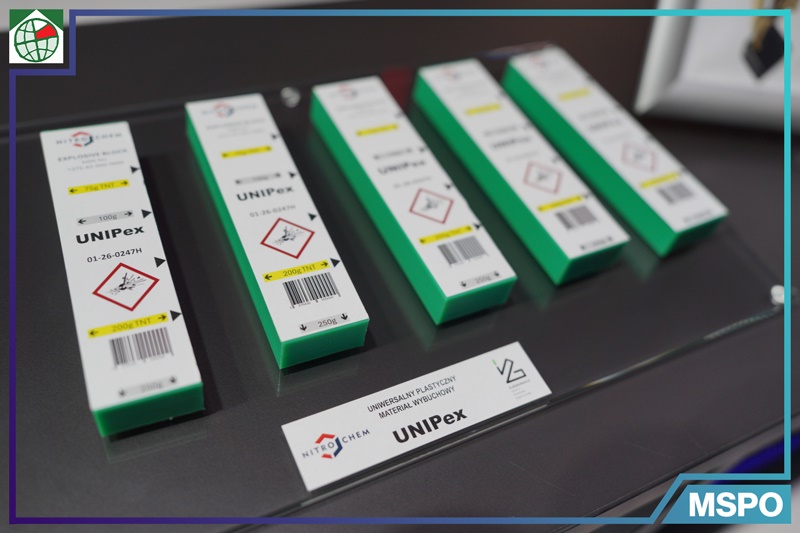
Poland’s Łukasiewicz Research Network and Nitro-Chem have agreed to industrialize UNIPeX, the country’s first domestically developed plastic explosive intended for commercial-scale production. The material contains about 88% RDX and could enter production in the second half of 2028.
Łukasiewicz and Nitro-Chem sign implementation agreement
Poland is preparing to manufacture its first domestically developed plastic explosive on a commercial scale, according to Polska Zbrojna. The UNIPeX material was created by the High-Energy Materials Research Group at the Institute of Organic Industry in Warsaw, part of the Łukasiewicz Research Network. The state research network has signed an agreement with Bydgoszcz-based chemical producer Nitro-Chem covering the product’s implementation and manufacture.
Responsibility for the project is divided among several Polish organizations. The Łukasiewicz Institute for Sustainable Technologies is designing the production line, while Nitro-Chem is due to operate the manufacturing process. The planned facility will cover both preparation of the explosive composition and packaging of the finished product. Researchers have already produced a prototype and tested it under laboratory conditions, project leader Rafał Lewczuk told Polska Zbrojna.
Domestic inputs underpin the supply chain
RDX, a high explosive supplied in Poland by Nitro-Chem, will account for approximately 88% of UNIPeX by mass. Other Polish companies will provide the ingredients that give the material its workable consistency: Boryszew ERG will supply plasticizers responsible for flexibility and softness, while Synthos SA of Oświęcim will produce the rubber used as a binder. The developers say the formulation relies entirely on components available from Polish industry.
Production in Bydgoszcz is also expected to include a marking substance that makes plastic explosives easier to detect. Its technology was developed by the Łukasiewicz Institute of Organic Industry. The domestic formulation, inputs and marker are intended to give Poland an independent supply for the armed forces, special services and civilian users. Poland has not previously produced plastic explosives on a large scale; Polska Zbrojna reports that Mesko SA currently supplies limited quantities to military engineering units according to demand.
Performance targets and 2028 timetable
UNIPeX has a stated TNT equivalence of 1.3, giving it around 30% more explosive power than TNT, and a detonation velocity of approximately 7,500 metres per second. Its malleable consistency allows a charge to be shaped to an object and placed tightly against its surface. The developers say it can be used underwater and retains its properties between –30°C and +50°C, allowing deployment in winter, mountain and desert conditions.
Laboratory testing indicates that the material remains stable during transport, storage and use. According to Lewczuk, it does not detonate when struck by a rifle bullet but can be initiated with a standard military electric detonator. The planned service life is at least ten years. These specifications would position UNIPeX against established products such as US-made C-4 and Semtex, which is produced by Explosia in Pardubice in the Czech Republic for military and civilian engineering applications.
Łukasiewicz researchers estimate that production could begin in the second half of 2028 after development of the manufacturing line. No planned capacity, investment value or contract volume was disclosed. Nitro-Chem president Karol Przybyszewski said the domestic technology and supply chain are intended to maintain deliveries to the Polish armed forces despite logistical restrictions, economic blockades or disruption caused by conventional and hybrid warfare. UNIPeX was presented at the International Defence Industry Exhibition in Kielce, where it competed for a Defender award.