Poland Looks to Silesian Mine Heaps for Infrastructure Aggregates
Poland’s planned infrastructure investment boom will require millions of tonnes of aggregates. Material stored in Silesian mining heaps could supplement conventional quarry supply, but its commercial role will depend on processing, certification and transport economics.
Infrastructure plans create a raw-material challenge
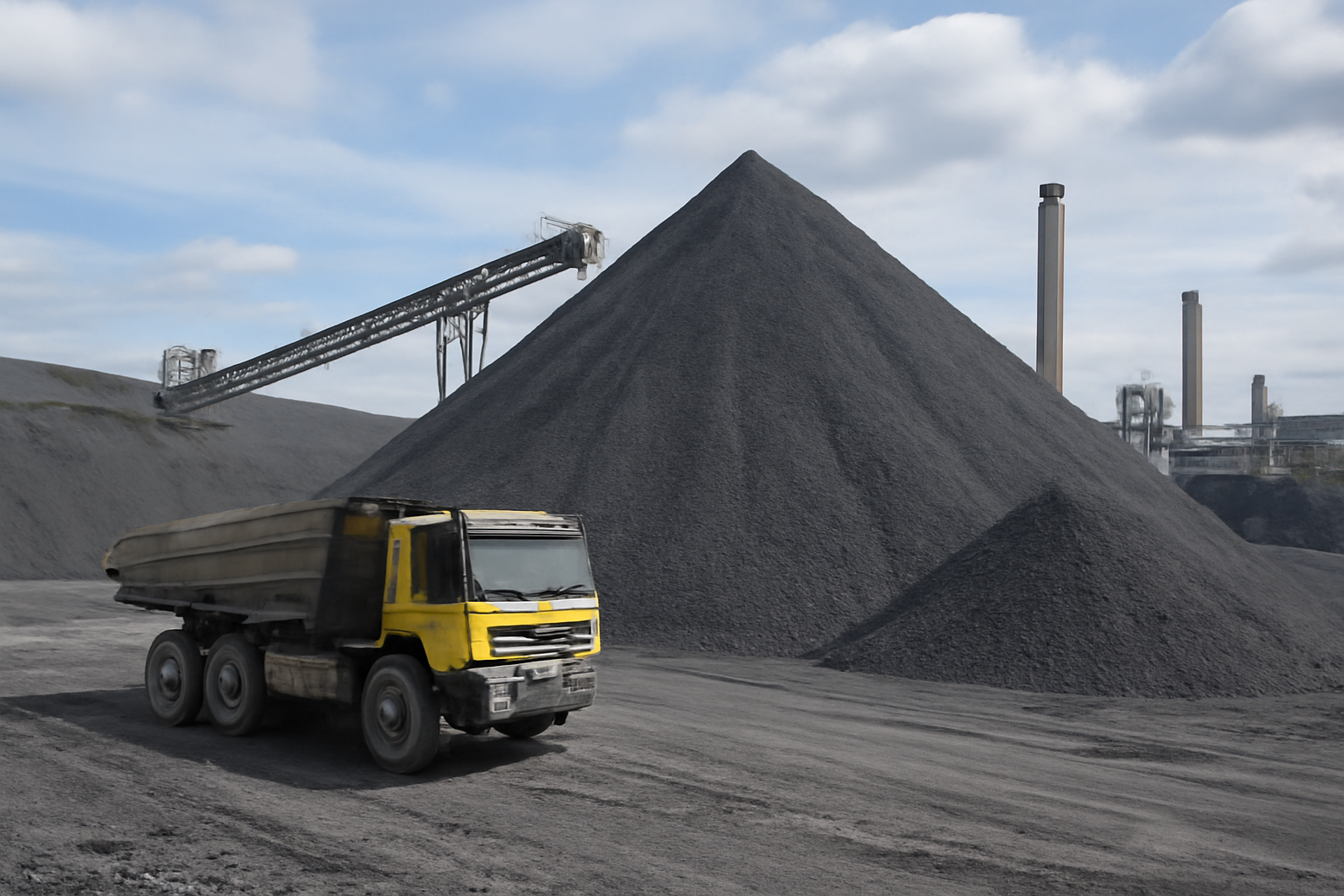
Poland’s planned infrastructure investment boom will require millions of tonnes of construction materials, putting the availability of aggregates under closer scrutiny. One proposed source is the large volume of material accumulated in mining heaps across Silesia, where decades of mining activity have left substantial deposits close to an industrial and transport-intensive region.
The proposal presents the heaps not simply as waste requiring long-term management, but as a potential secondary source of material for roads and other infrastructure. Recovering suitable fractions could reduce demand for newly extracted aggregate and provide an additional domestic supply channel during a period of heavy construction activity.
Usable supply depends on quality and cost
The presence of millions of tonnes of material does not automatically translate into the same volume of marketable aggregate. Material from individual heaps may differ in composition, grain size and contamination risk. It must therefore be examined, processed and classified for specific construction applications before buyers can treat it as a reliable substitute for products from conventional quarries.
Economics will be equally important. Recovery may require excavation, sorting, crushing and screening, followed by quality control and transport to a construction site. The proposal is most likely to be competitive where a heap contains suitable material, processing can be organised at scale and the final customer is located within an economical delivery radius.
For contractors and aggregate buyers, consistency will matter as much as headline tonnage. Infrastructure projects require material that meets the technical specifications of each layer or structure. Suppliers using recovered mining material will therefore need repeatable product parameters, documented testing and dependable delivery schedules. Without those conditions, the heaps may remain a large theoretical resource rather than a bankable source of supply.
Potential gains extend beyond aggregate supply
If the material qualifies for infrastructure use, the model could offer both economic and environmental benefits. It would turn an existing industrial residue into a saleable construction input, while potentially reducing the need to open or expand extraction elsewhere. Removing material may also support the gradual rehabilitation of former mining areas, although the effect would depend on the condition of each site and the way recovery is managed.
The opportunity is therefore significant but site-specific. Silesian heaps can contribute to Poland’s aggregate needs only where testing confirms that the material is technically suitable and where processing and logistics remain competitive. For mining-area owners, recyclers and construction-material suppliers, the next commercial step is not simply to count stored tonnes. It is to identify usable fractions, prove compliance and connect individual sites with projects able to absorb the resulting products.