Philippines to Release $33.5 Million in Rice Reserves as Vietnamese Cargoes Arrive
The Philippines plans to sell aging state rice stocks worth about 1.9 billion pesos ($33.5 million) through its subsidized retail program. The release comes as imports remain essential, with 39 vessels loading rice in Vietnam for Philippine ports in June.
State stocks enter the subsidized market
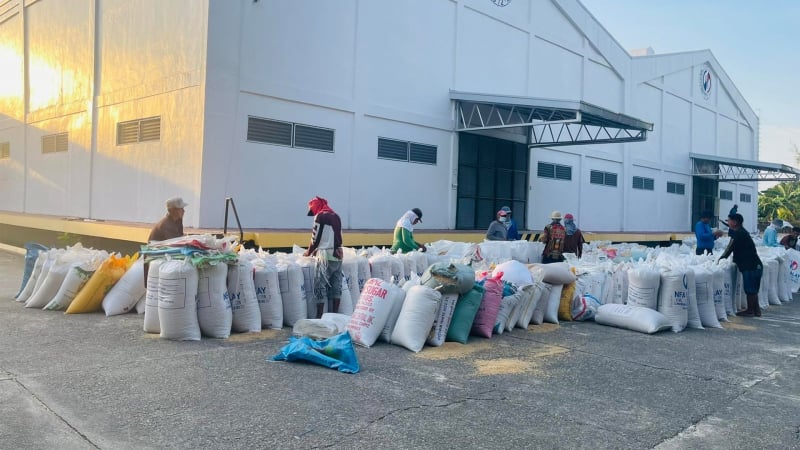
The Philippines’ National Food Authority plans to release rice inventories worth about 1.9 billion pesos ($33.5 million) that have been held for more than six months. According to the Vietnam Food Association, the grain will support the government’s subsidized rice program, which sells rice to consumers at 20 pesos per kilogram. The measure is intended to keep an essential food staple affordable while rotating older stocks before their quality deteriorates.
The disposal will also free warehouse capacity for rice purchased from Philippine farmers and return cash to the NFA. This matters because the agency’s procurement program is operating in a market where domestic paddy availability has become tighter and government reserves have declined. Selling the older grain therefore serves two objectives: supplying the subsidized channel now and preparing storage facilities for the next round of local procurement.
Domestic output remains below consumption
The latest US Department of Agriculture balance cited by the Vietnamese publication forecasts Philippine milled rice production at 12.3 million tonnes in the 2026/27 marketing year. That is slightly above 2025/26 but below earlier projections because of higher fertilizer and fuel costs, low water levels in irrigation reservoirs and a growing El Niño risk. Consumption is expected to increase to 17.65 million tonnes as population growth outweighs the effect of higher retail prices.
The gap leaves imports central to the Philippine market. USDA forecasts imports at 5.2 million tonnes, while ending stocks are expected to decline to 2.65 million tonnes because domestic production will not cover demand. The government is simultaneously maintaining a recommended maximum retail price of 50 pesos per kilogram for imported rice, using a tariff mechanism tied to a price index and investigating possible safeguard measures on rice imports, according to the Vietnam Food Association.
Vietnamese loading activity continues
Vietnam remains the Philippines’ largest rice supplier. Vietnam Food Association data show that 43 vessels entered Ho Chi Minh City and My Thoi ports between June 1 and June 29, 2026, to load an expected 301,960 tonnes of rice of various grades. Of those vessels, 39 were bound for Philippine ports. The source headline described the flow as 40 cargoes, while the detailed association data listed 39 vessels.
The continuing arrivals show that releasing government stocks does not remove the underlying import requirement. The reserve sale concerns rice already held for more than six months and supports a targeted retail program; imports, by contrast, cover the broader deficit between national production and consumption. For Vietnamese exporters, the 5.2-million-tonne import forecast points to sustained Philippine demand, although tariff changes or safeguard action could alter access conditions.
Vietnamese paddy prices rise during harvest
In Tay Ninh province, early summer-autumn harvesting has coincided with firmer paddy prices. IR50404 was quoted at 6,100-6,400 dong per kilogram, up 700 dong; Dai Thom 8 and OM18 at 7,300-7,600 dong, up 900 dong; and OM5451 at 6,800-7,100 dong, up 1,100 dong from the previous week. IR4625 glutinous paddy remained at 7,000-7,200 dong per kilogram.
Tay Ninh had planted 267,000 hectares, or 97.9% of its summer-autumn plan, and harvested nearly 28,000 hectares. Average yield was 7.3 tonnes per hectare, with output estimated at almost 204,000 tonnes. Across the Mekong Delta, 1.076 million of a planned 1.243 million hectares had been planted by June 22, 2026. About 123,000 hectares had been harvested, producing an estimated 765,000 tonnes of paddy at a yield of around 6.191 tonnes per hectare.