Philippines overtakes Vietnam as China’s top banana supplier by value
The Philippines became China’s largest banana supplier by value in the first half of 2026, while Vietnam retained the lead by volume. Lower prices and uneven quality reduced the value of Vietnamese shipments in a market worth more than $1 billion annually.
Philippines moves ahead by import value
The Philippines reclaimed first place among China’s banana suppliers by value in the first half of 2026, displacing Vietnam, which had become the market’s largest source in 2024. Vietnam nevertheless remained the leading supplier by physical volume, highlighting a widening difference between shipment scale and unit value.
China imported 1.15 million tonnes of bananas worth $641 million during the six-month period, according to Chinese customs statistics reported by Thanh Nien. Import volume increased 3.3% and value rose 3.7% from the same period of 2025. China’s banana import market is valued at more than $1 billion annually.
Four origins each supplied more than 100,000 tonnes and generated over $100 million in sales: the Philippines, Vietnam, Ecuador and Cambodia. Vietnam shipped 452,000 tonnes, nearly 5% less than a year earlier. The Philippines supplied 291,000 tonnes, while Ecuador delivered 175,000 tonnes, up 14.1%. Cambodia ranked fourth with 147,000 tonnes, an increase of nearly 11%.
Price gap changes the supplier ranking
By value, Philippine shipments reached $179 million, ahead of Vietnam at $174 million. Ecuador earned $134 million and Cambodia $103 million. The reversal reflected substantial differences in average import prices rather than shipment volume.
China’s average banana import price was $556 per tonne. Philippine fruit averaged $614 per tonne, up 2%, and Cambodian bananas fetched $698 per tonne, down 0.6%. Vietnam’s average price fell 6.2% to $385 per tonne, the lowest among the four major suppliers. Ecuador recorded the highest price at $770 per tonne, up 2.6% from the first half of 2025.
Quality and post-harvest systems shape returns
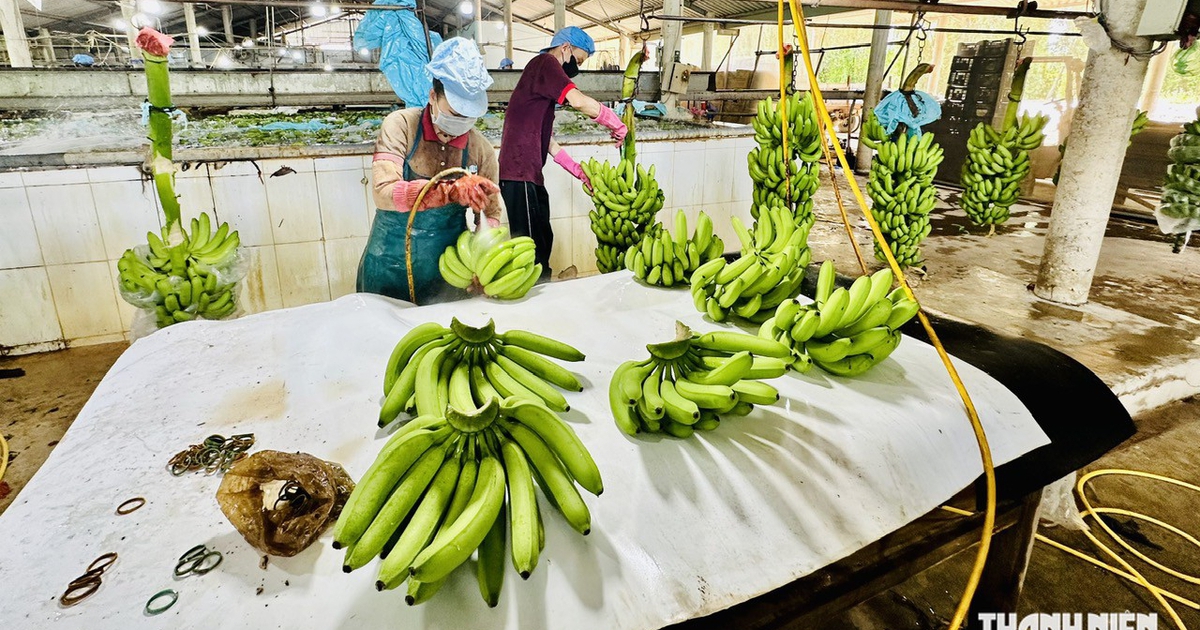
Dang Phuc Nguyen, secretary-general of the Vietnam Fruit and Vegetable Association, linked export volume and revenue to quality, pricing, distribution and preservation. He said Vietnamese bananas largely serve the mass-market segment and have gained market share rapidly through price competition. Vietnam’s land border and short sea routes to China reduce road and maritime freight costs, supporting that strategy.
The Philippines has supplied demanding Asian markets, including Japan, South Korea and China, for decades and has established global brands in premium supermarket channels. Large farms operated by multinational groups use standardized processes covering variety selection, fertilization, fruit protection and harvesting. Integrated cold-chain and post-harvest treatment also improve appearance, shelf life and consistency.
Vietnam has attracted investment from large agricultural companies, but some production remains distributed among small farms, resulting in uneven quality between consignments. As of July 2026, Vietnam had more than 1,200 active growing-area codes and 120 active packing-facility codes for exports to China. More than 1,100 additional codes were awaiting Chinese approval. Nguyen said improving varieties, cultivation, harvesting, preservation and logistics would be necessary to raise the sector’s value.