Philippines plans to end imported rice price cap as Vietnam exports reach 5.5 million tons
The Philippines plans to remove its 50-peso-per-kilogram price ceiling on imported rice after market prices stabilized below the cap, while maintaining imports to protect supplies against El Niño risks. Vietnam exported 5.496 million tons of rice in the first seven months of 2026, broadly steady by volume but lower in value year on year.
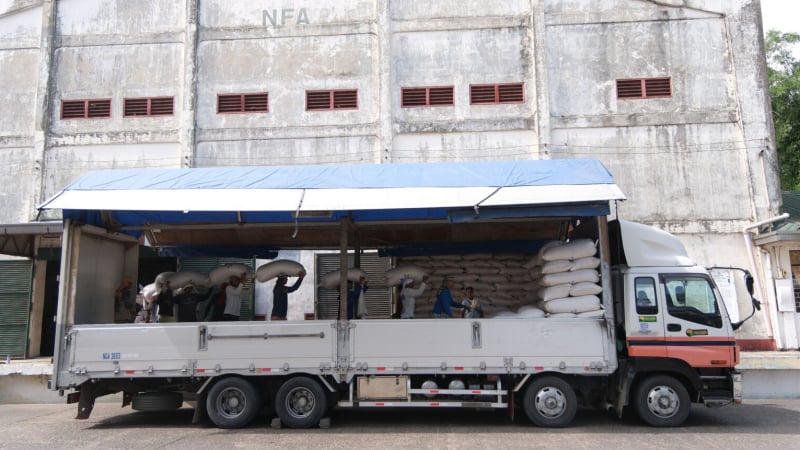
Price ceiling set to end as import policy remains open
The Philippine Department of Agriculture plans to end the ceiling of 50 pesos per kilogram on imported rice because market prices have stabilized below that level, according to Dan Viet, citing the latest bulletin from the Vietnam Food Association. The government has also decided against temporarily suspending rice imports, viewing continued foreign supply as necessary to prevent shortages and sharp price increases.
The policy separates two issues that have shaped the Philippine market: retail price controls and the volume of rice entering the country. Removing the ceiling would acknowledge that prevailing prices no longer require the restriction, while keeping import channels open would provide protection against weather-related production losses later in 2026.
Philippine imports totaled 2.22 million tons as of May 28, compared with 1.93 million tons in the corresponding period a year earlier, Dan Viet reported. The publication later placed total imports at approximately 3.3 million tons. Officials said imported supplies would help maintain sufficient stocks from December through April.
Record second-quarter harvest faces El Niño risk
The Philippines harvested 4.63 million tons of paddy rice in the second quarter of 2026, up 5.7% from 4.38 million tons a year earlier, according to the Philippine Statistics Authority figures cited by Dan Viet. It was the country's highest second-quarter paddy output since 1987.
That strong result may not extend into the third quarter. The Department of Agriculture warned that a developing El Niño could bring drier conditions, particularly to rain-fed farming areas. Officials estimate that output could decline by around 700,000 tons if El Niño intensifies, equivalent to approximately 3.5% of the annual production target. Storms could cause an additional loss of 500,000 to 600,000 tons.
The government has reactivated its El Niño task force and is expanding irrigation support, distributing climate-adapted seed, adjusting planting schedules and strengthening crop insurance and credit assistance. Future rice import decisions will depend on actual domestic production and market conditions.
Stocks rise across commercial, household and state storage
Philippine rice inventories stood at 2.51 million tons on July 1, 2026, an increase of 10.1% from a year earlier and 6.8% from the previous month, according to PSA data reported by Dan Viet. Commercial warehouses held 1.197 million tons, households accounted for 978,910 tons and the National Food Authority held 333,030 tons.
Alongside the reliance on imports, the government plans to increase the suggested retail price for domestically produced rice to support farm income and encourage local production. It has also raised the NFA's procurement budget to 20 billion pesos, with the agency expected to buy 500,000 tons of paddy at higher procurement prices during the harvest season.
Vietnamese export volume holds steady as value declines
Vietnam exported 478,814 tons of rice worth $241.109 million in July 2026, according to data compiled by the country's crop production and plant protection authority and reported by Dan Viet. Cumulative exports through July 31 reached 5.496 million tons valued at $2.624 billion.
Export volume was 0.12% lower than in the same period of 2025, while value fell 7.08%. The wider decline in earnings indicates weaker average export returns even as shipment volumes remained almost unchanged. The source identifies the Philippines as a major destination for Vietnamese supply but does not specify how much of the 5.496 million-ton total was shipped there.
In Vietnam's Mekong Delta, farmers had harvested about 442,000 hectares of the 2026 summer-autumn crop by early August. Yields averaged roughly 6.168 tons per hectare, producing an estimated 2.72 million tons of paddy. Planting for the autumn-winter crop had reached 256,000 hectares, or nearly 40% of the planned 640,000 hectares.