Philippines bans fresh ube exports as global demand strains planting supply
The Philippines has imposed an indefinite ban on fresh ube exports to protect planting material and expand domestic production. Processed and frozen products remain exempt, but international buyers face tighter availability and potentially higher prices.
Fresh exports halted to protect planting material
The Philippines, described by CafeBiz as the world’s largest producer of ube, has imposed an indefinite ban on exports of the fresh purple tuber. The government aims to control domestic supply and preserve planting material at a time when international demand is rising faster than the country’s production capacity. The restriction does not cover frozen or processed ube products.
Ube is propagated mainly from pieces of existing tubers, meaning sales for consumption compete directly with the material required for the next crop. Agriculture Secretary Francisco P. Tiu Laurel Jr. said the Philippines also does not want to export planting stock to countries that could establish their own production and become competitors. The Department of Agriculture said its immediate strategy is to strengthen domestic planting facilities and supply before pursuing larger export revenues.
Output rises, but longer-term supply remains constrained
Philippine statistics cited by CafeBiz show that ube production increased 17% in the first half of this year to 5,660 tonnes. That growth has not resolved the underlying shortage. Annual production was below 12,500 tonnes last year, compared with about 13,400 tonnes in 2024, indicating a decline despite the recent half-year increase.
Production remains concentrated on small plots, while farmers have limited access to quality planting inputs. In recent months, some growers directed much of their available crop toward foreign demand, leaving fewer tubers for propagation. Tiu Laurel said the industry was expanding faster than producers could supply it.
Higher demand has already changed farm economics. Philippine media cited in the report said growers now receive about 100-150 pesos, equivalent to $1.59-$2.38, per kilogram. Ube prices in the country have more than doubled in recent years. These prices can encourage additional planting, but expansion will remain constrained if farmers cannot obtain sufficient disease-free and productive planting material.
International users prepare for tighter availability
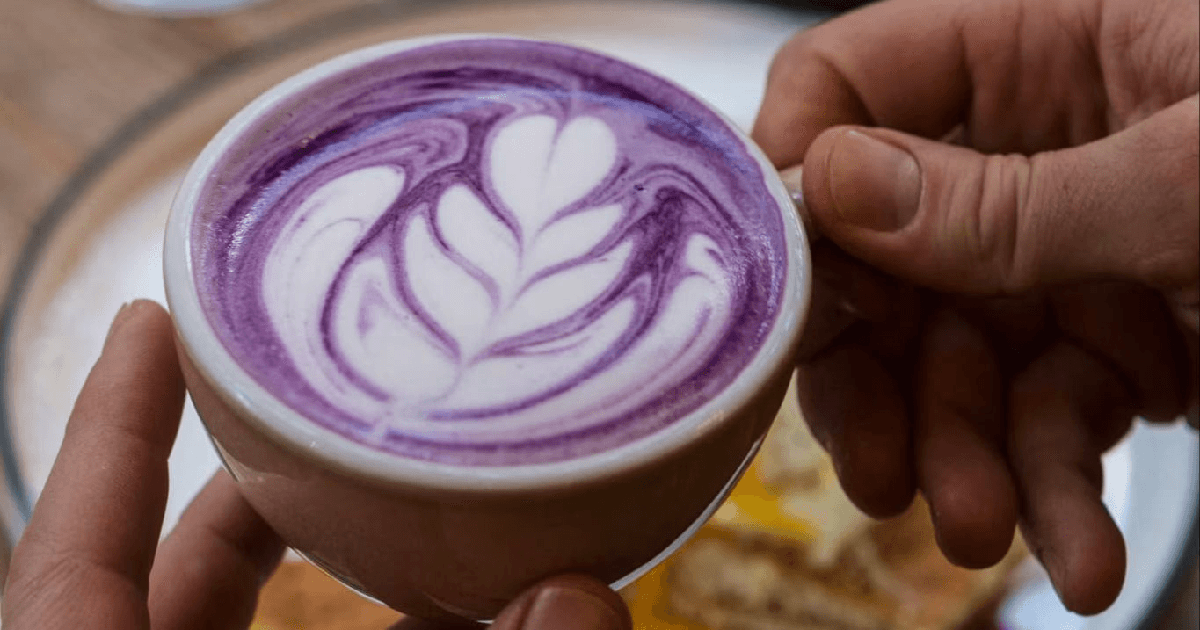
Demand has spread from markets with large Filipino communities into mainstream cafés, bakeries and restaurants. Ube is used in lattes, cakes, ice cream and other desserts, including at Michelin restaurants in the United States and the United Kingdom. Starbucks and Costa Coffee added ube-flavoured products to their menus this year. According to market research company Datassential, the presence of ube on US restaurant menus more than tripled between 2021 and 2025. The United States is currently the largest consumer market.
Damien Yeo, a senior consumer and retail analyst at Fitch Solutions unit BMI, said Manila’s ban could create a short-term shortage. Restaurants and importers retain access to frozen and processed products, which are already widely used in the United States and Europe, but businesses are preparing for higher costs. Nigel Motley, co-founder of London-based Filipino café Kapihan, said the company may have to accept higher prices if supply becomes scarce. Florence Mae Maglanoc, owner of UK bakery Panadera and restaurant Donia, said sourcing has consistently been difficult and that she increasingly relies on frozen and processed ube, although fresh ube offers better quality.
The policy could also accelerate production elsewhere. Yeo noted that other tropical countries can grow ube, while manufacturers may substitute other purple crops, including certain sweet potato varieties. Vietnam and China are already expanding cultivation of purple tubers for international markets. For the Philippines, the commercial challenge is to protect its planting base without losing overseas customers to substitutes or emerging suppliers. Keeping processed exports outside the ban gives domestic processors an opportunity to capture more value, while preserving access for foreign food-service buyers.