Philippine Chicken Meat Imports Forecast to Rise Nearly 15% to 780,000 Tonnes in 2027
The USDA forecasts Philippine chicken meat imports will reach 780,000 metric tons in 2027, an increase of nearly 15%. Expanding demand from food manufacturers and food-service businesses is expected to drive the rise.
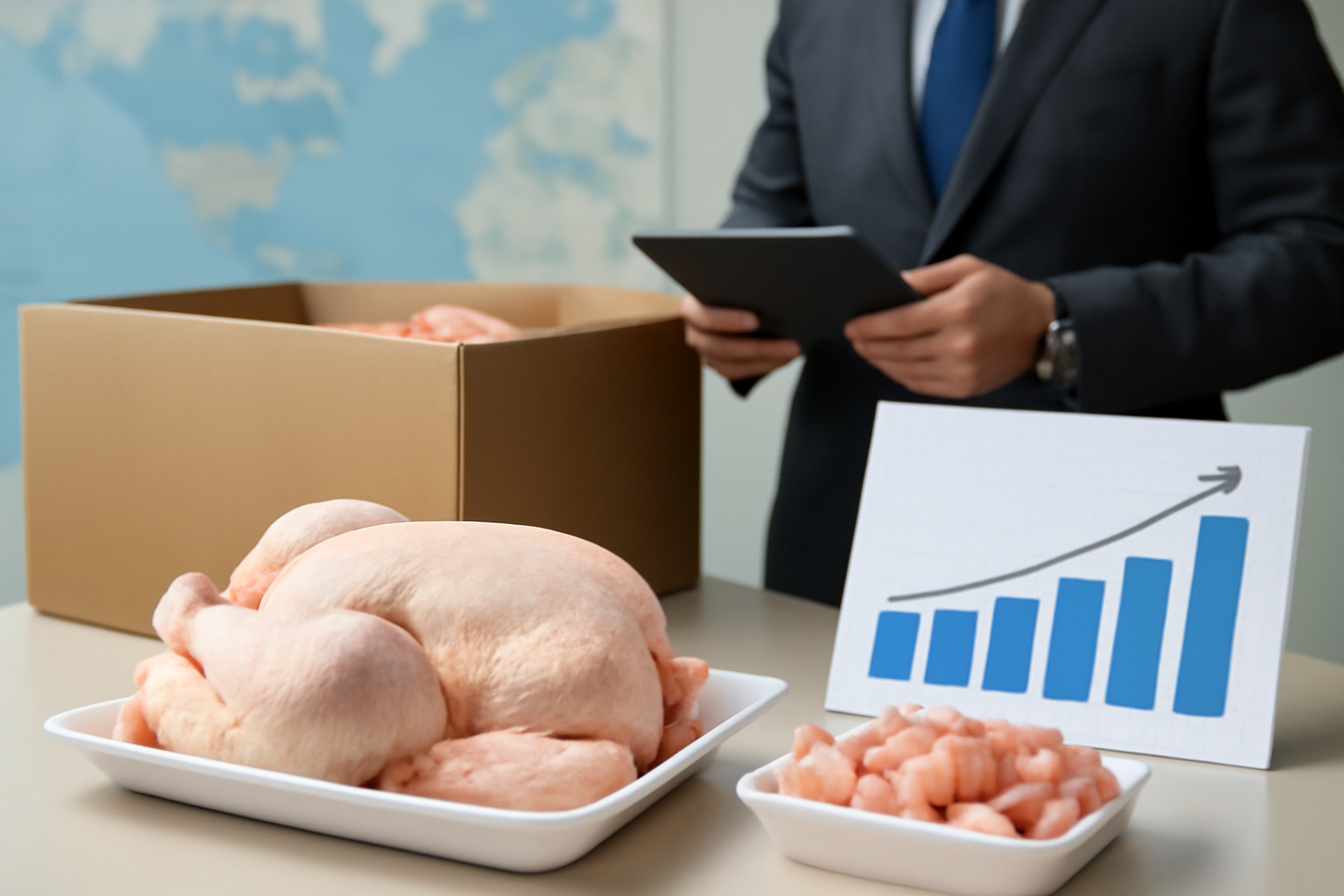
Import requirement set to increase
Philippine chicken meat imports are forecast to reach 780,000 metric tons in 2027, rising by nearly 15% as demand expands in the country’s food manufacturing and food-service industries, according to the United States Department of Agriculture.
The projection points to a larger role for imported poultry in supplying commercial buyers whose requirements extend beyond household consumption. Food manufacturers typically need dependable volumes and standardized inputs for continuous production, while food-service businesses depend on regular deliveries across restaurant, catering and institutional channels. Growth in these industries can therefore raise import demand even when domestic poultry remains the core of the wider market.
The USDA forecast does not identify individual supplying countries in the material provided. It nevertheless signals a larger prospective market for exporters able to satisfy Philippine requirements on product specifications, regulatory compliance and delivery schedules. The commercial opportunity will depend on how much of the forecast demand domestic producers can serve and how competitively overseas suppliers can reach Philippine buyers.
Processors and food service drive the outlook
The demand profile matters because manufacturers and food-service operators purchase chicken meat as an industrial or menu input rather than solely as a retail product. Their procurement decisions can be shaped by consistency, processing suitability and continuity of supply as well as price. Importers that can match these requirements may be better placed to secure recurring business than sellers focused on occasional spot transactions.
A rise to 780,000 metric tons would require Philippine importers, cold-storage operators, distributors and processors to handle greater volumes through the supply chain. Import growth can increase the importance of logistics capacity and inventory management, particularly for frozen products that must remain within controlled temperature conditions. Buyers will also need to balance advance purchasing against the risks of holding more stock than downstream businesses require.
For domestic poultry producers, stronger industrial demand presents both an opportunity and a competitive test. Expanding consumption can create room for local output and imports at the same time, but overseas meat may compete directly in product categories used by processors and food-service operators. The effect on local producers will depend on production growth, costs, product mix and the ability to supply buyers consistently.
Regional suppliers face a larger but contested market
The forecast gives poultry exporters a clear demand signal, although it does not establish how the additional business will be divided among suppliers. Exporters with established commercial relationships, suitable product formats and reliable shipping arrangements may have an advantage. New entrants would still have to meet Philippine market-access rules and compete with both domestic chicken and other foreign suppliers.
Price competition is likely to remain central because chicken is a widely used protein and a major input for cost-sensitive food businesses. However, the lowest offer may not always win if manufacturers require precise cuts, stable quality or predictable arrival times. Supply disruptions, freight conditions or changes in overseas availability could alter purchasing decisions and shift orders between approved origins.
The USDA projection is a forecast rather than a confirmed import volume. The path to 780,000 metric tons will depend on whether food manufacturing and food-service demand develops as expected, as well as the performance of Philippine poultry production. Industry participants will consequently be watching procurement activity, domestic supply conditions and the pace at which commercial food businesses expand their chicken requirements through 2027.