Peru-Guatemala trade deal targets agricultural market worth more than $2 billion
The Peru-Guatemala free trade agreement took effect on July 1, immediately removing tariffs from 45 product categories of interest to Peru. Peruvian food exports to Guatemala reached a record $69.5 million in 2025, leaving substantial room for growth in a market with import potential exceeding $2 billion.
Tariff reductions take effect
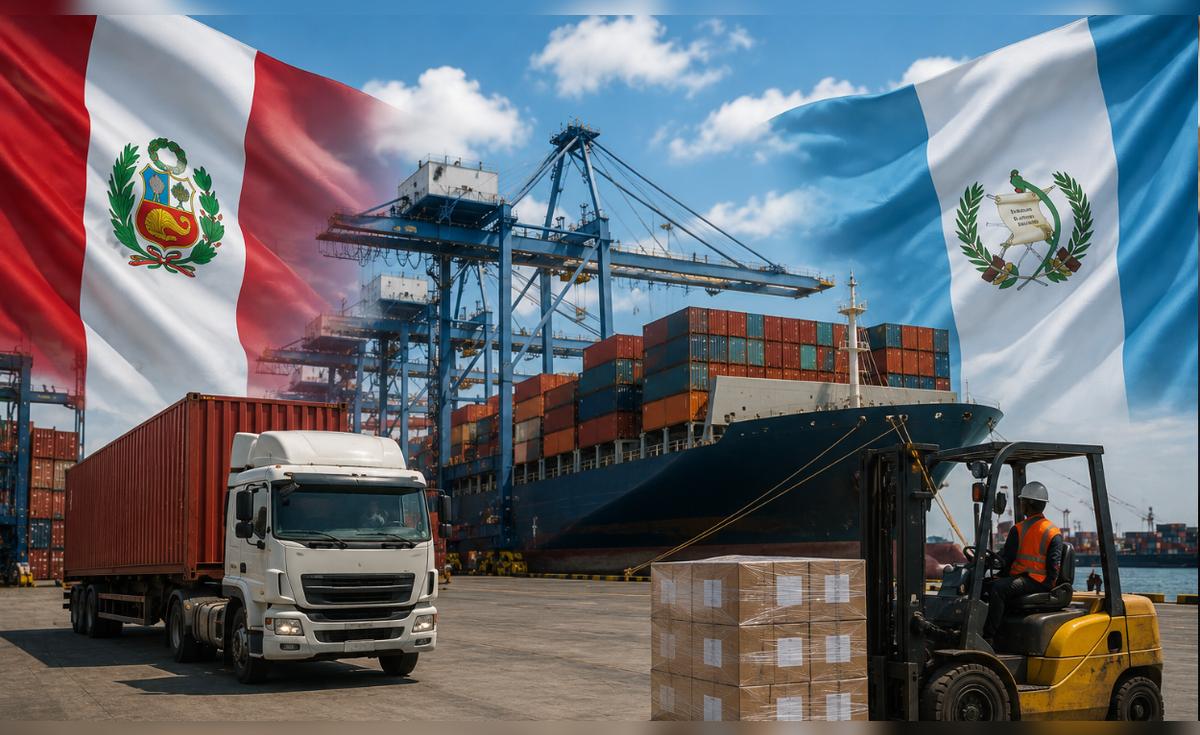
The free trade agreement between Peru and Guatemala entered into force on July 1, creating improved access for Peruvian agricultural goods to a market whose import potential exceeds $2 billion. La República reports that the agreement could create opportunities for large exporters and smaller producers supplying fruit, vegetables, cacao, Andean grains and processed food.
The agreement identifies 112 tariff categories of interest to Peru. Tariffs on 45 of them were removed immediately. Guatemala previously imported goods covered by those 45 categories from third countries for approximately $468 million, providing a defined market in which Peruvian suppliers can compete under the new conditions. The remaining commercial opportunity will depend on the schedules and requirements applying to the other categories.
Exports start from a modest base
Peruvian food sales to Guatemala remain limited compared with the size of the potential market. According to Peru’s Ministry of Agrarian Development and Irrigation, known as Midagri, shipments reached a record $69.5 million in 2025 but still did not exceed $70 million. The ministry’s statistics show that only 20 agricultural products generated close to 90% of those exports.
Fresh grapes, citrus fruit and palm oil together accounted for 55% of the total value exported to Guatemala in 2025. Products identified as having stronger prospects under the agreement also include mangoes, purple corn, giant Cusco corn, flour-based food preparations, beans, frozen strawberries, jellies, jams and wine. The broader opportunity extends to fresh vegetables, cacao and Andean grains, although actual access for fresh produce may depend on phytosanitary protocols.
Logistics and sanitary access remain decisive
The agreement comes as Peru’s agricultural export sector continues to expand. Agro-exports reached $4.713 billion during the first five months of 2026, according to La República, supporting foreign-currency earnings and employment. Guatemala, with a population approaching 20 million, could also strengthen Peru’s position in Central America. Peru already has trade agreements with Panama, Costa Rica and Honduras, while negotiations continue with El Salvador and Nicaragua.
Tariff preferences alone will not guarantee higher sales. Midagri sees a need for investment in more efficient maritime routes to Central America, stronger logistics infrastructure and faster negotiation of phytosanitary protocols for fresh agricultural products. These constraints will determine whether growers and processors can deliver competitively and whether smaller producers can participate. If transport and sanitary access improve alongside the tariff changes, Guatemala could become a more significant destination for Peru’s agricultural supply and reduce its dependence on slower-growing traditional markets.