Peru’s Amazon Brazil nut exports reached $48 million in 2025
Peru exported $48 million of Amazon Brazil nuts in 2025, up 27.6% from 2024, according to the Central Reserve Bank of Peru. The supply chain is concentrated in Madre de Dios and depends on conserved Amazon forests shared with Bolivia and Brazil.
Peruvian exports rise 27.6%
Peru’s exports of Amazon Brazil nuts reached $48 million in 2025, an increase of 27.6% from 2024, according to figures from the Central Reserve Bank of Peru reported by Agencia Órbita. The result reflects the commercial value of a non-timber forest product whose natural range extends across Peru, Bolivia and Brazil.
In Peru, production is concentrated mainly in Madre de Dios. The annual harvest supports a chain covering collection, processing and export, connecting remote forest areas with international buyers. Although the species grows across three countries, the reported $48 million figure refers to Peruvian exports rather than combined shipments from the entire Amazon supply region.
Supply depends on standing forest
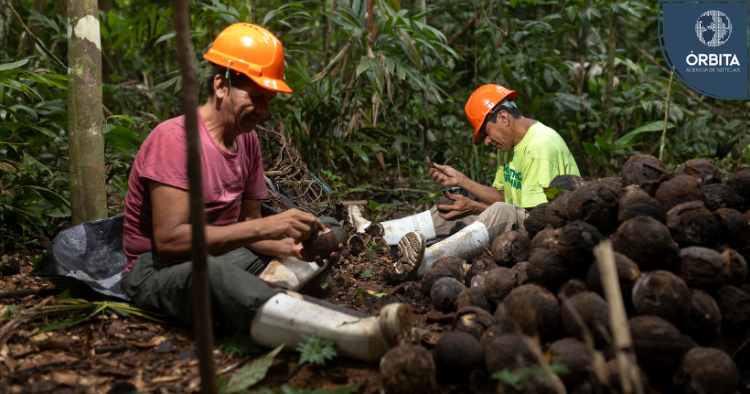
Unlike most agricultural commodities, Amazon Brazil nuts are not produced primarily on large commercial plantations. The trees grow naturally in conserved forests, making export supply dependent on intact ecosystems, access to productive trees and the seasonal work of collectors.
In Madre de Dios, Brazil nut concessions and Indigenous community territories are part of a production chain associated with more than 1 million hectares of Amazon forest. Local and Indigenous knowledge guides the identification of productive trees, collection routes and the timing of harvests. Peru’s Ministry of Culture recognizes the importance of this traditional knowledge to the cultural heritage and collective memory of Amazonian peoples.
Milton Huanca, a specialist in sustainable production chains, said a Brazil nut tree can take approximately 20 to 30 years to begin producing fruit. Its life cycle also requires complex ecological conditions, including pollinators and animals that disperse seeds. For exporters and processors, this long biological cycle limits the possibility of quickly expanding supply in response to higher demand or prices.
Sustainability shapes market access
The connection between production and mature forests has made Brazil nuts relevant to strategies for managing non-timber forest products. WWF works on sustainable use with more than 90 forest concessions, 6 Indigenous communities and other participants in the Amazon landscape. The organization says cooperation among producers, forestry authorities, companies and civil society is important for responsible resource management.
WWF also participated in an OSINFOR event in Puerto Maldonado, supported by HP, that brought together collectors, public institutions, private companies and local residents. The program focused on the role of Brazil nuts in the regional economy and forest conservation. For importers, the 27.6% export increase indicates greater commercial activity in Peru, while the forest-based production model keeps traceability, concession management and ecosystem health central to long-term supply reliability.