Paria coconut growers warn Colombia export halt is driving down demand and prices
Phytosanitary barriers have halted exports of peeled Venezuelan coconuts to Colombia, disrupting a trade channel that normally absorbs 80% of national output. Growers in Paria report falling demand and prices, rising unemployment and mounting pressure from poor roads, fuel shortages and high labor costs.
Phytosanitary barriers close the main sales channel
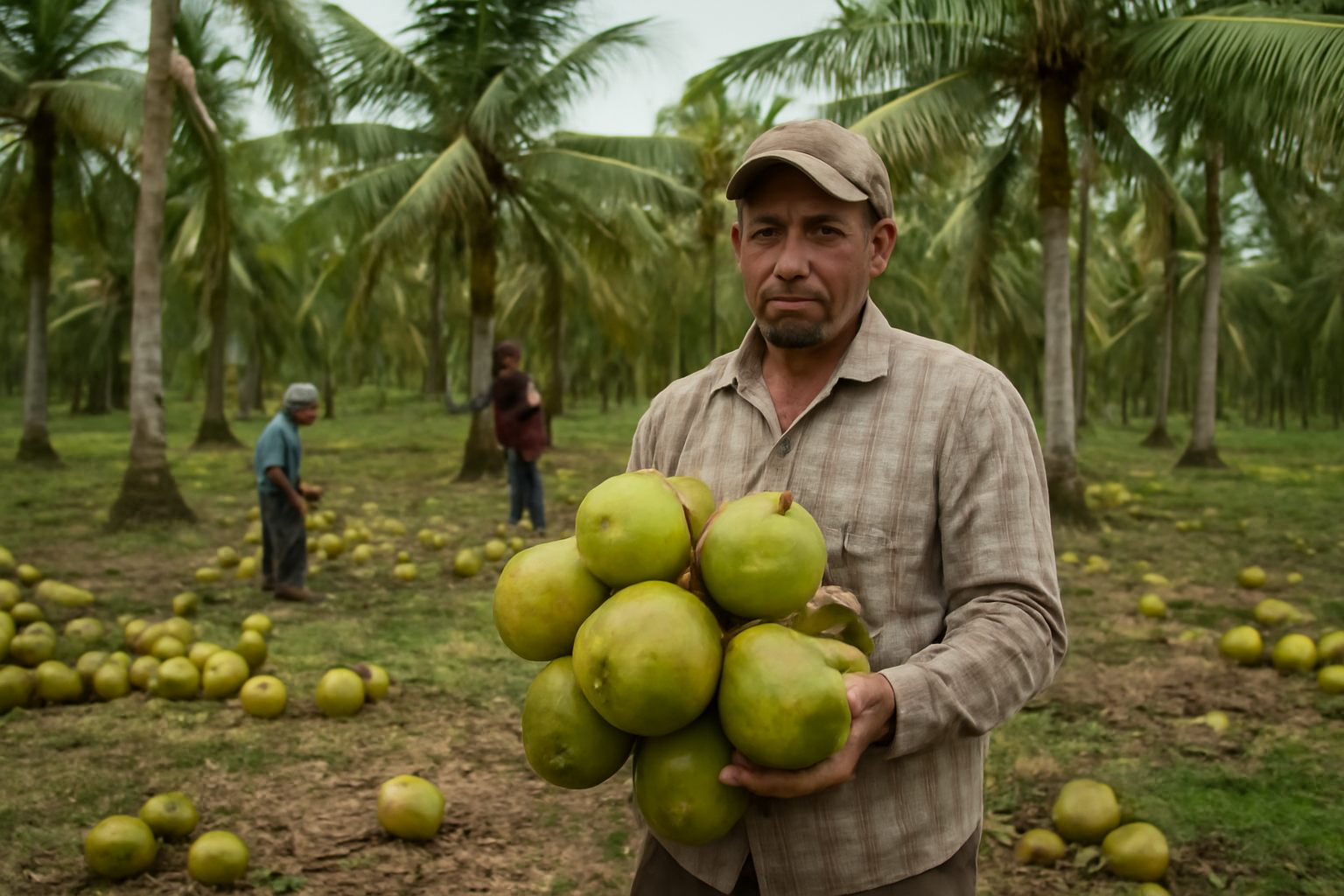
Coconut growers in Venezuela’s Paria peninsula have warned that phytosanitary barriers are keeping exports of peeled coconuts to Colombia at a standstill. The interruption has closed the principal outlet for a crop that is central to the rural economy of Paria, in Sucre state, and has quickly spread from cross-border trade into farming, processing and employment.
El Tiempo reported that Venezuela normally exports 80% of its coconut production to the Colombian market. With that channel suspended, growers and traders say demand has dropped sharply, fruit prices have collapsed and unemployment in the sector has increased. No figures were provided for the affected tonnage, the decline in prices or the number of jobs lost.
The concentration of sales in one destination has magnified the impact at farm level. Producers can continue harvesting, but the domestic market has not been shown to have enough demand to replace Colombia. Perishable output and limited processing capacity also leave growers with less room to store the crop or redirect it into other products while the phytosanitary dispute remains unresolved.
Farm constraints compound the trade shock
The warnings emerged during a meeting at the headquarters of the Asociación Cooperativa Productores de Coco y Palma Paria in Mariño municipality. The event, titled “Coconut cultivation in Paria: marketing, phytosanitary barriers and profitability,” brought together growers, traders, small processors, business representatives and members of the Unión Nacional Campesina Ezequiel Zamora.
Agronomists José Carmelo Pomenta, a producer and trader, and Beltrán Caraballo, a researcher at the National Institute for Agricultural Research, led the main presentations. According to El Tiempo, the discussion covered the history of coconut cultivation in Paria but focused on current deficiencies in plant-health management, technical assistance and access to credit.
Participants also identified insecurity on plantations, deteriorated agricultural roads, difficulty obtaining fuel, and shortages and high costs of specialized workers, including coconut climbers and peelers. These constraints raise the cost of moving and preparing coconuts even when buyers are available. With the Colombian outlet closed and farmgate prices under pressure, producers have less revenue to absorb those operating costs or maintain plantations.
Producers seek emergency action and technical talks
The assembly adopted five agreements intended to produce an immediate response. Growers asked authorities to declare an emergency and treat the coconut crisis as a matter of state, arguing that coconut is a strategic national commodity. They also called for a detailed technical report setting out the sector’s problems and demands for submission to phytosanitary, legislative and government authorities.
The group proposed strengthening the organization that represents producers, workers, industrial companies and exporters, as well as establishing a technical working group. A further meeting was scheduled for Friday, September 25, to review assigned tasks and plan subsequent action. For the sector, restoring access to Colombia depends on resolving the phytosanitary obstacles; longer-term resilience will also require stronger domestic demand, processing options and production support. Until then, the loss of a market taking 80% of output leaves Paria’s coconut chain exposed to further price weakness and farm disruption.