Paraguay’s pork exports rise as industry seeks markets beyond Taiwan
Paraguay exported 12,962 tonnes of pork from January through August 2026, up 8% year on year, while slaughter increased 12%. Taiwan absorbs 85-90% of shipments, leaving market diversification as the industry prepares for substantial production growth.
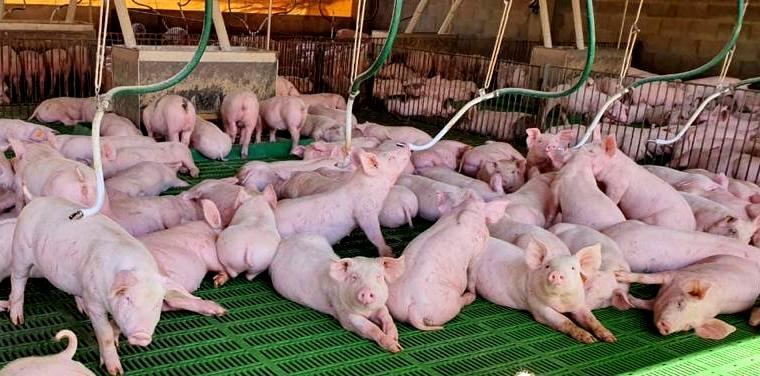
Exports and slaughter continue to increase
Paraguay exported 12,962 tonnes of pork between January and August 2026, an increase of 8% from the same period a year earlier, according to official records from the National Animal Quality and Health Service, Senacsa. Domestic slaughter grew by 12% over the same comparison period, reflecting an expansion in both production and foreign sales.
Hugo Schaffrath, president of the Paraguayan Association of Pig Farmers, told El Nacional that the sector had already recorded a substantial jump from 2024 to 2025. He expects exports to finish 2026 around 15% above their 2025 level. Paraguay shipped about 18,000 tonnes last year and could reach between 20,000 and 22,000 tonnes this year if conditions in the international market improve.
The increase in volume has not produced an equivalent rise in earnings. Schaffrath said the fall in the dollar left exporters with practically the same revenue as last year and weakened incentives to ship more pork, despite expectations of stronger growth.
Taiwan dominates the destination mix
Taiwan buys between 85% and 90% of Paraguay’s pork exports, making it by far the country’s largest market. Paraguayan pork is also shipped to Brazil, Uruguay, Georgia, Singapore and the Philippines, but those destinations currently represent only a limited counterweight to Taiwan.
This concentration is becoming more significant as producers expand. The association forecasts a 180% increase in production over the next five years, based on capacity that farmers are already developing rather than projects that have yet to begin. Schaffrath said the industry will eventually need to export more than 200,000 tonnes of pork annually—around 10 times its current overseas volume.
The association and the Paraguayan government are working to obtain access to Chile, which Schaffrath described as a nearby market with attractive prices. The industry’s larger targets are South Korea, Japan and Mexico. Reaching those destinations will depend partly on sanitary negotiations and Paraguay’s effort to obtain recognition as a country free of foot-and-mouth disease without vaccination.
Processing capacity prepares for expansion
According to Schaffrath, access to the targeted high-volume markets could bring prices per kilogram about 50% above current levels. Senacsa is working with producers on the required animal-health status, while the Ministry of Industry and Commerce and its REDIEX export promotion agency are involved in efforts to open additional destinations.
Processing investment is beginning to follow the expected growth in livestock supply. A newly opened meat plant has annual slaughter capacity of between 700,000 and 800,000 animals. Another plant is being expanded, while plans for an additional facility remain at the proposal stage.
Schaffrath expects the sector to require a more robust processing industry from 2028 or 2029. The central challenge is therefore shifting from production alone to the coordination of farms, slaughter capacity and market access. Without new destinations, the markets currently available would not be large enough to absorb the volume producers expect to bring forward.