Palm oil prices strengthen as traders await Malaysian production data
Most crude palm oil contracts closed higher on Bursa Malaysia Derivatives in trading dated 5/7/2026. Investor Daily linked the gains to stronger soybean oil prices as traders awaited Malaysian production figures.
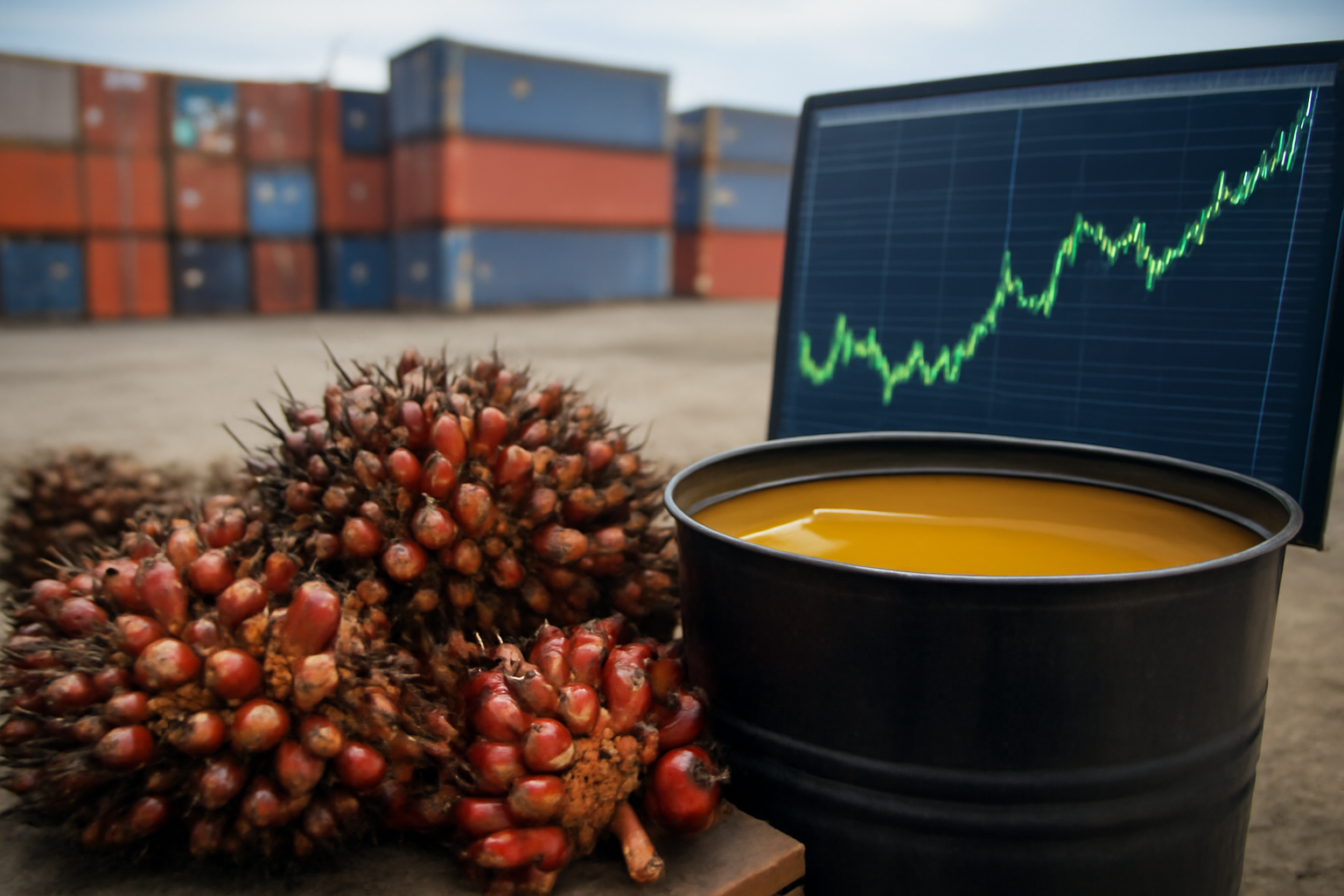
CPO contracts close mostly higher
Most crude palm oil contracts on Bursa Malaysia Derivatives closed higher in trading dated 5/7/2026, according to Investor Daily. The publication said the advance followed gains in soybean oil, while market participants positioned ahead of new Malaysian palm oil production figures.
The move highlights the continuing influence of competing vegetable oils on the palm oil market. Soybean oil and palm oil serve many of the same food and industrial users, so a change in the price of one can affect the relative value and purchasing appeal of the other. Stronger soybean oil can therefore provide support for CPO even before palm oil’s own supply indicators become available.
Production data becomes the next test
Malaysia’s forthcoming production data is now the central reference point for traders. Output figures help the market assess the amount of palm oil entering the supply chain and whether recent price strength is consistent with underlying availability. Producers, processors and physical traders will use the data to review procurement plans, inventory exposure and sales timing.
The report did not provide the expected production figure or specify the size of the gains across individual CPO contracts. It also did not identify whether traders anticipate an increase or a decline in Malaysian output. That leaves the current advance tied primarily to the signal from soybean oil and to positioning before the production release, rather than to a confirmed change in palm oil supply.
Vegetable-oil signals remain connected
For importers, the key question is whether the stronger futures market changes replacement costs for nearby purchases. For exporters and processors, firmer contracts may improve selling opportunities, but the durability of that support will depend on the production numbers and on whether soybean oil maintains its gains. A production result that changes expectations for Malaysian availability could quickly become more important than the external vegetable-oil signal.
The immediate market picture is therefore one of cautious strength. Most contracts advanced, but traders still lack the Malaysian output evidence needed to judge the balance between supply and demand. Until those figures are available, movements in soybean oil are likely to remain an important directional reference for CPO, while different contract months may respond unevenly to expectations about physical supply.
Malaysia’s role as a major palm oil pricing and production centre gives its data significance beyond the domestic market. Buyers and sellers following Bursa Malaysia use its contracts as a reference for commercial decisions across the wider palm oil chain. The next production update will help determine whether the latest gains reflect a temporary cross-market response or a firmer assessment of palm oil fundamentals.