Pakistan Weighs GM Maize as Consumption Growth Outpaces Population
Pakistan’s maize consumption is estimated to be growing by around 8% annually, while production declined in 2025-26. Supporters say GM hybrids could raise yields, but seed industry representatives warn of regulatory, traceability and market-access risks.
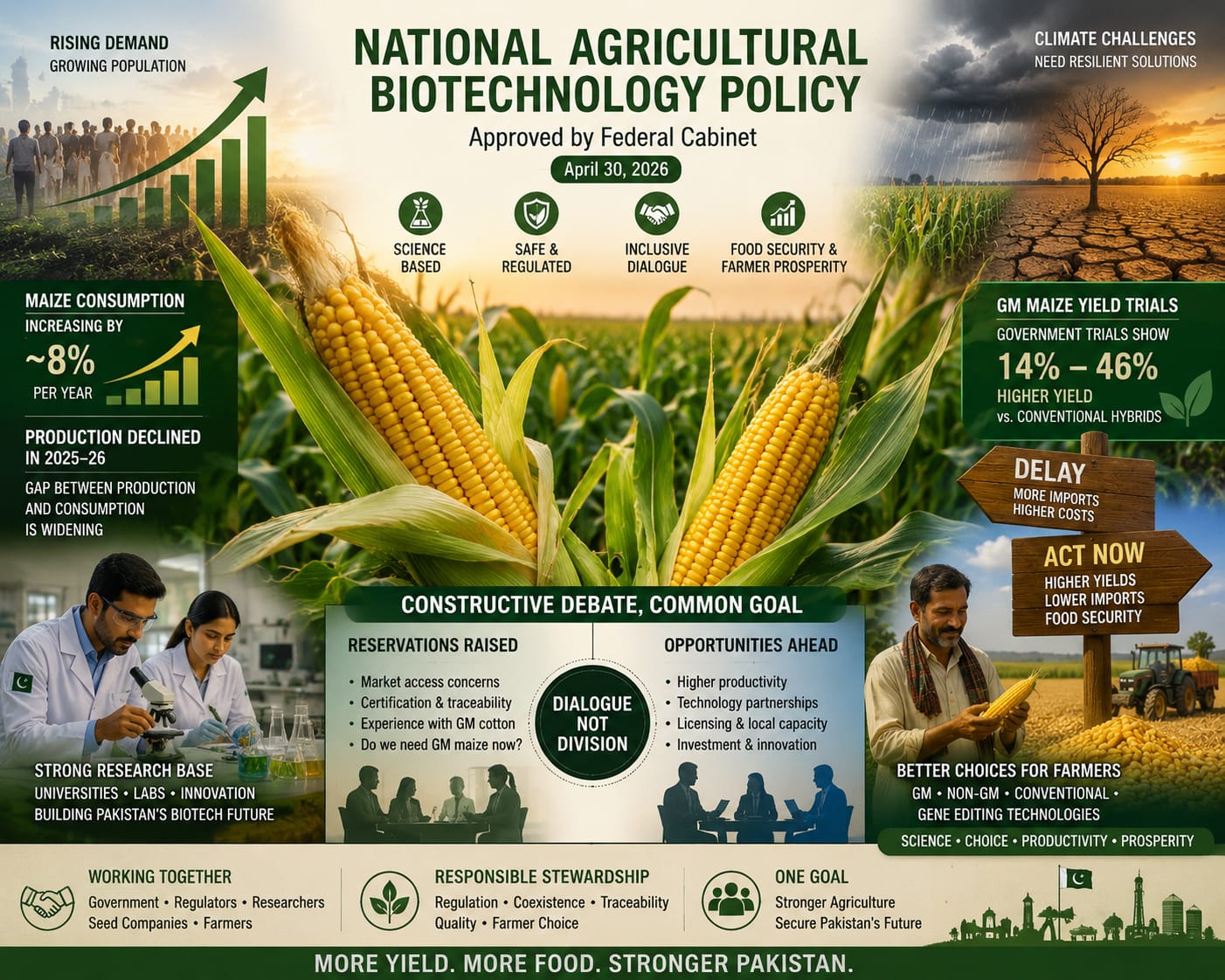
Demand growth raises supply concerns
Pakistan’s debate over genetically modified maize is intensifying as domestic consumption rises faster than population growth and the country considers how to implement its new biotechnology policy. GNN reports that the Federal Cabinet approved the National Agricultural Biotechnology Policy on April 30, 2026, after extensive consultations, but representatives of the local seed industry continue to question whether GM maize should be introduced.
Maize is both a food crop and a major input for Pakistan’s poultry, livestock and feed industries. The country’s population is growing by around 2% a year, while maize grain consumption is estimated to be increasing by around 8% annually. Production declined during 2025-26, creating concern that domestic supply could fall further behind demand from consumers and animal-feed users.
A widening deficit could make Pakistan more dependent on imported maize and add to its import bill. The central question is therefore whether farmers can raise output through better seed, agronomy and pest control quickly enough to match consumption growth.
Trials indicate higher yields
Industry representatives cited government yield trials in which GM maize hybrids produced gains of 14% to 46% compared with conventional hybrids. Biotechnology supporters argue that these results justify further scientific evaluation and implementation of the national policy. They say local, independently assessed field trials offer a more useful test than broad comparisons between countries using GM and non-GM systems.
Rashid Ahmad, Executive Director of the CropLife Pakistan Association, said national seed companies and multinational technology developers do not have to be competitors. He argued that licensing, partnerships and foreign investment could allow Pakistani companies to incorporate approved biotechnology traits into locally adapted hybrids while retaining their seed portfolios and farmer relationships.
Supporters cite the Philippines and Vietnam as markets where local and regional companies have commercialized hybrids containing licensed GM traits after regulatory approval. In their view, clear rules and responsible stewardship could bring Pakistani seed businesses into the biotechnology value chain rather than displace them.
Seed industry raises trade and performance risks
Former Seed Association of Pakistan chairman Chaudhry Asif Ali has questioned whether the technology is currently necessary. He pointed to restrictions and regulatory concerns in some markets and argued that improved conventional genetics can also raise productivity. He also compared the Philippines with India, saying Philippine adoption of GM maize had not produced yields above those achieved through non-GM approaches in India.
Biotechnology specialists counter that national yield comparisons cannot isolate the effect of GM traits. Climate, irrigation, soil, fertilizer, pest pressure, seed quality and farm management all influence performance. They also note that the United States has no general prohibition on GM crops and instead regulates biotechnology through established frameworks.
Ali additionally warned that GM production could increase certification, segregation and traceability requirements for exports to certain markets. Proponents accept that buyers have different standards but say isolation protocols, quality controls and transparent traceability can support parallel GM and non-GM supply chains.
Implementation will determine the outcome
Pakistan’s experience with GM cotton also shapes the dispute. Ali said the technology did not deliver the expected increase in cotton yield and that productivity declined during some periods. Supporters respond that cotton’s performance reflected several factors, including seed quality, pests, climate change, water availability, farming practices and weaknesses in the seed system.
The maize decision will consequently involve more than approving a particular trait. Regulators must establish field-testing standards, seed-purity safeguards, coexistence rules and traceability requirements. Farmers will also need reliable seed, pest management and agronomic support. With consumption growing at around 8% and production already declining in 2025-26, delays or weak implementation could leave feed users more exposed to domestic shortages and imported-maize costs.